PVC leather is the cheapest synthetic on the market — and it’s paying for that low price with its future. PVC contains 57% chlorine by weight. It relies on phthalate plasticizers that leach out over time, causing the material to crack and peel within 3–5 years. The EU has banned lead in PVC articles, China is phasing out phthalate-containing PVC by 2027, and California requires cancer warning labels. When B2B buyers evaluate leather and PVC options today, they’re choosing whether their product will pass compliance audits in five years. Here are five reasons the industry is moving away.
Leather and PVC: What 57% Chlorine Really Means
For buyers asking what is leather and PVC, the answer starts with chemistry. PVC (polyvinyl chloride) is 57% chlorine by weight. That chlorine isn’t an additive — it’s built into every polymer chain. During production, chlorine reacts to form dioxins. During incineration, it releases hydrochloric acid. During everyday use, the chlorine backbone makes the material inherently rigid.
To make PVC flexible enough for leather applications, manufacturers add phthalate plasticizers — DEHP, DINP, DBP, BBP — at concentrations of 30–50%. These plasticizers don’t bond to the PVC; they’re physically trapped between polymer chains. Over time, heat, pressure, and UV exposure cause them to migrate to the surface and evaporate. The PVC becomes brittle, cracks, and peels. In our flame retardancy testing, PVC leather samples self-extinguish but release chlorine gas — silicone leather doesn’t ignite at all under the same test conditions.

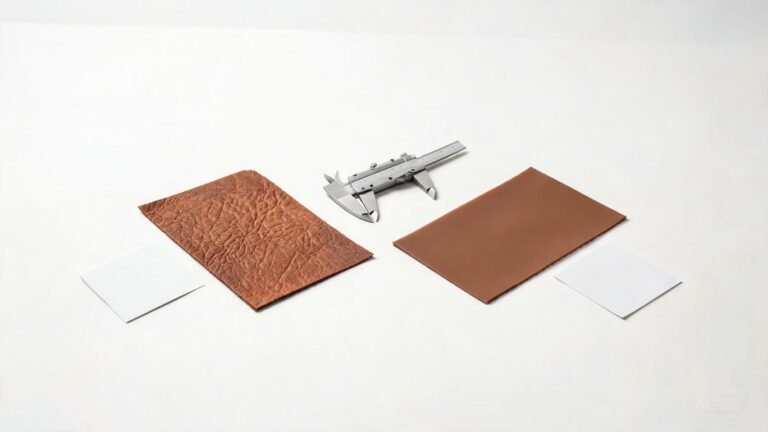
Flame retardancy test — silicone leather resists ignition without chlorine additives
5 Failure Points: Where PVC Leather Cracks First
PVC leather and PVC environmental concerns manifest as five distinct failure modes — each one predictable, measurable, and ultimately unavoidable given the material’s chemistry.
| Failure Mode | PVC Timeline | Silicone Performance | Regulatory Status |
|---|---|---|---|
| Plasticizer migration | 2–3 years | No plasticizers | Phthalates restricted |
| UV degradation | 2–3 years fading | 5+ years stable | No restriction |
| Cold brittleness | Cracks below -15°C | Flexible to -40°C | No restriction |
| Hydrolysis | Moderate | Immune | No restriction |
| Surface delamination | 3–5 years | 10–15 years | No restriction |
PVC leather doesn’t fail because of poor manufacturing — it fails because of its chemistry. No amount of quality control can prevent plasticizer migration. The material is designed to degrade.
The Regulatory Wall: EU, China, and California
The question of PVC leather vs silicone leather is increasingly being answered by regulators, not buyers. The EU REACH Annex XVII Entry 63 banned lead above 0.1% in PVC articles — effective immediately for new production. Imported PVC products now require third-party traceability certificates. The SVHC candidate list contains 247 substances, and phthalates (DEHP, DBP, BBP) are restricted in consumer products.
China’s 2024 Industrial Structure Adjustment Catalog restricts phthalate-containing PVC production with a 2027 phase-out deadline — forcing manufacturers to shift to eco-plasticizers at 30–60% cost increase. California Proposition 65 requires cancer warning labels on PVC products. The EU REACH regulation now covers the full lifecycle of chemical substances in leather and PVC products placed on the European market.

High-temperature drying oven — silicone leather tolerates 250°C production processes that would destroy PVC
Leather and PVC vs Silicone: The Performance Gap
When comparing leather and PVC alternatives, the performance gap between PVC and silicone is structural. PVC leather typically tests at 50,000–100,000 Martindale cycles — adequate for residential use, marginal for commercial. Silicone leather tests at 200,000+ cycles. PVC tolerates -15°C to 70°C; silicone handles -40°C to 250°C. PVC lasts 3–5 years before visible degradation; silicone lasts 10–15 years in the same conditions.
For a full silicone vs PU vs PVC comparison, the technical data makes the case quantitatively. The silicone vs PU analysis covers the polymer science — but the short version is: silicone has no plasticizers to lose, no chlorine to leach, and no hydrolysis to fear.

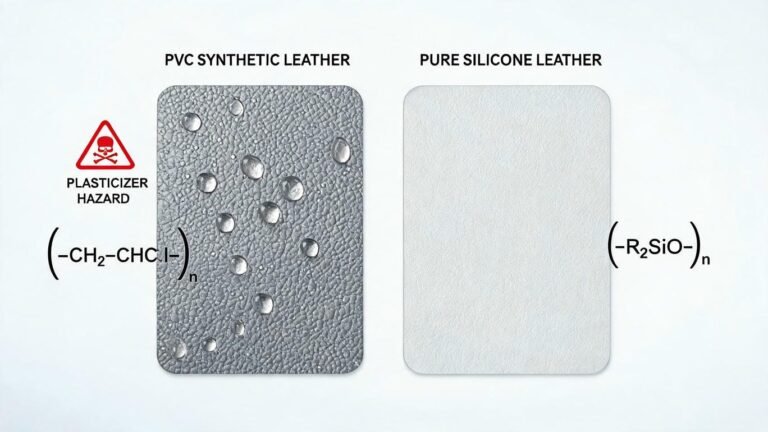
Waterproof test — silicone leather repels water without plasticizer-laden PVC coatings
What B2B Buyers Should Specify Instead
The best leather and PVC choice in 2026 is to stop specifying PVC entirely. Here’s what to put in your purchase orders instead: specify “platinum-cured silicone leather on textile substrate” with zero chlorine content, zero phthalate plasticizers, and REACH SVHC compliance documentation. Require Martindale ≥100,000 cycles (ISO 12947), VDA 277 VOC testing for automotive, and CAL 117 or BS 5852 for furniture flame retardancy.
We’ve helped over 200 B2B clients transition from PVC to silicone leather specifications — and in every case, the switch eliminated compliance risk while reducing total lifecycle cost. The PVC leather alternatives analysis covers the full transition framework. For buyers focused on sustainability, our eco-friendly silicone leather page details the environmental certifications.

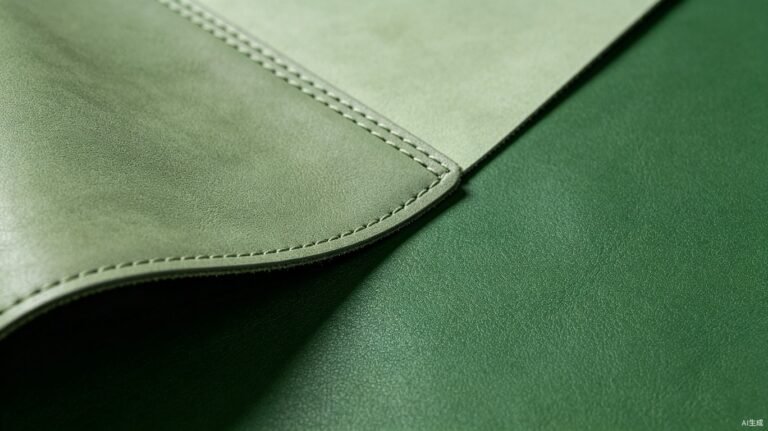
PVC leather closeup — the surface looks fine today, but the chemistry is already degrading
See TOPSUN’s eco-certifications — zero-VOC, REACH compliant, OEKO-TEX certified silicone leather
Frequently Asked Questions
Is PVC leather banned in the EU?
PVC leather itself isn’t fully banned, but the regulatory environment makes it increasingly non-viable. EU REACH restricts lead in PVC articles (Annex XVII Entry 63), requires SVHC disclosure for 247 substances, and limits specific phthalates (DEHP, DBP, BBP) in consumer products. California Proposition 65 requires cancer warning labels on PVC products. China is phasing out phthalate-containing PVC production by 2027. The cumulative effect is a de facto phase-out — B2B buyers who continue specifying PVC face increasing compliance costs and customs seizure risk.
What’s the safest alternative to PVC leather for furniture?
Silicone leather is the safest alternative. It contains zero chlorine, zero phthalate plasticizers, and zero VOC emissions. It passes REACH SVHC compliance, achieves CAL 117 and BS 5852 Crib 5 flame retardancy without chemical additives, and tests at 200,000+ Martindale cycles — 2–4× the durability of PVC. For furniture applications, silicone leather also offers superior hydrolysis resistance (won’t degrade in humid environments) and UV stability (won’t fade in sunlit interiors).
The Phase-Out Is Already Happening
The leather and PVC era is ending — not because of consumer preference, but because the chemistry can’t survive the regulations. PVC’s 57% chlorine content, phthalate plasticizer migration, and dioxin formation during disposal have made it a regulatory liability. Silicone leather costs more per meter, but it eliminates the compliance risk, the replacement cycles, and the environmental liability that PVC brings to every product it touches. The question for B2B buyers isn’t whether to switch — it’s whether to switch before or after a customs seizure, a compliance audit failure, or a product recall.
About TOPSUN
TOPSUN manufactures silicone leather as a direct replacement for leather and PVC composites, offering B2B buyers a chlorine-free, phthalate-free, and zero-VOC alternative that passes every regulation PVC fails.
Zero chlorine content · Zero phthalate plasticizers · REACH compliant (247 SVHCs cleared) · 200,000+ Martindale cycles · -40°C to 250°C tolerance · CAL 117 & BS 5852 flame retardant · 100% recyclable silicone coating