Every year, a new leather technology lands in the trade show circuit with a compelling sustainability story and a price point that makes procurement teams lean forward. Then the pilot order arrives, and the reality sets in: the material scratches easily, the color shifts after three months of window light, or the lead time stretches from 8 weeks to 6 months. The leather new material landscape in 2026 is full of promise — but most of it isn’t ready for high-volume B2B production. The trick is knowing which innovations have crossed the line from lab curiosity to specifiable material, and which ones are still PowerPoint presentations with a swatch book.
See Production-Ready Materials
5 Leather New Materials Actually Available for Sourcing
The leather new material pipeline has never been more crowded, but commercial readiness isn’t just about having a prototype. For B2B buyers, a material needs consistent supply, predictable pricing, third-party test data, and a manufacturer that can handle 50,000-meter orders without quality drift. These five materials clear that bar — though each has specific applications where it shines, and others where it falls short.

Plant-based leather is one of several new leather categories entering the market — but commercial readiness varies dramatically by material type.
1. Silicone Leather
What it is: Liquid silicone rubber coated onto a fabric or rigid substrate, creating a non-porous, inherently durable surface. Why it matters: Silicone leather isn’t a “new” material in the startup sense — it’s been in industrial and medical applications for decades. What’s new is its rapid adoption in furniture, automotive, and fashion as prices have come down and texture options have expanded. It’s the only leather alternative with 10+ year service life, zero VOC emissions, and inherent flame retardancy — all without chemical additives.
2. Water-Based PU Leather
What it is: Polyurethane leather produced using water-based coating systems instead of solvent-based ones. Why it matters: Traditional PU leather relies on DMF and other solvents that raise VOC and worker safety concerns. Water-based PU dramatically reduces solvent content — in some formulations to near-zero — while maintaining PU’s familiar feel and competitive pricing. The catch: it’s still PU, so it still suffers from hydrolysis and UV degradation over 3-5 years. It’s a better PU, not a fundamentally different material.
3. Bio-Based PU Blends
What it is: PU leather where a portion of the polyol (typically 20-50%) is derived from renewable plant sources like soybean oil or castor oil. Why it matters: These materials offer a “greener” marketing story with essentially the same processing and performance characteristics as conventional PU. For brands looking to check a sustainability box without switching material categories entirely, bio-based PU blends are the lowest-friction option. Performance is identical to standard PU — same service life, same limitations.
4. Cactus Leather
What it is: Material made from processed nopal cactus fibers, typically combined with a PU binder to achieve leather-like durability. Why it matters: Cactus is extremely water-efficient (it uses roughly 80% less water than animal leather) and grows in arid regions where other crops fail. The sustainability story is strong, and the material has a distinctive natural texture. Limitations include limited supply (fewer than 5 large-scale producers globally), higher cost, and lower abrasion resistance than synthetic alternatives. Best suited for fashion accessories and small goods where the sustainability narrative is part of the product value.
5. Recycled Leather Fiber Composites
What it is: Material made by grinding leather scrap and offcuts into fiber, then bonding them with a polyurethane or bio-based binder into sheet form. Why it matters: The leather industry generates massive amounts of scrap — estimates suggest 30-40% of every hide ends up as waste. Recycled leather fiber composites divert this waste from landfills while maintaining a “genuine leather” marketing position. Quality varies widely by manufacturer; high-end versions can approach full-grain leather aesthetics, while budget options look and feel like particle board with a leather coating.

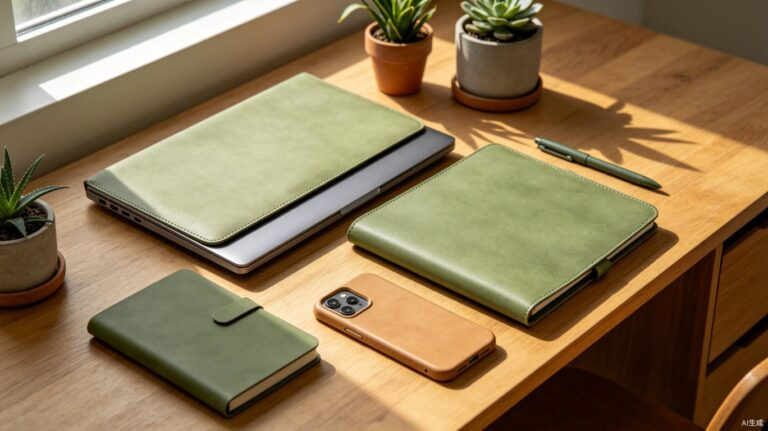
New leather materials come in a growing range of colors and textures — but not all can match the consistency of established production processes.
3 Leather New Technologies to Watch (But Not Specify Yet)
Not every new leather technology is ready for production. These three generate tremendous interest and could reshape the industry — but today, they’re better suited for R&D pilot programs than volume manufacturing:
- Mycelium leather: Grown from mushroom root structures, mycelium materials offer compelling sustainability credentials but currently struggle with consistency, durability, and production scale. Most commercial offerings are still in limited-edition or sample phases.
- Bacterial cellulose leather: Produced by fermenting bacteria, cellulose-based leather is soft and flexible but lacks the abrasion resistance needed for most commercial applications. Watch for breakthroughs in cross-linking technologies that could harden the surface.
- Cultivated (lab-grown) leather: Actual animal leather cells grown in bioreactors. The technology is real and advancing fast, but costs remain 10-50x higher than conventional leather and production volumes are measured in thousands of square centimeters, not millions of meters.
Procurement rule of thumb: If a “new leather” supplier can’t provide third-party abrasion test data, batch-to-batch consistency specs, and a confirmed lead time for a 10,000-meter order, it’s not ready for your production line. Pilot first, specify later.
5-Year TCO Comparison: New Leather Materials
The real test of any leather new material isn’t whether it works in a prototype — it’s how it performs over the product’s full lifecycle. Here’s how the production-ready materials compare on total cost of ownership for a typical commercial furniture application (assuming 5-year project horizon, standard wear patterns):
| Material | Per-Meter Cost | Service Life | 5-Year TCO/m |
|---|---|---|---|
| Silicone leather | $15–22 | 10+ years | $15–22 (no replacement) |
| Water-based PU | $8–12 | 3–5 years | $16–24 (1 replacement + labor) |
| Bio-based PU blend | $9–13 | 3–5 years | $18–26 (1 replacement + labor) |
| Cactus leather | $20–30 | 2–3 years | $40–60 (2 replacements + labor) |
The TCO math is clear: silicone leather has the highest upfront cost but the lowest 5-year cost because it never needs replacing. Budget materials look cheaper on a per-meter basis but become more expensive once you factor in reupholstery labor, downtime, and material waste.

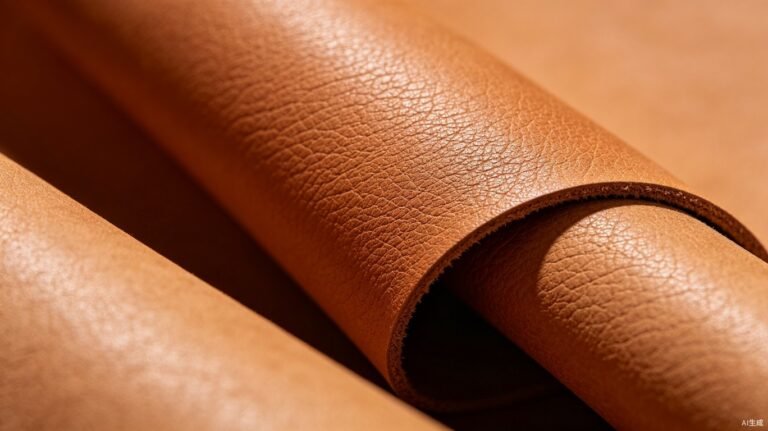
Silicone leather’s soft, flexible texture — one of the reasons it’s gaining traction as a production-ready alternative to traditional leather materials.
Next-generation silicone leather overview — see how the material is advancing in texture, performance, and manufacturing scale.
How to Evaluate a Leather New Material Supplier
The excitement around new leather materials has attracted a wave of new suppliers — and not all of them are ready for B2B volume. When evaluating a supplier of any leather new material, ask these four questions before placing a production order:
- What’s your monthly production capacity? If the answer is vague or measured in thousands of meters (not hundreds of thousands), they may not scale with your demand.
- Can you provide batch-to-batch consistency data? Delta E ≤ 1.0 for color and ±5% for thickness are reasonable benchmarks for commercial-grade materials.
- Which third-party labs have tested your material? SGS, Intertek, and TÜV are the gold standard. In-house test reports aren’t sufficient for production specification.
- What’s your warranty, and what does it cover? A supplier that stands behind their product will offer at least 12 months of warranty against manufacturing defects and performance degradation.
Frequently Asked Questions
What’s the most durable new leather material available today?
Among commercially available new leather materials, silicone leather has the highest verified durability — 200,000+ Martindale abrasion cycles, 1,000+ hours UV resistance, and 10+ year service life. It outperforms water-based PU, bio-based PU blends, and plant-based leathers on nearly every durability metric. The trade-off is a higher per-meter cost, which is typically offset within 3-4 years through avoided replacements.
Are new vegan leather materials actually more sustainable than traditional leather?
It depends on the material and how you measure sustainability. Silicone leather has zero VOC emissions and is 100% recyclable but uses synthetic raw materials. Plant-based leathers use renewable feedstocks but often require PU binders that negate some of the sustainability benefit. Animal leather has a higher carbon and water footprint per unit but is biodegradable. The most sustainable choice depends on which environmental metrics matter most for your application — emissions, water use, recyclability, or biodegradability.
New Isn’t the Same as Ready
The leather new material landscape in 2026 is genuinely exciting. Silicone leather has crossed into mainstream adoption, water-based PU is raising the bar for low-VOC synthetic options, and bio-based blends are making sustainability claims more credible. But for every production-ready innovation, there are three technologies that look great on a trade show floor and fail when you try to order 20,000 meters. The smart procurement strategy isn’t to chase every new material — it’s to identify which ones have the supply chain, test data, and manufacturing scale to actually deliver on their promises, and then pilot them before committing to volume.
About TOPSUN
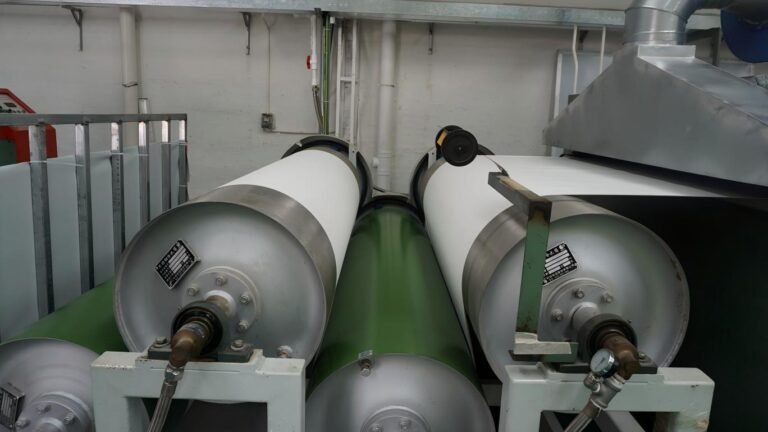
TOPSUN produces next-generation silicone leather — one of the few leather new materials with full commercial scale, third-party test verification, and 500,000+ meters of monthly production capacity.
200,000+ Martindale cycles · Zero VOC emissions · 10+ year service life · 100+ textures · 7-15 day production lead times