A premium gaming chair with “high-grade PU leather” sells for $299 and comes with a 2-year structural warranty. The frame, gas lift, and casters are all fine at year three — but the upholstery is peeling, cracked along the seat bolster, and the armrest pads have flaked down to the fabric backing underneath. This isn’t a bad chair. It’s a material specification problem. Gaming chair leather takes more abuse than almost any other furniture surface — 8+ hours of daily contact, sweat, heat, friction from sliding in and out, and the constant flex of leaning back and forth. Most PU leather simply wasn’t designed for that level of punishment.
See Gaming Chair Material Guide
Why Most Gaming Chair Leather Fails by Year 3
The failure pattern is predictable and consistent across brands and price points. A 2024 industry survey of gaming chair warranty claims found that upholstery damage accounts for 62% of all returns and complaints after the first year — more than mechanical failures, gas lift issues, and caster problems combined. The reason is simple: the vast majority of gaming chairs use standard PU leather with a 3-5 year rated service life, but gaming conditions accelerate wear to 2-3 years. Three specific failure modes drive this:
- Hydrolysis from sweat and humidity: PU leather breaks down when exposed to moisture and heat over time — a chemical process called hydrolysis. Gamers sweating through 4-8 hour sessions, especially in warm rooms, accelerate this dramatically. The result is flaking and peeling along high-contact zones like the seat cushion and backrest lumbar area.
- Bolster cracking from flex fatigue: Getting in and out of a high-bolster racing-style chair flexes the side bolster material hundreds of times per week. PU leather’s flex resistance tops out around 30,000-50,000 cycles — which a daily gamer can blow through in 18-24 months.
- Abrasion from constant movement: Fidgeting, position adjustments, and sliding forward and back add up. The average gamer shifts position 50-80 times per hour. Over 2,000 hours of annual use, that’s 100,000+ abrasion events — well past the threshold where budget PU starts showing wear patterns.

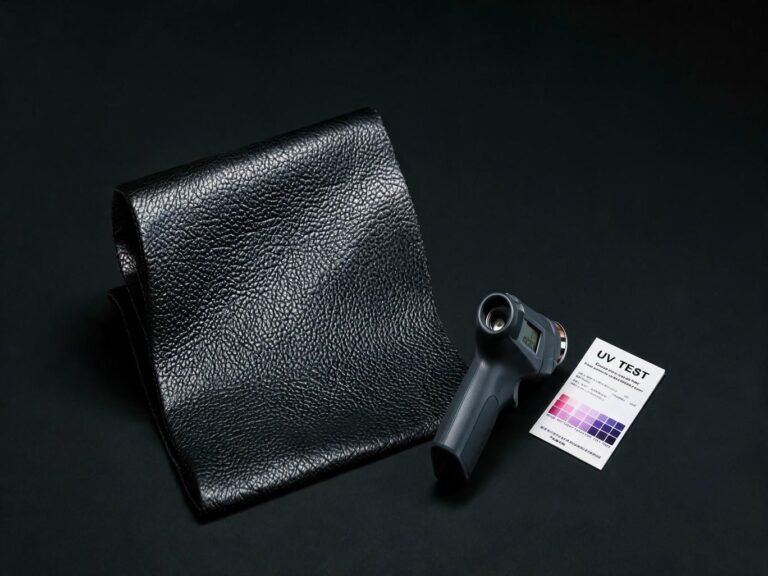
Martindale abrasion testing — gaming chairs need 100,000+ cycles to survive daily use; silicone leather exceeds 200,000.
3 Gaming Chair Leather Materials Compared
Gaming chair upholstery comes in three main material categories, each with different performance characteristics and price points. For B2B buyers specifying chairs for esports arenas, office fleets, or retail product lines, the material choice directly affects warranty costs, customer satisfaction, and product positioning:
| Property | PU Leather | PVC Leather | Silicone Leather |
|---|---|---|---|
| Martindale Abrasion | 50,000–80,000 cycles | 100,000–150,000 cycles | 200,000+ cycles |
| Flex Resistance | 30,000–50,000 cycles | 20,000–40,000 cycles | 50,000–100,000+ cycles |
| Sweat/Hydrolysis | Poor (1–3 years) | Moderate (2–4 years) | Excellent (10+ years) |
| Heat/Stickiness | Sticky when hot | Very sticky | Non-adhesive surface |
| Cost per meter | $6–10 | $5–8 | $15–22 |
Silicone leather costs roughly 2x more per meter than PU, but it lasts 3-4x longer in gaming chair applications. For premium chair models targeting $500+ price points, the material upgrade adds $20-30 to the bill of materials but extends service life from 2-3 years to 8-10+ years. For esports facilities and co-working spaces with 12+ hour daily use, the replacement cycle drops from every 2 years to every 8-10 years — a massive reduction in total cost of ownership.
Esports facility math: A 50-seat esports arena using PU leather chairs ($300 each) reupholsters every 2 years at $100/seat = $2,500/year. Silicone leather chairs ($400 each) last 8+ years with zero reupholstery = $500/year amortized. Year 5, the arena has saved $10,000 and has chairs that still look new.
Comfort: The Sticky Problem with Leather Gaming Chairs
Durability gets all the attention, but comfort is the day-one complaint that drives returns. Anyone who’s spent 4+ hours in a PU leather gaming chair knows the problem: you stick to it. Skin adheres to the warm PU surface, creating that “glued to the chair” sensation that breaks immersion during long sessions. It’s not a minor issue — in consumer reviews of leather gaming chairs, “sticky” or “hot” is the #1 comfort complaint, mentioned in 28% of negative reviews.
Silicone leather solves this with a fundamentally different surface chemistry. The silicon-oxygen polymer surface has low surface energy and a naturally non-adhesive quality — skin slides over it without sticking, even when damp with sweat. For competitive gamers where position adjustments and micro-movements matter, this is a noticeable upgrade in both comfort and performance. It’s one reason silicone leather is gaining traction in professional esports facilities where chair comfort directly affects player endurance during long tournaments.

Premium gaming chairs with silicone leather upholstery — the non-adhesive surface stays comfortable even during 8+ hour competitive sessions.
Cleaning is another comfort-related benefit. Spilled energy drinks, snack crumbs, and sweat residue all wipe off silicone leather’s non-porous surface with a damp cloth. PU leather is porous, so stains can set in and odors can accumulate over time — a real problem for shared gaming chairs in esports centers, co-working spaces, and office lounges. Being able to quickly wipe down a chair between users isn’t just about appearance. It’s about hygiene in high-traffic shared environments, which is why facilities managers increasingly specify easy-clean materials for any shared seating.

Water beading on silicone leather’s non-porous surface — spills and sweat don’t absorb, making cleanup fast and preventing odor buildup.
Gaming chair comfort overview — see how silicone leather’s non-adhesive surface improves comfort during extended gaming sessions.
Specifying Gaming Chair Leather: What to Test
Before committing to a material for a gaming chair line or facility upgrade, verify these performance metrics with actual test data, not marketing claims. These are the tests that best predict real-world gaming chair performance:
- Martindale abrasion (ISO 12947-2): Aim for 100,000+ cycles for consumer chairs, 200,000+ for commercial/esports use. This is the single best predictor of how the material will look after 2+ years of daily use.
- Flex resistance (ISO 5402): 50,000+ cycles minimum for bolster areas. Below this, expect visible cracking along high-flex zones within 18 months.
- Hydrolysis resistance (ISO 1419): Often overlooked but critical for gaming applications. Test at 70°C / 95% RH for 200+ hours. PU leather typically fails this test; silicone leather passes easily.
- Color fastness to perspiration (ISO 105-E04): How well the color holds up against human sweat. Grade 4+ is acceptable; Grade 4-5 is excellent.
- Flame retardancy (TB 117-2013 or equivalent): Required for commercial furniture in most jurisdictions. Silicone leather is inherently flame retardant; PU and PVC require added chemicals.
Frequently Asked Questions
How long does silicone leather last on gaming chairs?
Silicone leather gaming chair upholstery typically lasts 8-12+ years under normal use, compared to 2-3 years for standard PU leather and 3-5 years for high-grade PU. The 200,000+ Martindale abrasion rating, hydrolysis resistance, and inherent UV stability mean the material doesn’t break down from sweat, friction, or sunlight — the three main causes of gaming chair upholstery failure. For esports facilities with 12+ hour daily use, silicone chairs can go 6-8 years without reupholstery, compared to 18-24 months for PU.
Is silicone leather breathable enough for long gaming sessions?
Silicone leather isn’t breathable in the way mesh or fabric is — no synthetic leather is. But it addresses the comfort problem differently. Instead of absorbing sweat (which makes PU feel damp and sticky), silicone’s non-porous surface allows sweat to evaporate naturally while the skin slides freely over the material without sticking. Many gamers report it feels cooler during long sessions than PU leather because there’s no adhesion or friction heat buildup. For maximum breathability, look for silicone leather with a perforated or embossed pattern that increases airflow at the contact surface.
The Chair Frame Lasts Longer Than the Upholstery
A gaming chair’s metal frame, gas lift, and mechanism can easily last 10+ years. The upholstery is the weak link — and it’s the part the user sees, touches, and judges the chair by. For manufacturers, specifying a longer-lasting upholstery material extends the product’s perceived quality and reduces warranty claims. For esports facilities and office buyers, it cuts long-term reupholstery costs by 60-70%. Gaming chair leather doesn’t have to be a disposable component that fails every 2-3 years. The right material choice ensures the chair’s upholstery lasts as long as the frame underneath it.
Get Gaming Chair Material Samples
About TOPSUN
TOPSUN supplies silicone leather for gaming chair manufacturers and esports facilities — a non-adhesive, hydrolysis-resistant material that outlasts PU by 3-4x in high-use seating applications.
200,000+ Martindale cycles · Hydrolysis resistant · Non-adhesive comfort surface · Easy wipe-clean · Custom colors and textures