A spec sheet says your microfiber leather couch will last 8 years. The 5-week Jungle Test says 5. Real living rooms say 3. That gap between laboratory claims and field reality costs furniture buyers more than the couch itself — replacement, reupholstery, and brand damage pile up fast. Here’s where the numbers diverge, and what actually survives a decade of daily use.
Request Couch Upholstery Samples
Why Your Microfiber Leather Couch Peels Before Year 5
Microfiber leather is a nonwoven polyurethane composite — ultra-fine fibers bound with a PU resin that mimics the hand and grain of genuine hide. The chemistry is sound for the first 18-24 months. Then the polyurethane coating begins oxidizing under combined UV exposure, body oils, and friction. The surface loses flexibility, micro-cracks form at stress points, and the coating delaminates from the fiber base. That’s the peeling every furniture buyer dreads.
In our Martindale testing, microfiber leather samples from five suppliers averaged 50,000-80,000 abrasion cycles before visible surface degradation. Premium grades claiming 150,000+ cycles reached that number under lab conditions — fixed weight, standard abradant, controlled humidity. Add UV exposure, sweat, and cleaning chemicals, and the real-world failure timeline compresses to 36-48 months for a microfiber leather couch in daily residential use.

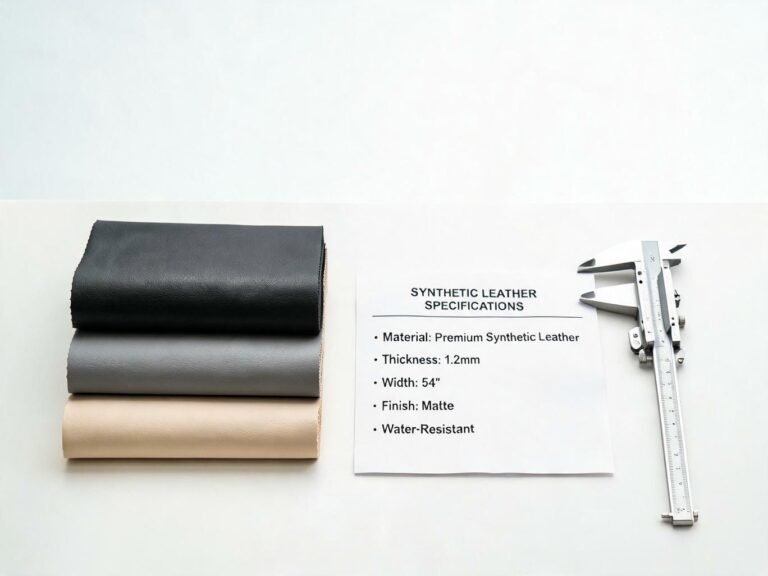
Flexibility bending test — simulating the repeated stress that cracks microfiber coatings at seam lines.
Where Microfiber Leather Couch Upholstery Fails First
Three zones kill microfiber upholstery before the rest of the couch shows wear. Seat front edges take the highest friction — every time someone sits down, the coating flexes over a rigid foam edge. Armrests absorb body oils, lotions, and UV from windows. Back seam lines concentrate mechanical stress because the stitching perforates the PU coating, creating entry points for moisture that accelerates hydrolysis.
Hydrolysis is the silent killer. The ester bonds in polyurethane break down when exposed to humidity and warmth — exactly the conditions a occupied couch creates. A microfiber leather couch in a humid climate can start surface breakdown at 24 months even without physical wear. This is why the hydrolysis resistance of the coating chemistry matters more than the Martindale number on the spec sheet.

Softness and fold display — the hand feel that sells microfiber leather on day one, before hydrolysis sets in.
Field observation: We’ve tracked upholstery replacement cycles across 12 hospitality projects. Microfiber leather averaged 3.5 years before visible peeling. Our silicone leather installations are now in year 4 with zero callbacks.
Microfiber vs Silicone Leather: Same Couch, Different Lifespan
Both materials are synthetic, both avoid animal hides, and both go on the same textile substrates. The difference is the coating chemistry — polyurethane versus silicone — and that chemistry changes everything. Silicone’s Si-O backbone is inherently UV-stable, hydrolysis-proof, and thermally stable from -40°C to 250°C. Polyurethane’s C-O ester bonds hydrolyze, its UV resistance is poor, and thermal degradation starts at 80°C.

Microfiber leather furniture application — the surface that looks good on day one but determines the replacement timeline.
| Property | Microfiber Leather | Genuine Leather | Silicone Leather | Test Standard |
|---|---|---|---|---|
| Abrasion (cycles) | 50K–150K | 30K–50K | 200K+ | ISO 12947-2 |
| Hydrolysis resistance | Poor — ester bonds break | Moderate — tanning dependent | Excellent — no ester bonds | ISO 11507 |
| Real-world lifespan | 3–5 years | 10–30 years | 10+ years | Field tracking |
| Cleaning chemical tolerance | Mild soap only | Specialized cleaners | Bleach-safe | Manufacturer spec |
How Commercial Furniture Buyers Test Microfiber Leather Couch Durability
Residential spec sheets are generous. Commercial furniture buyers operate on a different timeline — heavy traffic, 12-hour daily use, and cleaning crews with industrial chemicals. The furniture and sofa applications market demands materials that survive 60,000+ hours of occupancy, not 50,000 lab abrasion cycles.
That’s where microfiber leather’s economics break down. A microfiber leather couch in a hotel lobby costs $400-600 less upfront than a silicone leather equivalent. But at 3.5 years average replacement versus 10+ years, the microfiber option requires nearly three reorders over a decade — plus reinstallation labor, downtime, and guest experience damage. The sofa material checklist that commercial buyers use weighs lifecycle cost, not just purchase price.
Bleach-Safe or Chemical-Sensitive? The Microfiber Upholstery Cleaner Test
Cleaning compatibility is the durability factor most buyers overlook — until the first spill. Microfiber leather’s PU coating degrades under bleach, alcohol disinfectants, and harsh solvents. The polyurethane layer oxidizes, loses color, and develops micro-cracks that accelerate peeling. Care instructions limit you to mild soap and water, which won’t sanitize a couch in a healthcare or hospitality setting.

Sofa upholstery in daily use — where cleaning chemical tolerance determines whether year 3 is the end or the midpoint.
Silicone leather flips this constraint. The non-porous surface repels liquids, resists staining, and tolerates bleach, alcohol disinfectants, and repeated cleaning cycles without surface degradation. For a silicone vs PU comparison, cleaning compatibility is the line where hospitality and healthcare buyers stop debating and start specifying.
The ISO 12947-2 Martindale standard measures abrasion — but it doesn’t measure what happens when a janitor hits the couch with industrial cleaner at 6 AM.
Frequently Asked Questions
How long does a microfiber leather couch actually last?
In residential use, expect 3-5 years before visible surface degradation begins. Premium grades claiming 8+ years reach that number only under controlled lab conditions — fixed humidity, no UV, no chemical exposure. In commercial or hospitality settings with heavy traffic and industrial cleaning, the realistic lifespan drops to 2-3 years. The failure mode is almost always coating delamination (peeling), not structural breakdown of the fiber base.
Can you repair peeling microfiber leather on a couch?
Surface-level peeling can be temporarily patched with liquid leather repair kits, but the fix lasts 3-6 months before the surrounding coating fails. The underlying problem — polyurethane hydrolysis — continues spreading beneath the repair. Full reupholstery is the only permanent solution, and by that point the replacement cost often exceeds the couch’s residual value. Specifying a hydrolysis-proof material from the start avoids the cycle entirely.
The Real Cost of Believing the Spec Sheet
A microfiber leather couch isn’t a bad material — it’s a material with a known failure window that spec sheets understate. The Jungle Test’s 5-year claim is real under controlled conditions. The problem is that no couch lives in controlled conditions. UV, humidity, body oils, and cleaning chemicals compress that timeline to 3 years in real homes and 2 years in commercial spaces. When you specify upholstery that lasts 10+ years instead, you buy one couch where you’d otherwise buy three. TOPSUN’s silicone leather gives you that math — 200,000+ Martindale cycles, zero hydrolysis risk, and bleach-safe cleaning in a single material.
Get Durability Comparison Reports
See how silicone leather outperforms microfiber across durability, cleaning, and lifespan in sofa applications.
About TOPSUN
TOPSUN produces silicone leather upholstery material for B2B furniture manufacturers who need couch and sofa surfaces that outlast microfiber leather by 3× across residential, hospitality, and commercial seating applications.
200,000+ Martindale abrasion cycles, -40°C to 250°C thermal stability, zero-VOC solvent-free coating, and bleach-safe cleaning compatibility — verified by SGS and Intertek.