When designers specify “leather” for a new product line, they’re choosing between four fundamentally different material families. Genuine leather is made from animal hide preserved through tanning. PVC leather is made from petroleum-based plastic. PU leather is made from polyurethane solvents. And silicone leather is made from silica — the same mineral that makes up 59% of the Earth’s crust. The base material determines everything downstream: texture, durability, environmental footprint, and whether your product passes regulatory compliance. Understanding what each leather is made from isn’t academic — it’s the difference between a product that lasts 3 years and one that lasts 10.
Genuine Leather: Made From Animal Hide and Tanning Chemistry
Genuine leather is made from animal rawhide — typically cattle, but also sheep, goat, or pig. The hide undergoes tanning, a chemical preservation process that prevents decomposition while adding flexibility. Traditional vegetable tanning uses tannins extracted from tree bark and takes months. Chrome tanning, which dominates industrial production, relies on chromium salts and cuts processing time from months to days.
The finished material is essentially preserved collagen fibers — a three-dimensional matrix that gives genuine leather its characteristic breathability, patina development, and tear resistance. Full-grain leather retains the complete hide surface with natural pore patterns. Top-grain leather sands away imperfections for a uniform look. Bonded leather shredders leather scraps and reconstitutes them with PU or latex binders — the lowest grade, and a common source of consumer disappointment.
For B2B specifiers, the key question isn’t just what is genuine leather made from — it’s whether the tanning chemistry meets your regulatory requirements. Chrome-tanned leather can contain hexavalent chromium (CrVI), restricted under REACH Annex XVII. Vegetable-tanned leather avoids this but costs more and varies in color consistency. For a deeper dive into what leather is made of, our existing material guide covers each tanning method in detail.
PVC Leather: Made From Petroleum Plastic and Fabric Backing
PVC leather is made from polyvinyl chloride — a petroleum-based plastic. Manufacturers apply liquid PVC onto a fabric backing (usually polyester or cotton), then heat-cure it into a flexible sheet. Plasticizers make it soft enough to simulate leather’s hand feel. Stabilizers attempt to delay UV degradation. The result is inexpensive, waterproof, and easy to clean. But the chemistry has built-in failure mechanisms.

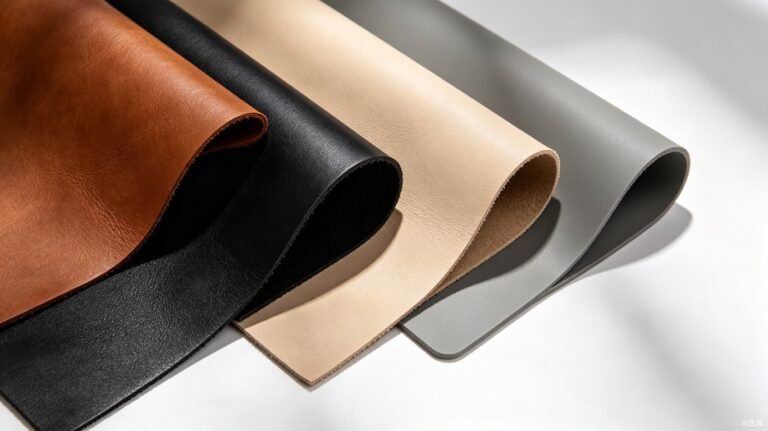
Raw materials lifecycle display — from silica to finished silicone leather, showing the full material chain.
Plasticizers migrate over time. As they leave the PVC matrix, the material hardens, becomes brittle, and cracks. PVC also releases hydrochloric acid when burned — producing toxic smoke that fails flame retardancy standards for public spaces. These limitations explain why PVC leather typically lasts only 2-3 years in commercial applications and why regulators are increasingly restricting phthalate-based plasticizers.
Understanding how is synthetic leather made from PVC helps specifiers predict performance. The plasticizer content directly determines softness — and lifespan. Higher plasticizer content feels softer but degrades faster. This trade-off is inherent to PVC chemistry and cannot be engineered away.
PU Leather: Made From Polyurethane and Solvent Coating
PU leather is made from polyurethane resin applied to a fabric base through either a wet or dry coating process. Wet process PU uses DMF (dimethylformamide) solvent to create a porous structure that mimics genuine leather’s breathability. Dry process PU applies resin directly onto release paper, avoiding DMF but producing a less breathable surface. Both methods coat polyester or nylon fabric with a polymer layer that simulates leather’s texture and appearance.
PU outperforms PVC in breathability and environmental safety — it’s easier to degrade and uses less carbon. But PU’s ester bonds are vulnerable to hydrolysis. Moisture breaks the polymer chain, causing the coating to delaminate from the fabric base. This is why PU leather specified for humid environments typically fails within 3-5 years. When comparing PU leather vs PVC leather materials, PU wins on feel and environmental profile but loses to PVC on pure abrasion resistance at equivalent price points.
Designer’s note: Both PVC and PU require plasticizers or solvents that off-gas over time. If your specification requires low VOC emissions for indoor air quality — healthcare, automotive interiors, or children’s products — neither material passes without additional certification. This is the gap silicone chemistry fills.
Silicone Leather: Made From Silica and Solvent-Free Coating
Silicone leather is made from silicone resin derived from silica — silicon dioxide, the most abundant mineral on Earth. Unlike PU and PVC, which rely on petroleum-derived polymers and solvent-based processing, silicone leather uses a solvent-free dry coating process. The silicone elastomer bonds molecularly to the textile base fabric without adhesives, creating a monolithic structure that doesn’t delaminate.
The silicone leather composition gives it properties that no amount of engineering can add to PU or PVC. Silicone’s siloxane backbone (Si-O-Si) is inherently UV-stable — no plasticizers to evaporate, no ester bonds for hydrolysis to attack. In our testing lab, silicone-coated fabric withstands 200,000+ Martindale abrasion cycles, 1,000+ hours of ASTM G154 UV exposure, and 1,000+ hours of ISO 9227 salt spray without surface degradation. These numbers come directly from our silicone leather introduction page, where the full technical data is available.

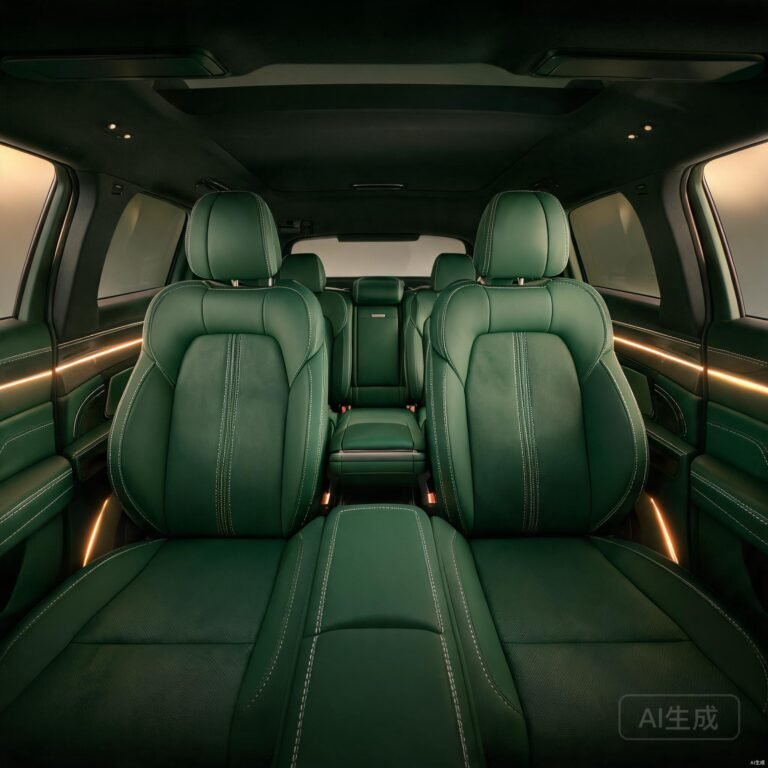
Production process flow — silicone resin coating applied through solvent-free dry process onto textile base.
For designers, the practical advantage is texture and color freedom. Our silicone leather offers 100+ embossed textures — cowhide, pigskin, sheepskin, and custom patterns — with Pantone-matched color accuracy of Delta E ≤ 1.0. Custom embossing rollers are ready in 7-10 days. For a detailed silicone vs PU comparison across all performance metrics, our technical breakdown covers every test standard.
Why the Base Material Determines 10-Year Performance
The leather manufacturing process explained above reveals a simple truth: the base material sets the performance ceiling. No coating thickness, no additive package, and no quality control can overcome the fundamental chemistry of what leather is made from. Here’s how the four material families compare across the metrics that matter for B2B specifications:
| Material | Base Component | Coating Process | VOC Emission | Recyclable |
|---|---|---|---|---|
| Genuine leather | Animal hide (collagen) | Vegetable / chrome tanning | Low (vegetable) / varies (chrome) | Biodegradable (veg-tanned) |
| PVC leather | Petroleum plastic + fabric | Plasticizer-based heat cure | High (phthalates) | No |
| PU leather | Polyurethane + fabric | Solvent-based wet/dry | Moderate (DMF in wet process) | Limited |
| Silicone leather | Silica-derived polymer + fabric | Solvent-free dry coating | Zero | Yes (100%) |
In our experience working with OEM designers across multiple application areas, the material selection conversation almost always converges on the same point: if the product needs to survive 10+ years, meet REACH compliance, and deliver zero VOC emissions, only one base chemistry qualifies.
For projects where eco-friendly credentials are non-negotiable — LEED-certified buildings, baby products, medical devices — the choice narrows further. The base material either supports your compliance story or undermines it.

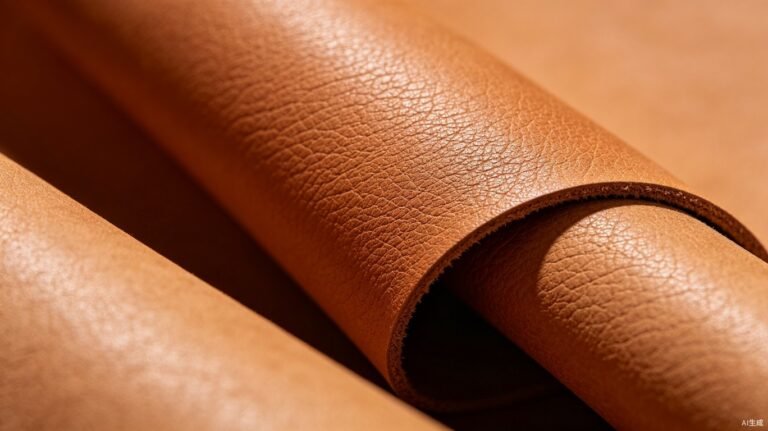
Genuine leather texture — the collagen fiber matrix that gives animal leather its characteristic grain and breathability.
Silicone leather properties introduction — from raw silica to finished material, covering key performance characteristics.
Frequently Asked Questions
Is bonded leather made from real leather?
Bonded leather contains real leather — but only as shredded scraps mixed with polyurethane or latex binders. The leather fiber content typically ranges from 10-90%, with the remainder being synthetic adhesive. While technically “made from” leather, bonded leather has none of genuine leather’s durability or breathability. It delaminates, cracks, and peels within 2-3 years. Most industry professionals don’t consider it genuine leather despite the marketing claims.
Which leather material is safest for direct skin contact?
Silicone leather is the safest option for skin contact applications. It’s certified to ISO 10993-5 biocompatibility standards — the same standard used for medical device materials. Genuine leather can cause chromium sensitivity reactions in some individuals. PVC contains phthalates linked to endocrine disruption per REACH regulations. PU off-gasses residual solvents. Silicone is hypoallergenic, non-toxic, and used in medical-grade applications including surgical instruments and infant products. For our factory production process, every batch is verified for biocompatibility before shipping.
Material Transparency Starts With the Base
When a supplier can’t tell you exactly what their leather is made from, that’s a red flag. The base material — animal hide, petroleum plastic, polyurethane, or silica — determines whether your product will pass REACH, survive UV exposure, maintain texture integrity, and meet indoor air quality standards. Designers who understand material chemistry make sourcing decisions that hold up for a decade. Those who don’t end up specifying materials that fail within warranty.
About TOPSUN
TOPSUN produces silicone leather made from silica-based polymer coatings for B2B designers and specifiers who need material transparency across automotive, furniture, and medical product lines.
Our solvent-free dry coating process delivers zero-VOC materials verified by REACH and ISO 10993 biocompatibility testing, with 100+ texture options and Pantone-matched colors available in 7-10 days.