Choosing a color leather couch for a commercial space is not an aesthetic decision — it is a lifecycle cost decision disguised as one. In hospitality and contract furniture environments, light colors show stains within weeks while dark colors show UV fading within months. A study by the American Leather Chemists Association found that color retention accounts for 40% of the visual failure modes that trigger premature furniture replacement in commercial settings. The wrong color choice can cut a couch’s service life from 7 years to 2. Here is the performance data that should drive your color specification.
The Color Performance Trade-Off: Stains vs. Fade
Every color leather couch faces two enemies in commercial use: particulate staining (from skin oils, food, ink, and environmental dirt) and UV fading (from window light and artificial UV). These two failure modes move in opposite directions depending on color depth. There is no free lunch — but there is a way to choose the right trade-off for your environment:
| Color Group | Stain Visibility | UV Fade Risk | Cleaning Frequency | Replacement Risk |
|---|---|---|---|---|
| White / Cream | Extreme — visible in days | Low (reflects UV) | Daily professional | Stain-driven (1–2 yrs) |
| Light Brown / Beige | High — visible in weeks | Low–Moderate | 2–3× per week | Stain-driven (2–3 yrs) |
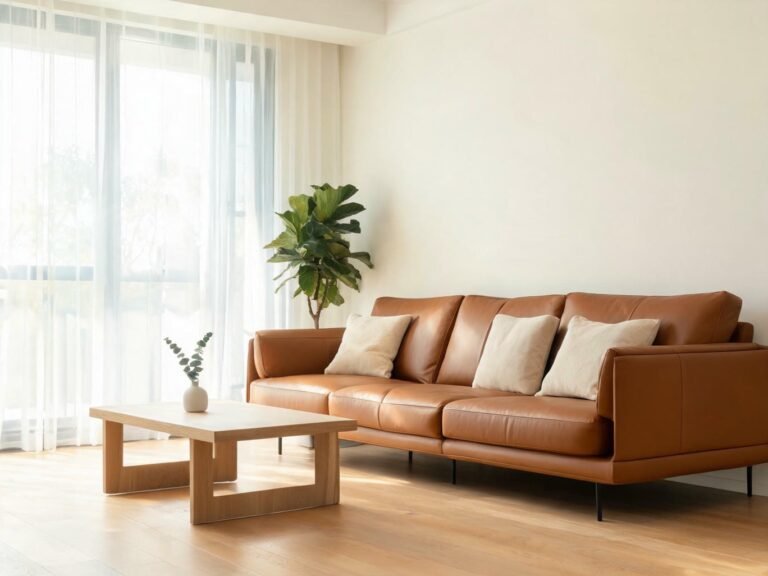
| Medium Brown / Caramel | Moderate | Moderate | Weekly | Balanced (3–4 yrs) |
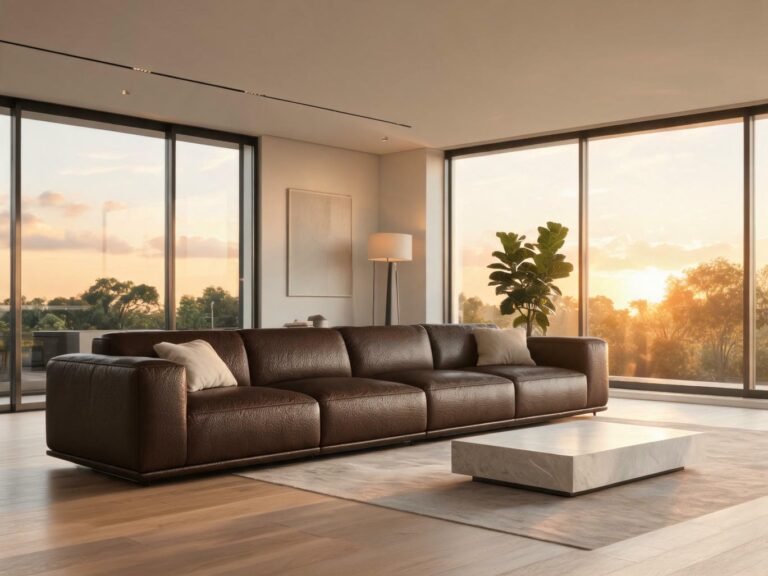
| Dark Brown / Chocolate | Low | High — visible in 6–12 mo | Bi-weekly | Fade-driven (2–3 yrs) |
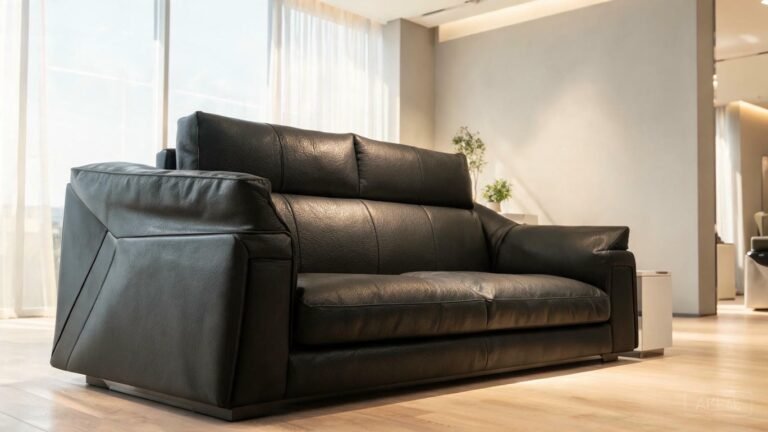
| Black / Charcoal | Very Low | Extreme — visible in 3–6 mo | Bi-weekly | Fade-driven (1–2 yrs) |
The data tells a clear story: the safest middle ground for a commercial color leather couch is medium brown or caramel. It balances stain visibility and fade risk, giving you 3–4 years of acceptable appearance before replacement. But that assumes standard PU or PVC leather. The entire trade-off changes when you switch to silicone leather.

Full color swatch rack — silicone leather is available in unlimited Pantone-matched colors, but performance varies by hue in commercial use.
Why PU Leather Fails the Color Test in Commercial Couches
PU leather fails in commercial couch applications because its surface coating is porous at the microscopic level. Skin oils, food residue, and environmental particulates penetrate the coating and bond with the plasticizer molecules underneath. On light colors, this shows as yellowing and darkening at contact points (armrests, headrests, seat fronts). On dark colors, the same chemical penetration is invisible — but UV radiation breaks down the plasticizer-pigment matrix, causing the surface to lighten and develop a chalky haze.
ISO 105-B06 testing quantifies this. Standard PU leather in medium brown tests at Grade 3 after 200–300 hours of accelerated UV exposure — meaning visible fading that a hotel guest will notice. Dark brown PU drops to Grade 2 after 400 hours. White PU does not fade visibly (there is no pigment to fade) but yellows as the polymer itself oxidizes. The failure modes are different by color, but the outcome is the same: the couch looks worn and must be reupholstered or replaced. For existing analysis, see our color leather sofa guide.
Silicone leather eliminates both failure modes. The non-porous surface repels liquids and oils — so stains cannot penetrate, regardless of color. The UV-stable Si-O polymer backbone does not degrade under UV — so dark colors do not fade, and light colors do not yellow. Every color performs the same: Grade 4–5 on ISO 105-B06 after 1,000+ hours.
Real-World Case: Hotel Lobby Couch Color Performance
A 120-room boutique hotel group specified three couch colors across their properties: cream in the lobby, caramel in the restaurant, and charcoal in the bar. All were upholstered in standard PU leather at approximately $12/meter. After 18 months of operation:
The cream lobby couches showed visible darkening at armrests and seat fronts. Professional cleaning restored appearance temporarily, but the staining recurred within 2–3 days. The couches were reupholstered at 20 months — 5 months ahead of the budgeted replacement cycle. Cost: $4,800 reupholstery + 3 days of lobby downtime.
The caramel restaurant couches held up better on staining but showed moderate fading on the window-facing seats. The color mismatch between sun-exposed and shaded sections of the same couch was visible from across the room. Reupholstery at 24 months. For more on leather couch quality factors, see our leather sofa quality guide.
The charcoal bar couches showed the worst performance. UV fading from the bar’s accent lighting created a visible “halo” pattern on seat backs within 6 months. The faded sections looked gray-white against the original dark charcoal — giving the couches a permanently worn appearance. Reupholstered at 14 months, the shortest cycle of the three.

Commercial leather couch in a hospitality setting — color performance directly impacts the furniture replacement budget and guest perception.
How Silicone Leather Changes the Color Equation
When the same hotel group reupholstered all three spaces with silicone leather in the same colors (cream, caramel, charcoal), the performance profile flattened. The cream couches in the lobby showed no staining at 18 months — skin oils and food residue wiped off with water, because the non-porous silicone surface does not absorb them. The caramel restaurant couches showed zero UV fading at 36 months, because the silicone polymer does not photo-oxidize. The charcoal bar couches maintained full color depth under the same accent lighting that destroyed the PU version.
The practical implication: with silicone leather, you can specify any color leather couch you want without trading off against performance. White stays white. Black stays black. Caramel stays caramel. The material removes color from the risk equation entirely. For our furniture-grade material, see the Classic Collection (0.8–2.0mm) or our furniture application page.
Color Specification Checklist for Commercial Leather Couches
Whether you specify PU or silicone leather, these four metrics should appear on your purchase order for any commercial couch color:
| Spec Item | What to Require | Standard PU Result | Silicone Leather Result |
|---|---|---|---|
| Color fastness to light | ISO 105-B06 Grade 4+ | Grade 3 (200–300 hrs) | Grade 4–5 (1,000+ hrs) |
| Stain resistance | AATCC 127 water + oil repellency | Moderate (absorbs oils) | High (non-porous surface) |
| Cleanability | Bleach-safe, alcohol-compatible | No — degrades coating | Yes — no surface degradation |
| Abrasion resistance | ISO 12947-2 ≥100K cycles | 30K–50K cycles | 200K+ cycles |
Commercial-grade silicone leather sofa: see how color stays true across UV exposure, staining, and 200K+ abrasion cycles.
Frequently Asked Questions
What is the most durable color for a commercial leather couch?
With PU leather, medium brown/caramel is the safest compromise — it balances stain visibility and fade risk. But with silicone leather, color no longer affects durability. The non-porous surface prevents staining on light colors, and the UV-stable polymer prevents fading on dark colors. Any color you specify will perform identically — 10+ year service life with Grade 4–5 color fastness.
Can I specify Pantone-matched colors for commercial couch upholstery?
Yes. TOPSUN matches to Pantone TPG and RAL references with Delta E ≤ 1.0 batch-to-batch accuracy. For commercial couch projects, we recommend requesting A4 swatches in your specified Pantone color, verified by spectrophotometer, before approving production. This ensures the color you specify is the color you receive — and that it will stay that color for the full service life.
Color Is a Performance Variable, Not Just an Aesthetic One
In commercial furniture, the color leather couch you specify is a maintenance and replacement decision, not just a design decision. PU leather forces you to choose between stain risk and fade risk, with no color giving you both. Silicone leather breaks that trade-off entirely — every color, from white to black, delivers 1,000+ hours of UV stability, non-porous stain resistance, bleach-safe cleanability, and 200,000+ abrasion cycles. When color stops being a risk variable, your furniture specification becomes simpler, your maintenance budget becomes predictable, and your brand experience becomes consistent across every property and every product cycle.
About TOPSUN
TOPSUN manufactures color leather couch material for B2B clients in hospitality, commercial office, and residential contract furniture — providing silicone-coated leather that eliminates the color-vs-performance trade-off through non-porous stain resistance and UV-stable color retention.
With ISO 105-B06 Grade 4–5 color fastness across all colors, Delta E ≤ 1.0 Pantone matching, 200,000+ Martindale abrasion cycles, and bleach-safe cleanability, our silicone leather keeps every couch color true for 10+ years in commercial use.