Car seat leather is the single most touched surface in a vehicle. It’s also one of the most stressed. Every time someone gets in and out, they slide across the bolster. Coffee spills on the cushion. UV radiation from the windshield cooks the top surface. Sweat, sunscreen, and hand sanitizer attack the coating. And the seat has to look good doing it — for 10 years and 150,000 miles, minimum.
If you’re an automotive interior engineer, a Tier-1 seat system supplier, or a procurement manager specifying seat materials, you know that “leather for car seats” isn’t one thing. It’s a category that includes genuine leather (several grades), PU leather, PVC, and now silicone leather — each with different performance characteristics, cost points, and OEM approval requirements.
In this guide, we’ll walk through the test standards that define automotive seat leather performance, compare the four main material types on the metrics that actually matter in a car, and explain how electric vehicles are changing the specification game.
Read Our Full Automotive Material Guide
The 7 OEM Test Standards That Define Car Seat Leather Performance
Every OEM has its own set of material specifications, but they all measure roughly the same things. Here are the seven most important test standards for automotive seat leather, what they measure, and typical minimum requirements for premium vehicles.
| Test Standard | What It Measures | Premium OEM Min. | Why It Matters |
|---|---|---|---|
| SAE J2450 / ISO 12947 | Abrasion resistance (Martindale method) | 40,000–60,000 cycles | Bolster wear from entry/exit |
| SAE J2527 / ISO 105-B02 | UV and xenon arc weathering | 1,000 hrs (ΔE ≤ 3.0) | Color fade and cracking from sun |
| SAE J931 / ASTM D2099 | Flex / bend resistance | 50,000 flexes (no crack) | Seat cushion flex from use |
| ISO 105-E04 | Perspiration resistance (color fastness) | Grade 4+ (1–5 scale) | Body sweat and sebum damage |
| FMVSS 302 / ISO 3795 | Flammability (burn rate) | ≤ 100 mm/min (no drips) | Passenger safety in fire |
| VDA 270 / ISO 105-X12 | VOC emissions and odor | Odor grade ≤ 3.0 | Interior air quality / “new car smell” |
| Cold crack (ASTM D2136) | Low-temperature flexibility | −30°C to −40°C (no crack) | Winter performance in cold climates |
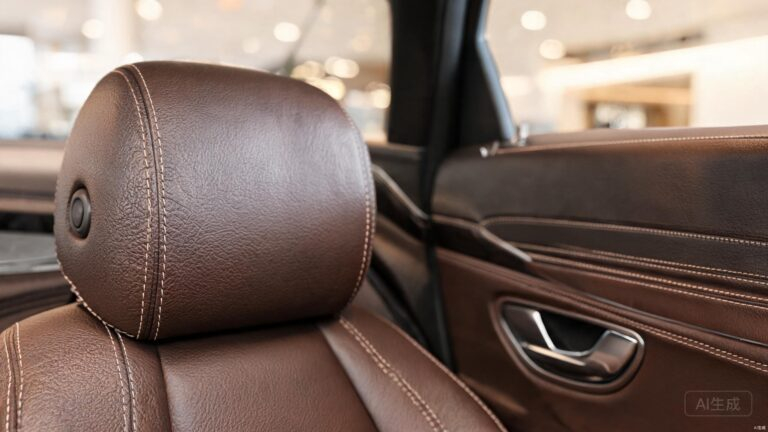
The most common failure point for car seat leather is the side bolster — that raised edge on the side of the seat cushion that you slide across every time you get in and out. It sees both abrasion (from clothing zippers, buttons, and denim) and flex (from the repeated compression and release). If a material passes the abrasion test but fails the flex test — or vice versa — it won’t last in real-world use. The best seat materials are strong on both metrics.

Abrasion testing — car seat bolster wear is the #1 failure mode, so Martindale and Wyzenbeek test results are critical in material selection.
Engineering takeaway: Bolster abrasion and UV resistance are the two tests that most often drive material selection for seat covers. Nail those two, and you’re 80% of the way to a durable seat.
4 Car Seat Leather Types: Side-by-Side Performance Comparison
Now let’s compare the four main material types used for car seat upholstery. We’re comparing on the metrics that matter most for automotive applications, based on typical OEM-grade materials (not consumer-grade aftermarket products).
| Metric | Genuine Leather (Nappa) | PU Leather | PVC Vinyl | Silicone Leather |
|---|---|---|---|---|
| Abrasion (Martindale) | 40K–60K cycles | 30K–50K cycles | 20K–30K cycles | 100K–200K+ cycles |
| UV Resistance | 500–800 hrs | 500–800 hrs | 400–600 hrs | 1,500+ hrs |
| VOC / Odor | Moderate (tanning) | High (plasticizers) | High (plasticizers) | Very Low (zero VOC) |
| Cold Crack | −20°C to −30°C | −20°C to −25°C | −10°C to −15°C | −40°C to −50°C |
| Stain Resistance | Fair (coated) | Good | Very Good | Excellent |
| Breathability | High (natural) | Low | Very Low | Medium (with perforation) |
| Tactile Feel | Premium, warm | Good (can feel plastic) | Plastic-y | Soft, premium dry-touch |
| Cost (per seat) | $150–$350 | $40–$80 | $25–$50 | $80–$150 |
Genuine Nappa leather is still the king of feel and breathability — which is why it’s the standard for luxury trims. But it’s expensive, and it fades faster than synthetic materials under UV exposure. PU leather is the workhorse of the mid-market — better feel than PVC and better durability than genuine leather in some categories — but its VOC emissions are a concern for EVs where interior air quality matters more. PVC is the budget option, used in base trims and commercial vehicles. Silicone leather is the fastest-growing category — it has the best durability, UV resistance, cold crack performance, and lowest VOCs, at a price point between PU and genuine leather.
How Electric Vehicles Are Rewriting the Car Seat Leather Spec
The shift to electric vehicles is having a bigger impact on seat material specification than most people realize. Here’s why EVs are different — and what it means for leather selection.
Interior air quality is critical
In a gas car, the engine noise masks the smell of the interior — literally and figuratively. In an EV, there’s no engine noise and no engine heat, so interior odors are much more noticeable. And because EVs are often marketed as “clean” and “sustainable,” interior air quality has become a selling point. This is bad news for PU and PVC leathers, which off-gas plasticizers and other VOCs. Genuine leather is better but still has tanning residues. Silicone leather, with zero or near-zero VOC emissions, is well-positioned for EV interiors where low odor and clean air are key selling points. Our eco-friendly silicone leather guide covers this in more depth.
Vegan positioning is a factor
Many EV buyers are environmentally conscious, and “vegan interior” is increasingly a selling point — especially for premium EV brands like Tesla, Polestar, and Lucid. Genuine leather is being replaced by synthetic leather options in many EV trims, not just for cost but for brand positioning. This isn’t just about “saving animals” — it’s about the perception that a “sustainable” vehicle shouldn’t have leather interiors, given the environmental impact of cattle farming. For more.
Seat climate systems change the requirements
EVs rely heavily on seat heating and cooling for passenger comfort (because running the HVAC compressor uses battery and reduces range). This means seat materials are subjected to more extreme temperature cycling — hot and cold, on and off — than in traditional cars. Materials with better thermal stability and temperature resistance perform better in these conditions. Silicone leather’s wide temperature range (−50°C to 200°C) and thermal stability make it well-suited for climate-controlled seats.
Weight matters more
Every pound matters in an EV because it directly affects range. Synthetic leather is typically lighter than genuine leather (because you don’t need the full thickness of the hide, and the backing is a lightweight textile). The weight savings are small per vehicle — maybe 2–5 lbs for a full interior — but in an industry where engineers fight for every gram, it adds up.
Explore Automotive Interior Applications

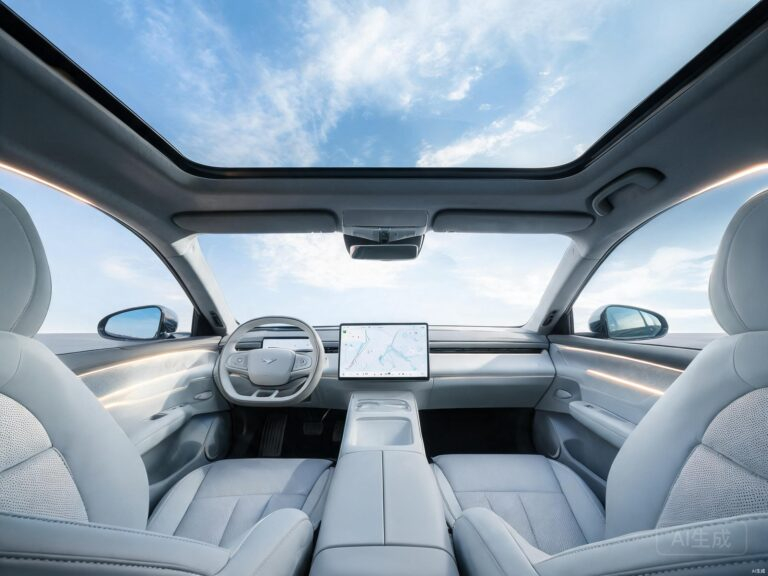
Modern automotive interior — EVs are driving demand for low-VOC, durable, vegan interior materials that match premium brands’ sustainability positioning.
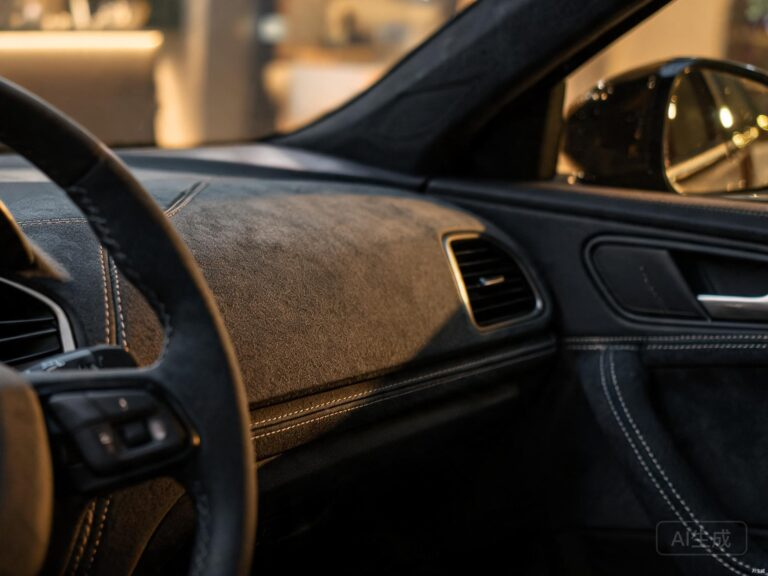
Automotive interior overview — silicone leather’s performance advantages make it increasingly popular for EV seat and interior applications.
Common Car Seat Leather Problems (and How to Spec Around Them)
After decades of testing and field experience, the automotive industry knows exactly how seat leather fails. Here are the five most common failure modes and how to specify materials to prevent them.
- Bolster wear — The #1 complaint. The side bolster gets shiny and then worn through from people sliding in and out. Fix: Specify materials with 50,000+ Martindale cycles and use a bolster pattern that reduces sliding friction. Silicone leather typically exceeds 100,000 cycles.
- Color fading — UV from the windshield causes the seat top surface to fade, especially on the driver’s side. Fix: Specify materials with 1,000+ hours of xenon arc testing (ΔE ≤ 3.0). Use UV inhibitors in the coating. Silicone leather is inherently UV-stable because of the Si-O molecular bonds.
- Coating cracking — The topcoat cracks along the seat cushion creases from repeated flexing. Fix: Specify materials that pass 50,000+ flex cycles at seat operating temperature. The coating needs to be flexible, not brittle. Silicone leather typically passes 500,000+ flexes.
- Stain and chemical damage — Coffee, soda, sunscreen, and hand sanitizer all damage leather seat coatings. Fix: Specify materials with good stain resistance and cleanability. For commercial and rideshare vehicles, this is increasingly important. Silicone leather is chemically inert — most stains wipe off with water.
- Odor and VOCs — “New car smell” is increasingly seen as a problem, not a feature. Fix: Specify low-VOC materials and ask for VDA 270 or equivalent odor test data. Silicone leather has zero VOCs and a neutral odor.
Field data: Warranty claims for seat wear are highest in the first 3 years and are dominated by bolster abrasion and color fading. If you can pass 3 years, you’re likely to pass 10.
Frequently Asked Questions
What’s the difference between Nappa leather and regular leather for car seats?
Nappa leather is a type of full-grain or top-grain leather that’s known for being exceptionally soft and smooth. It’s made from the hide of young sheep or lambs (or sometimes calves), which have a finer grain and fewer natural marks than cowhide. In automotive applications, “Nappa” has become somewhat of a marketing term — many manufacturers use it to describe any soft, high-quality leather, even if it’s technically cowhide. The key characteristics of automotive Nappa leather are: very soft hand, fine grain, uniform appearance, and a thin protective topcoat (or sometimes no topcoat for a more natural feel). It’s typically used in luxury and premium trims because it’s more expensive and requires more care than regular leather. For daily drivers who want durability without sacrificing feel, many manufacturers offer “Nappa-style” top-grain cowhide that has a similar look and feel but better wear resistance.
How long does leather for car seats typically last?
It depends on the material and the use. Genuine leather in a well-cared-for vehicle can last 10–15 years or more, and it actually develops a patina that many people find attractive. The key word is “well-cared-for” — leather needs regular conditioning (every 6–12 months) to prevent drying and cracking, and it should be protected from direct sun as much as possible. PU leather typically lasts 5–8 years before it starts to crack or peel, especially in hot climates where UV exposure is high. PVC vinyl lasts 3–6 years. Silicone leather, with its superior UV and abrasion resistance, is expected to last 10–15+ years — comparable to well-maintained genuine leather but without the maintenance requirement. For commercial vehicles and rideshare (where seats see 2–3x more use), the lifespan of all materials is roughly cut in half, and durability becomes the most important selection factor.
Specifying Car Seat Leather for the Next Decade
Car seat leather isn’t what it used to be. The material that was once purely about luxury and craftsmanship is now a high-performance component subject to rigorous testing standards — and the rise of electric vehicles is raising the bar even higher with new requirements for low VOCs, thermal stability, and vegan positioning.
The good news is that today’s material options are better than ever. Genuine Nappa leather still sets the standard for feel and prestige. PU leather offers a great balance of cost and durability. And silicone leather brings a new level of performance — better abrasion, better UV, better cold crack, better cleanability, and zero VOCs — at a price point that’s increasingly competitive with premium genuine leather.
The best approach? Specify based on your actual use case and test data, not on tradition or marketing. The right material for a luxury sedan might not be the right material for an EV, a commercial fleet, or a rideshare vehicle — and that’s OK.
Request Automotive-Grade Material Samples
About TOPSUN
TOPSUN supplies automotive-grade silicone leather for seat covers, door panels, and interior trim — tested to OEM standards for abrasion, UV resistance, VOC emissions, and cold crack performance.
We work directly with OEMs and Tier-1 suppliers on material development and validation. Sample cards and technical data sheets available on request.