As a furniture designer, I’ve specified hundreds of upholstery fabrics across residential, hospitality, and commercial projects. The furniture upholstery fabric that looks stunning on the mood board is rarely the one that survives Year 3 of commercial use. Designers gravitate toward natural fibers for their hand and drape, but the performance gap between a beautiful cotton chenille and a silicone-coated textile becomes painfully obvious after 30,000 rub cycles. Here’s what I’ve learned about specifying upholstery fabric that doesn’t just photograph well — it performs.
The Design Problem With Most Furniture Upholstery Fabric
Furniture upholstery fabric types comparison often starts and ends with color, texture, and price. That’s the problem. Designers select based on visual criteria, then discover — too late — that the fabric can’t handle the traffic it was placed into. A $40/yard jacquard that pills at 8,000 rubs is more expensive than a $15/yard olefin that holds up to 30,000. The difference isn’t aesthetic — it’s chemical and structural.
Here’s the core issue: woven fabrics fail at the yarn level. When individual fibers break under abrasion, the weave loosens, pills form, and the surface texture degrades. Coated fabrics — leather, faux leather, silicone-coated textiles — fail at the coating level. The surface either cracks, peels, or hardens. Different failure modes mean different specification strategies, and understanding both is what separates a designer whose work lasts from one whose work gets reupholstered every two years.

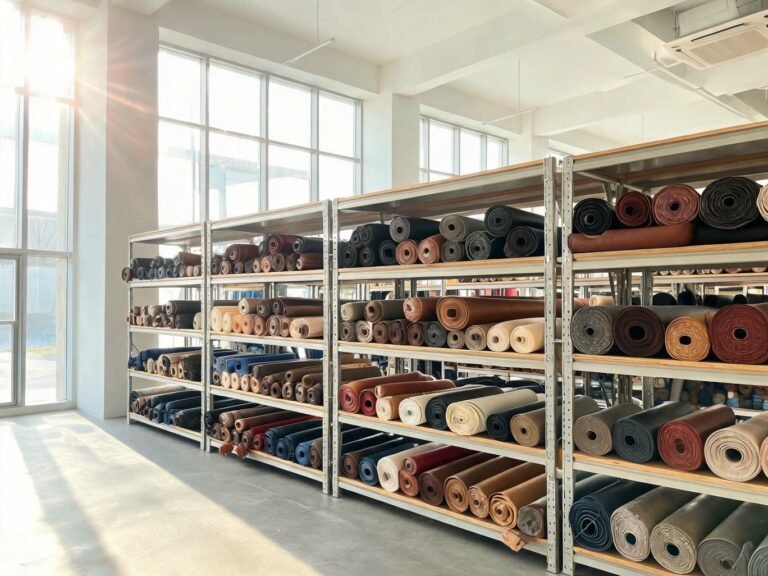
Faux leather furniture upholstery — coated fabrics offer different failure modes and specification strategies than woven textiles
5 Upholstery Fabric Types and Where They Break Down
The upholstery fabric Martindale rating guide tells you how many rubs a material can take before visible wear appears. But the rating alone doesn’t capture the full picture — pilling behavior, color stability, and cleanability all matter. Here’s how five common furniture upholstery fabric types compare in real-world commercial use:

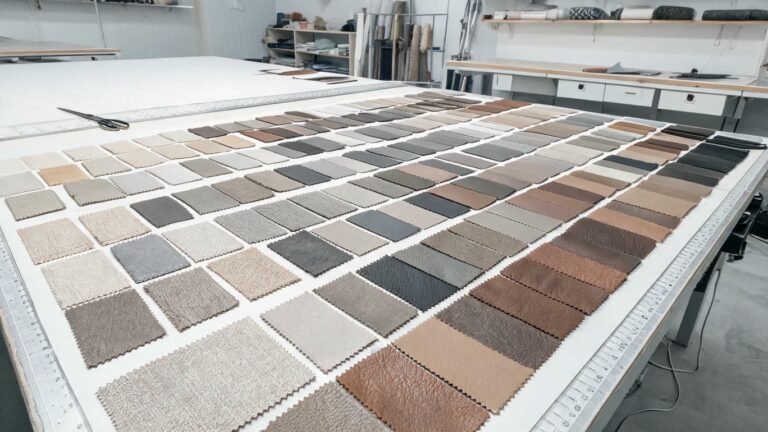
Classic multi-color upholstery swatch rack — material selection starts here, but specification must go beyond color and texture
| Fabric Type | Martindale | Pilling | Light Fastness | Commercial Use |
|---|---|---|---|---|
| Cotton/Linen | 10K–20K | Grade 3 | Class 3 | Low traffic only |
| Polyester | 20K–40K | Grade 4 | Class 4 | Medium traffic |
| Olefin | 30K–50K | Grade 4+ | Class 5 | Outdoor/commercial |
| Faux Leather (PU) | 20K–50K | N/A (coating) | Class 3–4 | Medium traffic |
| Silicone-Coated | 100K–150K+ | N/A (coating) | Class 4.5 | Heavy commercial |
The pattern is clear: woven fibers max out around 50,000 Martindale cycles before visible pilling and texture degradation set in. Coated fabrics don’t pill — but PU coatings crack and peel as the polymer ages. Silicone-coated textiles are the exception on both axes: no pilling (coated surface), no cracking (elastomer chemistry), and a Martindale rating that exceeds 100,000 cycles.
In one project, I specified a high-end polyester chenille for a 120-seat restaurant booth layout. The fabric looked luxurious and rated 35,000 Martindale. Within 14 months, pilling was visible on 60% of the seat surfaces, and UV from the floor-to-ceiling windows had caused uneven fading. We replaced it with a silicone-coated textile in a similar visual, and at the 3-year mark, the surfaces still look new.

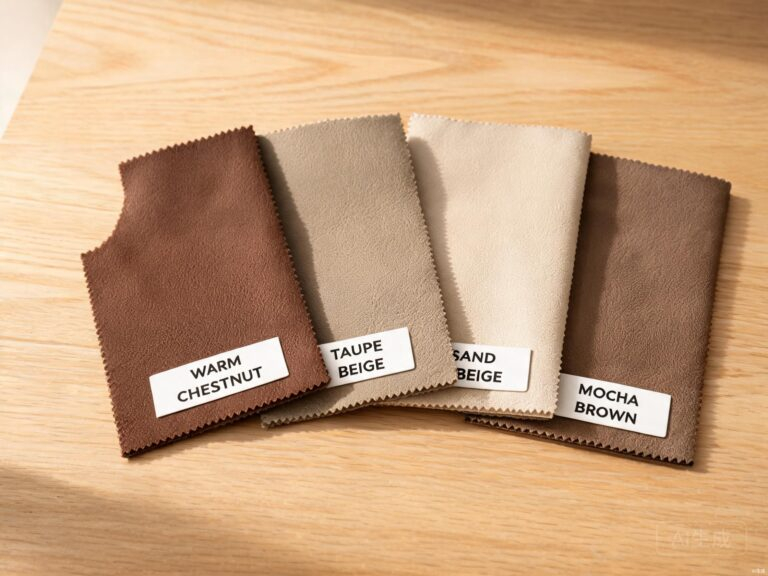
Full-color silicone leather swatch options — coated textiles now offer the color range designers expect from traditional fabrics
Color Fastness: The Hidden Failure Mode
Upholstery fabric color fastness testing is the specification detail most designers skip — and the one that generates the most complaints. A fabric can pass Martindale with flying colors (literally) and still look terrible after 12 months because the dye has shifted, faded, or transferred onto clothing.
Four color fastness standards matter for furniture upholstery:
- Rub fastness (ISO 105-X12): Measures dye transfer under friction. Grade 5 means no transfer. Cotton and linen typically achieve Grade 3–4; silicone-coated textiles achieve Grade 5.
- Light fastness (ISO 105-B06): Measures color change under UV exposure. Class 4+ is acceptable for residential; Class 5 is needed for sun-exposed commercial settings.
- Perspiration fastness (ISO 11641): Critical for seating in gym, healthcare, and high-contact environments. Body salts and oils can shift dyes dramatically.
- Water fastness (ISO 105-E01): Determines whether a spilled glass of water leaves a permanent ring. Many coated fabrics fail here because the water penetrates seams and backing.

Color fastness testing equipment — rub, light, and water fastness data separates fabrics that hold their color from those that fade or bleed
In our testing, silicone-coated textiles achieve Grade 5 across all four categories — the coating’s pigment is locked into the elastomer matrix, not applied as a surface dye. This is why eco-friendly silicone leather maintains color integrity in sunlit hotel lobbies and high-traffic waiting areas where dyed fabrics shift visibly within months. The BIFMA performance standards for contract furniture increasingly reflect this distinction.

Leather fabric sofa in a residential setting — the intersection of design aesthetics and long-term performance specification
Specifying Furniture Upholstery Fabric That Lasts
Furniture upholstery fabric specification for B2B procurement should go beyond color swatches and texture samples. Here’s the specification checklist I now require before approving any material for commercial furniture:
- Martindale or Wyzenbeek rating — with the specific test load. Commercial grade starts at 30,000 Martindale; heavy commercial needs 50,000+.
- Full color fastness grade set — rub (X12), light (B06), perspiration (11641), and water (E01). Any grade below 4 is a red flag for commercial use.
- Pilling resistance grade — Grade 4+ minimum for contract furniture. Woven fabrics below Grade 4 will pill visibly within the first year.
- Flame retardancy certification — BS 5852 (UK), CA TB 117-2013 (US), or EN 1021 (EU) depending on market.
- UV stability data — especially for furniture near windows or in sunlit spaces. Demand specific exposure hours and color change grades.
Our fabric and upholstery specification guide covers these requirements in procurement-ready detail. For broader sourcing context, the furniture fabric sourcing specification guide walks through the supplier evaluation process.
Surface finish and texture options for silicone-coated upholstery textiles — design flexibility without performance compromise
Design for the Year That Comes After Installation
The best furniture upholstery fabric isn’t the one that wins on the mood board. It’s the one that still looks intentional in Year 3 — no pilling, no fading, no cracking, no apology. Natural fibers bring warmth and character but can’t survive commercial traffic. Synthetic wovens improve on durability but sacrifice tactile quality. Silicone-coated textiles close the gap: they deliver the color depth and cleanability that coated surfaces offer, with abrasion performance that woven fabrics can’t match. Specify for the year that comes after installation, not the day of delivery.
About TOPSUN
TOPSUN develops furniture upholstery fabric with silicone-coated surfaces engineered for commercial, hospitality, and residential furniture manufacturers.
Custom texture and color development, Martindale 150K+ verified performance, and REACH-compliant low-VOC formulations — backed by BS 5852 and EN 1021 flame retardancy certifications.