The vegan leather material landscape is fragmenting faster than most procurement teams realize. What used to mean “PU leather on a polyester backing” now spans three distinct categories — petroleum-based, bio-based, and recycled-material-based — each with wildly different performance profiles, environmental claims, and price points. The global market reached approximately USD 4.07 billion in 2026 and is projected to nearly double by 2035, growing at a 7.8% CAGR as brands accelerate their shift away from animal leather.
Here’s the thing: not all vegan leather is created equal. A furniture OEM specifying “vegan leather” for a hotel lobby seating program could end up with anything from a 2-year PU cover to a 15-year silicone-coated material — and the difference isn’t always obvious from a sample swatch. This guide breaks down what sourcing managers actually need to know: the seven major material families, how they perform in real conditions, and which one fits your application.
Request Free Vegan Leather Samples
What Is Vegan Leather Material, Exactly?
At its simplest, vegan leather material is any leather-like fabric that contains no animal products. The term describes an outcome (cruelty-free, leather-like appearance) rather than a specific composition. That’s why the category is so broad: it includes everything from budget PVC upholstery to luxury mycelium-grown bio-leather.
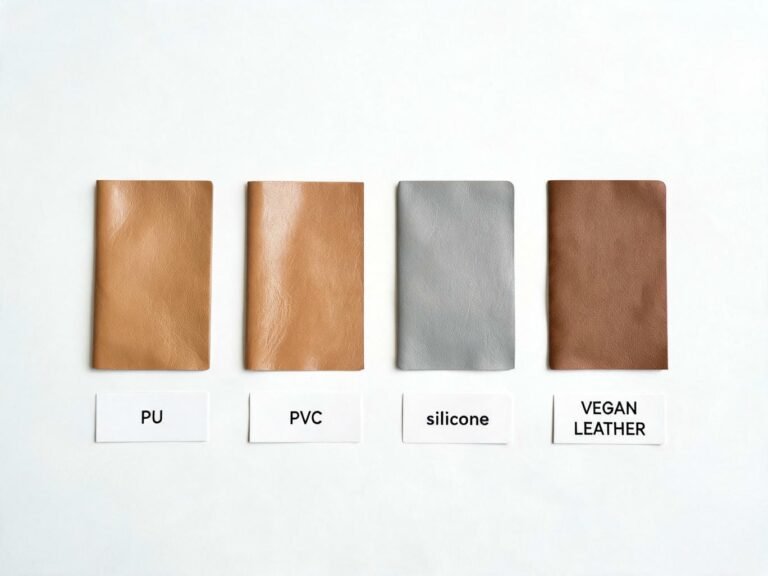
Most vegan leather is manufactured by coating a fabric backing (polyester, cotton, or microfiber) with a surface layer that mimics leather grain. Traditional versions use polyurethane (PU) or polyvinyl chloride (PVC) as the coating. Newer generations use bio-based polymers derived from plants, fungi, or fruit waste, or advanced synthetic formulations like silicone.

Modern vegan leather materials can replicate authentic grain patterns with remarkable precision
The definition matters for sourcing teams because “vegan” on a spec sheet tells you almost nothing about quality, durability, or chemical safety. Two materials both labeled “vegan leather” can differ by a factor of 10 in price and lifespan. The real evaluation starts when you look at what the surface coating is made from and how it’s bonded to the backing.
Key insight: “Vegan” is a claim about what the material isn’t (animal-based), not what it is. Always specify the coating chemistry — PU, silicone, PVC, bio-based — on your BOM.
The 7 Major Types of Vegan Leather on the Market
Vegan leather materials fall into three broad families — petroleum-based, bio-based, and advanced synthetic. Within those families, seven distinct types currently dominate commercial production, each suited to different applications and price points.
| Material Type | Base Chemistry | Typical Lifespan | Best For |
|---|---|---|---|
| PU Leather | Polyurethane (petroleum) | 2-5 years | Fashion accessories, budget upholstery |
| PVC Leather | Polyvinyl chloride | 3-5 years | Budget marine, industrial covers |
| Silicone Leather | Silicone polymer (inorganic) | 10-15+ years | Contract furniture, automotive, medical, marine |
| Cactus Leather | Opuntia cactus + bio-polymer | 3-6 years | Fashion, accessories, luxury branding |
| Mycelium Leather | Fungal mycelium grown on substrate | 2-4 years (emerging) | Luxury fashion, high-end footwear |
| Pineapple / Apple Leather | Fruit/plant fiber + bio-binder | 2-4 years | Small accessories, eyewear, packaging |
| Recycled Polyester Leather | rPET backing + PU coating | 3-6 years | Fast fashion, casual bags, eco-labeled lines |

Vegan leather is available in hundreds of colors and textures across all material families
Bio-based vegan leather has generated the most excitement recently — search interest in bio-leather grew 3,800% in 24 months, according to industry reports. But for high-wear B2B applications like contract furniture, automotive interiors, and marine seating, advanced synthetics like silicone leather still deliver the best balance of durability, cleanability, and environmental performance at commercial scale.
How Vegan Leather Compares to Genuine Leather
The comparison between vegan leather and genuine leather used to be straightforward — real leather looked and felt better and lasted longer. Today, that gap has narrowed dramatically, and in several performance categories, high-end vegan alternatives actually outperform animal hide.
Genuine leather’s biggest advantages remain its natural patina over time and its premium brand association. But it also comes with significant drawbacks for B2B buyers: inconsistent quality from hide to hide, poor resistance to UV and moisture, high maintenance requirements, and supply chain vulnerability driven by animal agriculture and tanning operations.
| Property | Premium Vegan (Silicone) | Genuine Top-Grain Leather | Standard Vegan (PU) |
|---|---|---|---|
| Expected Lifespan | 10-15+ years | 5-10 years | 2-5 years |
| UV / Sunlight Resistance | Excellent (no fading) | Poor (fades, cracks) | Poor (discolors, degrades) |
| Water Resistance | 100% waterproof | Absorbs moisture | Partial (permeates over time) |
| Cleanability | Wipe clean, stain-proof | Requires conditioning | Moderate (stains set in) |
| Consistency | Perfect (uniform rolls) | Variable (natural flaws) | Good |
| Cruelty-Free | Yes | No | Yes |

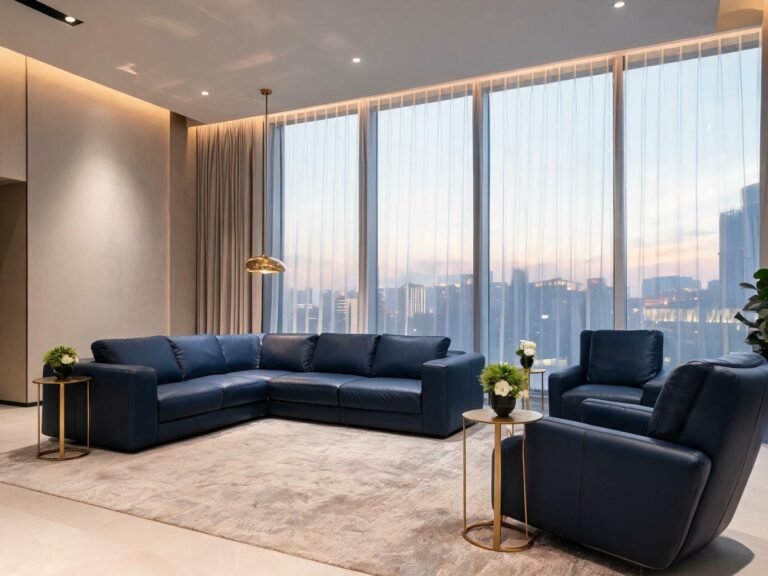
Premium vegan leather upholstery in a commercial hospitality setting
One of our commercial furniture clients switched from top-grain leather to silicone vegan leather for a 500-unit hotel lobby seating program. The initial material cost was comparable, but the projected lifecycle cost dropped by roughly 40% because the silicone covers wouldn’t need the annual conditioning, spot repair, and early replacement that leather typically requires in high-traffic hospitality settings.
5 Performance Metrics That Separate Good from Bad Vegan Leather
When you’re evaluating vegan leather material for a B2B project, don’t stop at the sample swatch. These five metrics predict real-world performance and are non-negotiable for any serious specification:
- Martindale abrasion resistance — The industry standard for wear durability. Budget PU leather typically rates 10,000-30,000 cycles. Premium silicone vegan leather exceeds 200,000 cycles. For contract furniture and automotive, aim for 100,000+.
- Hydrolysis resistance — Measures resistance to degradation from heat and humidity. PU leather commonly fails hydrolysis testing in 3-5 years in warm climates. Silicone leather is inherently hydrolysis-resistant and can last 10+ years even in tropical regions. Learn more about hydrolysis resistance.
- VOC emissions — Critical for indoor air quality, especially in automotive and closed-space applications. PVC and solvent-based PU leathers emit significant volatile organic compounds. Premium options like silicone leather have zero VOC emissions.
- Stain resistance — Especially important for furniture, food service, and healthcare applications. Silicone leather’s non-porous surface means most stains wipe away with just a damp cloth. Porous PU and bio-based materials absorb spills and require more intensive cleaning.
- Backing fabric quality — The surface coating gets all the attention, but the backing determines dimensional stability and tear strength. Look for high-density polyester or cotton backings matched to your application’s stress requirements.

Water beading on premium vegan leather demonstrates non-porous surface performance
In our experience, the single most under-specified metric is hydrolysis resistance. Procurement teams in North America and Europe often focus on abrasion and flame ratings, assuming all materials handle humidity similarly. They don’t. We’ve seen PU leather sofa covers peel and crack within 18 months in coastal Florida and Southeast Asia — environments where silicone leather shows negligible change after five years.
See how eco-certified vegan leather is tested and verified for B2B specifications
Choosing the Right Vegan Leather for Your Industry
The best vegan leather material for your project depends entirely on the application. Here’s how procurement teams typically match material to use case:
| Industry / Application | Recommended Vegan Leather Type | Why |
|---|---|---|
| Contract Furniture / Hospitality | Silicone leather | High abrasion resistance, easy cleaning, consistent color across large orders |
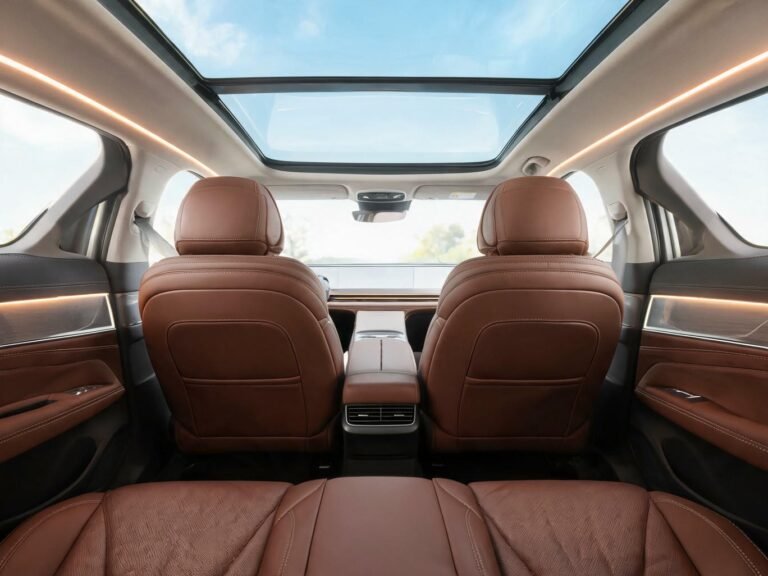
| Automotive Interiors | Silicone leather / TPU synthetic | UV stability, temperature resistance, low VOC, flame retardant options |
| Marine & Outdoor | Silicone leather | 100% waterproof, salt and UV resistant, hydrolysis-proof |
| Medical & Healthcare | Medical-grade silicone leather | Inherent antibacterial, disinfectant-compatible, biocompatible |
| Fashion & Accessories | PU / Bio-based (cactus, apple) | Wide texture options, brand differentiation, eco marketing story |
| 3C Electronics | Silicone leather (thin-gauge) | Soft touch, fingerprint resistance, scratch durability |
For B2B buyers specifying large-volume programs, the most common mistake is choosing a material based on surface appearance and initial price without validating long-term performance. Request accelerated aging test data — UV exposure, hydrolysis, and flex cycling — before committing to a production order. A material that costs 20% more upfront but lasts 3x longer almost always wins on total cost of ownership.
Explore Vegan Leather Applications
What to Do Next
The vegan leather material category will keep expanding as bio-fabrication and advanced polymer research accelerate. But for procurement teams with real products to ship today, the decision framework is clear: start with your performance requirements (abrasion, UV, cleanability, temperature range), then filter by sustainability claims, then compare total cost of ownership over the product’s expected lifetime.
If you’re evaluating vegan leather for a furniture, automotive, marine, or medical project, silicone leather is worth putting on your shortlist. It’s one of the few vegan leather materials that has been proven at commercial scale across multiple high-wear industries, with verified test data to back up both its performance and environmental claims.
Get a Custom Vegan Leather Quote
About TOPSUN
TOPSUN manufactures premium silicone vegan leather material for contract furniture, automotive interiors, marine upholstery, and medical equipment applications. Serving clients in 30+ countries from our advanced production facility, we specialize in high-performance, eco-certified synthetic leather that outlasts traditional alternatives.
ISO 10993 biocompatibility certified, REACH and PAHs compliant, zero VOC emissions, and Martindale abrasion resistance of 200,000+ cycles. Custom colors, textures, and thicknesses available for OEM/ODM projects.