“Heat transfer leather” means something very specific on a factory floor — and something entirely different on a craft blog. For procurement teams, it refers to the thermal lamination process that bonds a polymer coating to a textile backing using controlled heat and pressure, eliminating solvent-based adhesives entirely. This single manufacturing decision determines whether your upholstery lasts 3 years or 15, whether it off-gasses VOCs in a hot car cabin, and whether it survives thermal cycling from -30°C winters to 80°C dashboard surfaces.
The problem is that most B2B spec sheets bury heat transfer performance data six layers deep — or omit it entirely. A buyer sourcing automotive interior leather might see “PU coated” on the BOM without knowing whether that coating was applied via solvent casting (emitting DMF during production) or via thermal lamination (zero solvent emission). This guide breaks down what heat transfer leather actually means, how the process works, how different coating chemistries compare under thermal stress, and what specifications you need to verify before placing a bulk order.
Request Heat Transfer Leather Samples
What Is Heat Transfer Leather?
Heat transfer leather is synthetic leather produced through a dry-process manufacturing method in which a polymer coating — typically silicone, polyurethane (PU), or polyvinyl chloride (PVC) — is first cast onto a release carrier, partially cured, and then transferred onto a fabric substrate using heated rollers under controlled pressure. No solvents are used as bonding agents. The heat and pressure activate the polymer’s adhesive properties, creating a chemical-mechanical bond between coating and backing.
This is fundamentally different from the traditional “wet process” — solvent-based coating — where a liquid polymer dissolved in DMF (dimethylformamide) or MEK (methyl ethyl ketone) is spread directly onto the fabric and then evaporated off in long drying ovens. The wet process leaves residual solvents in the material, requires expensive emission control systems, and produces leather that can continue off-gassing VOCs for months after manufacture.
The heat transfer process, by contrast, creates a cleaner bond. The polymer is pre-cured on the release paper, meaning the volatile components have already been driven off before the material ever touches the fabric backing. When the heated rollers press the pre-cured coating onto the substrate, what happens is a thermal re-activation of the polymer surface — not a chemical reaction with solvents. The result is a material with lower VOC content, more uniform coating thickness, and stronger peel strength.
Key distinction: “Heat transfer leather” in B2B manufacturing refers to the thermal lamination process. In consumer/DIY contexts, it may refer to heat transfer printing (applying designs onto leather via heat press). This guide covers the manufacturing process — the one that determines material performance, not surface decoration.
The Heat Transfer Manufacturing Process Explained
The heat transfer lamination process for synthetic leather follows five distinct stages. Understanding each stage helps procurement teams identify where quality variations originate and what factory audit questions to ask.
Stage 1 — Release carrier preparation: A textured release paper or film is fed onto the production line. The texture on this carrier determines the final surface grain of the leather — lychee, pebble, smooth, or custom embossed patterns. Release paper quality directly affects pattern consistency across production runs.
Stage 2 — Coating application: The liquid polymer (silicone, PU, or PVC) is knife-coated or roll-coated onto the release carrier. For silicone leather, this step uses a platinum-catalyzed addition-cure silicone system — no peroxide byproducts, no post-cure volatile residues. Coating thickness is controlled to ±0.05 mm tolerance, typically ranging from 0.2 mm to 0.8 mm depending on the target application.

Precision coating rollers apply the polymer layer to the release carrier before thermal lamination
Stage 3 — Pre-curing: The coated carrier passes through a multi-zone drying oven. For silicone systems, temperatures range from 120°C to 180°C across progressive zones. The goal is to achieve a “B-stage” cure — the polymer is solid enough to handle but still has surface reactivity for bonding. Over-cure at this stage kills adhesion; under-cure causes coating transfer defects.
Stage 4 — Thermal lamination: This is the heat transfer step. The pre-cured coating on the release carrier meets the fabric backing (polyester knit, woven, or nonwoven) between heated nip rollers at 140-170°C and 3-5 bar line pressure. The heat re-activates the polymer’s bonding surface, and the pressure creates intimate contact between coating and fabric. A supplementary silicone adhesive layer may be applied between the pre-cured surface and the fabric to enhance peel strength for demanding applications.
Stage 5 — Final cure and release: The laminated material passes through a final curing oven to fully crosslink the polymer matrix. After cooling, the release carrier is stripped away, leaving the finished leather surface. The material is then inspected, rewound, and slit to order widths. For a deeper look at the complete production flow, our factory production process page provides a visual walkthrough.

Multi-zone drying ovens control pre-cure and final cure temperatures to ±2°C precision
Thermal Performance: Silicone vs PU vs PVC Leather
The coating chemistry determines how the finished leather performs under thermal stress. These differences are not theoretical — they directly affect warranty claims, replacement cycles, and end-user safety in applications from automotive interiors to contract furniture.
| Thermal Property | Silicone Leather | PU Leather | PVC Leather |
|---|---|---|---|
| Max service temp. | 200-250°C | 80-100°C | 60-80°C |
| Heat aging (1000h @ 150°C) | No visible change | Yellowing, embrittlement | Plasticizer migration, shrinkage |
| VOC at 80°C | Near zero | Moderate (DMF residue) | High (phthalate off-gas) |
| Low-temp flex (-30°C) | 200,000 cycles, no crack | Cracking at 5,000 cycles | Severe cracking at 1,000 cycles |
| UV + heat stability | 1,500h QUV, no degradation | 500h, visible fading | 300h, discoloration |
| Flame retardancy | Inherently self-extinguishing | Requires additives | Requires additives, releases HCl |
The data tells a clear story. Silicone’s inorganic backbone (Si-O-Si) is thermally stable to over 250°C before any structural degradation begins, while PU’s organic C-C bonds start breaking down around 100°C. In practical terms, a PU leather dashboard surface exposed to summer sun in Phoenix can reach 95°C surface temperature — right at the threshold where the coating begins to soften and emit residual solvent vapors. A silicone leather surface in identical conditions shows zero thermal degradation.
For buyers evaluating the silicone vs PU comparison for heat-sensitive applications, the thermal stability gap translates directly to warranty duration. Silicone leather warranties typically run 8-10 years; PU leather warranties in identical applications rarely exceed 3 years.

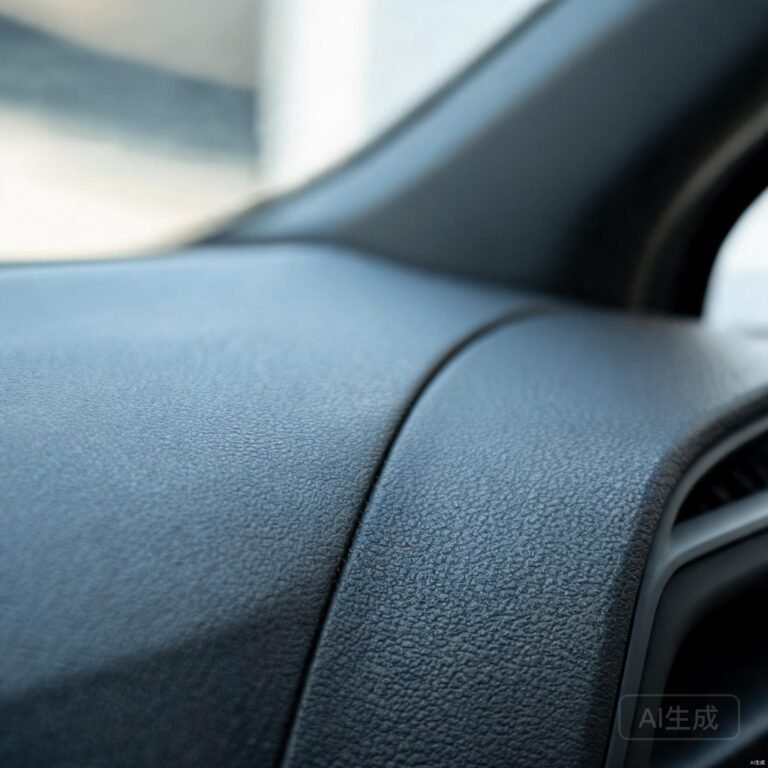
Silicone heat transfer leather maintains structural integrity in high-temperature automotive cabin environments
Testing Standards for Heat Transfer Leather
Reputable heat transfer leather manufacturers provide test data against recognized international standards. If a supplier cannot produce certificates for the following tests, treat their thermal performance claims as marketing, not engineering data.
UV stability (ASTM D329-05, QUV): The material is exposed to alternating UV light and condensation cycles for up to 1,500 hours. Silicone leather passes with no visible degradation, no color shift above Class 4.5 on ISO 105-B06, and no surface cracking. This test simulates years of sunlight exposure coupled with thermal cycling.
Salt spray resistance (ASTM B117): 1,000 hours of salt fog exposure tests the coating’s resistance to corrosive environments — critical for marine and automotive applications where road salt or sea spray contacts the leather surface. Silicone leather shows no coating delamination or substrate penetration after the full test duration.
Low-temperature flex (ISO 1764): The material is flexed repeatedly at -30°C to simulate winter service conditions. Premium silicone leather survives 200,000 flex cycles at -30°C without any crack formation. PU leather typically begins cracking before 10,000 cycles at the same temperature. Full technical data sheets should include these test results with third-party lab certification.
Flame retardancy: Heat transfer leather for contract furniture, automotive, and aviation must meet specific fire standards. Silicone leather achieves BS5852 (UK furniture fire safety, crib 5), DIN EN 1021 Parts I & II (European upholstered furniture), CAL TB 117-2013 (California), and 16 CFR 1610 (US textile flammability) — all inherently, without added flame retardant chemicals that can leach out over time.
Where Heat Transfer Leather Matters Most
Not every application demands heat-transfer-grade thermal performance. But in these four sectors, the thermal stability of the leather coating is a non-negotiable specification:
Automotive interiors: Dashboard surfaces can reach 95°C in direct sun. Door panels and seat bolsters experience rapid thermal cycling from cold-start to full sun exposure. Heat transfer silicone leather maintains surface integrity and emits zero VOCs under these conditions — a regulatory requirement for OEM cabin air quality standards.
Commercial contract furniture: Hotel lobbies, restaurant booths, and cinema seating near heating vents or in sun-exposed atrium spaces need materials that won’t soften, stick, or crack under sustained warm conditions. The heat transfer manufacturing process produces a more uniform coating that resists these failure modes better than solvent-cast alternatives.
Marine and outdoor: Yacht decks and outdoor furniture in tropical climates combine UV exposure with surface temperatures exceeding 70°C. Only silicone-based heat transfer leather survives this combination without plasticizer migration (PVC) or hydrolytic breakdown (PU). For marine-grade applications, the material’s hydrolysis resistance is equally critical.
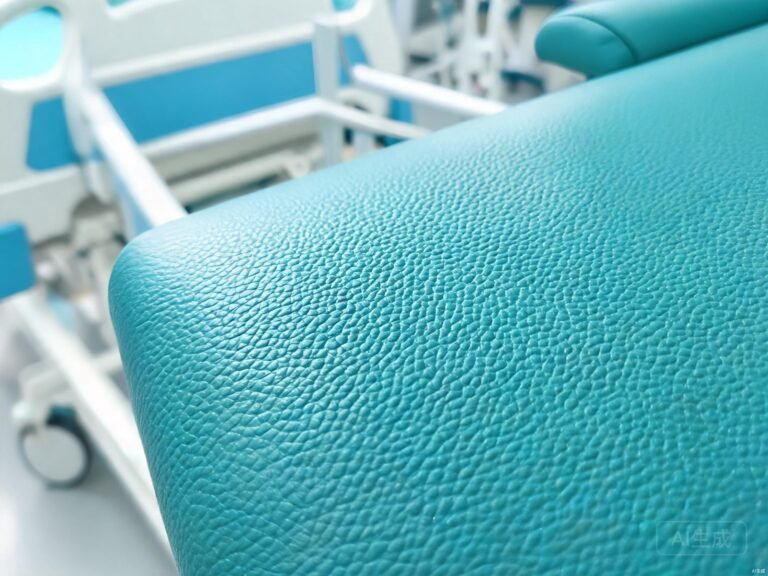
Medical and healthcare: Examination tables and treatment chairs that undergo autoclave-adjacent cleaning or frequent chemical wipe-down need coatings that tolerate thermal disinfection cycles. Silicone’s 250°C thermal ceiling and chemical inertness make it the only synthetic leather suitable for these environments without coating degradation.

Heated calender rollers control the thermal lamination bond between coating and substrate
Sourcing Checklist: 7 Specs to Verify Before Ordering
When evaluating heat transfer leather suppliers, request documentation for each of these seven specifications. If the supplier cannot provide test certificates for any item, flag it as a sourcing risk.
1. Maximum continuous service temperature. This should be stated as a number (e.g., 200°C for silicone, 80°C for PU), not a qualitative “high temperature resistant.” Ask for the test method used to determine it.
2. Heat aging test results. Request data from ASTM D573 or equivalent — the material should be tested at a minimum of 1000 hours at 150°C. Look for tensile strength retention percentage after aging. Silicone retains >90%; PU typically drops below 60%.
3. Peel strength after thermal cycling. The coating-to-substrate bond must survive repeated temperature swings. Ask for peel strength data after 50 cycles of -20°C to +80°C. Acceptable threshold: ≥3.0 N/cm with no delamination.
4. VOC emission data at elevated temperature. Request a VOC test report (VDA 278 or ISO 12219) conducted at 80°C cabin simulation temperature. Silicone leather should show TVOC below 50 μg/m³ — an order of magnitude below typical PU leather values.
5. Flame retardancy certifications. Verify that the flame test certificates match your target market’s regulatory requirements. A material certified to CAL TB 117-2013 is not automatically certified to BS5852 crib 5 — and the difference matters for contract furniture compliance.
6. Color fastness after combined UV + heat exposure. Request ISO 105-B06 test results showing color fastness rating ≥ Class 4 after 1,500 QUV hours. Materials that fade or yellow under combined UV and heat will fail warranty claims in sun-exposed applications.
7. Abrasion resistance specification. Heat exposure can embrittle coatings over time, reducing abrasion performance. Verify Martindale abrasion data (ISO 5470) — silicone leather should exceed 150,000 cycles. Our silicone leather abrasion test guide explains how to interpret these numbers.
Request Thermal Performance Test Reports
About TOPSUN Silicone Leather
TOPSUN is a specialized manufacturer of silicone synthetic leather, producing heat transfer leather through a solvent-free dry process at a production facility equipped with multi-zone precision coating lines, automated calendering systems, and in-house physical testing laboratories. Every production batch is tested for Martindale abrasion (150,000+ cycles), UV stability (ASTM D329, 1,500 hours), hydrolysis resistance (14 weeks), and low-temperature flex (200,000 cycles at -30°C) before shipment release.
Our silicone leather is certified to ISO 10993-5 (cytotoxicity, Level 1), ISO 10993-10 (skin sensitization, Level 0), and meets flame retardancy standards including BS5852, DIN EN 1021, CAL TB 117-2013, and 16 CFR 1610. The material is used across automotive interiors, contract furniture, medical devices, marine upholstery, and consumer electronics — serving OEM customers who require material performance documentation, not just product samples.
We support full custom development — color matching, texture design, substrate selection, and thickness specification — with low minimum order quantities for pilot production runs. To learn more about the material technology, visit our silicone leather introduction page.
Frequently Asked Questions
What temperature can silicone heat transfer leather withstand?
Silicone leather manufactured via the heat transfer process has a continuous service temperature of 200-250°C. It shows no visible change after 1,000 hours of heat aging at 150°C (ASTM D573). In automotive applications, this means the material will not soften, off-gas, or degrade even on dashboard surfaces reaching 95°C in direct summer sun.
How does heat transfer leather differ from solvent-coated leather?
Heat transfer leather uses thermal lamination to bond a pre-cured polymer coating to the fabric backing — no solvents are used in the bonding process. Solvent-coated leather (traditional wet process) dissolves the polymer in DMF or MEK, applies the mixture to fabric, and evaporates the solvent in drying ovens. Heat transfer leather has lower VOC content, more uniform coating thickness, and stronger peel strength because the pre-cure stage creates a denser, more consistent coating layer.
Is heat transfer leather suitable for automotive dashboards?
Yes — specifically silicone-based heat transfer leather. Dashboard surfaces are the most thermally demanding interior application, with surface temperatures reaching 80-95°C in hot climates. Silicone leather’s 200°C thermal ceiling, zero VOC emission at operating temperature, and 1,500-hour UV stability make it the only synthetic leather that meets OEM cabin air quality and durability requirements for dashboard applications without additional thermal barriers.
What certifications should I request from a heat transfer leather supplier?
At minimum: ASTM D329 (UV stability, 1,500 hours), ASTM B117 (salt spray, 1,000 hours), ISO 1764 (low-temp flex, -30°C), Martindale abrasion (150,000+ cycles), and flame retardancy certificates matching your target market (BS5852, DIN EN 1021, CAL TB 117, or 16 CFR 1610). For automotive applications, also request VDA 278 VOC data at cabin temperature. For medical applications, request ISO 10993-5 and ISO 10993-10 biocompatibility certificates.