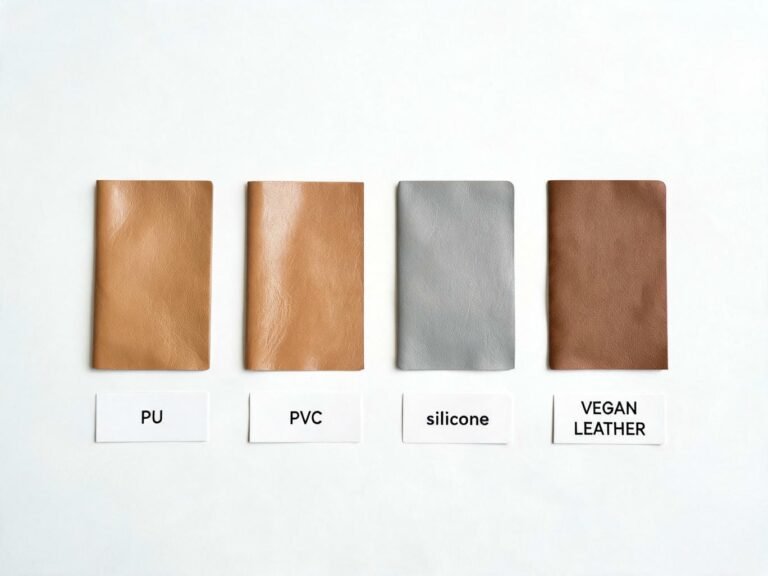
“Fake leather” is one of the most misleading terms in the materials business. It lumps together at least five distinct quality tiers — from thin PVC film on a paper backing to high-performance silicone-coated microfiber — under a single dismissive label. For procurement teams, that’s a problem: a product specified as “fake leather upholstery” could arrive as a 2-year disposable cover or a 15-year commercial-grade material, and the difference might not show up until well after installation.
The global faux leather market reached approximately USD 32.6 billion in 2026 and continues to grow at a 6.2% CAGR, driven by furniture, automotive, and fashion sectors shifting away from animal hide — but “growth” doesn’t equal “uniform quality.” The gap between the best and worst fake leather on the market is wider than most buyers realize .
This guide cuts through the terminology confusion. You’ll learn the five quality tiers of fake leather, seven practical tests for identifying it, and the specification details that actually predict real-world performance for B2B applications.
Request Fake Leather Sample Swatches
What Exactly Is Fake Leather?
Fake leather — also called faux leather, synthetic leather, artificial leather, or leatherette — is any manufactured material designed to imitate the appearance and sometimes the feel of genuine animal leather. The term describes a functional goal (look like leather) rather than a specific chemistry or quality level, which is why products labeled “fake leather” vary so dramatically.
Nearly all fake leather shares a basic two-part structure: a surface coating that provides the leather-like appearance, and a backing fabric that gives it dimensional strength and tear resistance. The coating chemistry and the backing quality are the two variables that determine 90% of a fake leather’s performance, lifespan, and price.

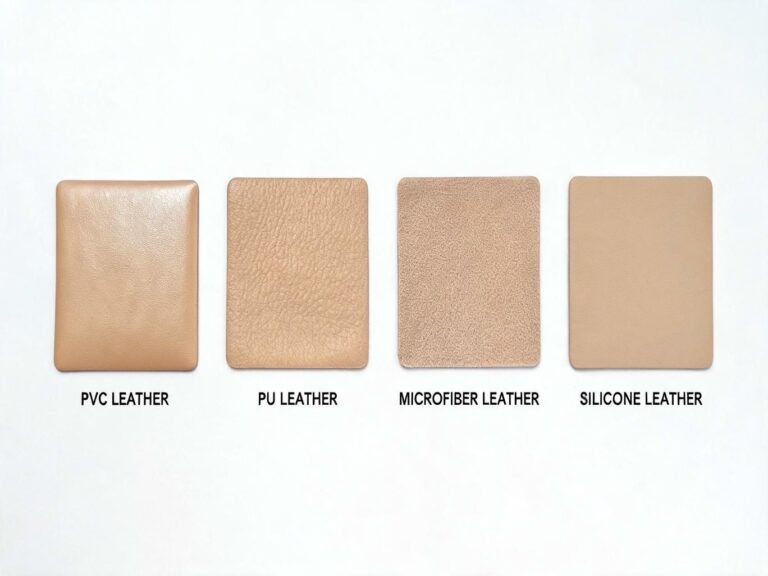
Modern fake leather can replicate grain patterns with precision — visual inspection alone is rarely enough to identify quality
It’s worth noting that “fake leather” is sometimes used pejoratively, implying something inferior or deceptive. In professional procurement contexts, terms like “synthetic leather,” “coated fabric,” or the specific chemistry name (PU, PVC, silicone) are more precise and neutral. Whatever you call it, the real question isn’t “is it real?” — it’s “does it meet the performance requirements for this application?”
Key insight: “Fake leather” tells you what something imitates, not what it’s made of. Always specify the coating chemistry (PU, PVC, silicone, microfiber) and key performance metrics on your RFQ — not just “faux leather.”
The 5 Quality Tiers of Fake Leather on the Market
Fake leather products span a huge quality range. Understanding these five tiers helps procurement teams set realistic expectations and avoid comparing apples to oranges when evaluating quotes.
| Tier | Typical Construction | Lifespan | Price Range (per yard) | Common Uses |
|---|---|---|---|---|
| Tier 1: Economy | Thin PVC coating, knit backing | 1-2 years | $1 – $3 | Displays, packaging, seasonal products |
| Tier 2: Standard | PU coating, polyester backing | 2-4 years | $3 – $7 | Budget furniture, fast fashion, accessories |
| Tier 3: Commercial | Thick PU / PVC blend, woven backing | 4-7 years | $7 – $14 | Restaurant seating, office furniture, auto entry-level |
| Tier 4: Premium | Microfiber backing, high-performance PU | 7-10 years | $14 – $25 | High-end automotive, contract furniture, marine |
| Tier 5: Ultra-High Performance | Silicone coating, microfiber backing | 10-15+ years | $25 – $50+ | Healthcare, hospitality, luxury marine, extreme environments |

Fake leather is available across five quality tiers — appearance can be deceiving without test data
A common sourcing mistake: requesting quotes for “fake leather” and then choosing the lowest price without verifying which tier you’re comparing. A Tier 2 PU leather at $4/yard isn’t a “deal” compared to a Tier 5 silicone leather at $30/yard if your application requires 10+ years of service life. Always specify performance requirements first, then compare quotes from suppliers who can meet those requirements.
Martindale abrasion resistance is the quickest way to estimate quality tier. Budget PU leather typically rates 10,000-30,000 cycles, commercial PU reaches 50,000-80,000 cycles, and premium microfiber and silicone fake leathers exceed 200,000 cycles .
How to Tell Fake Leather From Real Leather: 7 Identification Methods
With today’s manufacturing technology, the best fake leathers can fool the untrained eye on visual inspection alone. But several reliable methods still work for distinguishing fake from real leather. Here are seven tests, ordered from easiest (just look) to most definitive (lab analysis).
1. Check the Label and Edges
Real leather products usually carry specific labeling — “genuine leather,” “full-grain,” “top-grain,” or the leather mark logo. Fake leather labels use terms like “faux leather,” “PU,” “PVC,” “vegan leather,” or “man-made materials.” On cut edges, real leather shows a fibrous cross-section where the hide’s natural fibers are visible. Fake leather edges look uniform and often show the layered structure (coating + backing fabric) .
2. The Touch and Warmth Test
Real leather feels warm to the touch because it’s a natural porous material that absorbs body heat. Fake leather typically feels cool, slick, or plastic-like — it doesn’t absorb heat the way natural hide does. You can test this by pressing your palm flat against the material for 10 seconds. Real leather will feel warm where you touched it; fake leather will stay cool or feel slightly clammy .
3. Wrinkle and Stretch Test
Genuine leather has natural elasticity. Press your finger into the surface or gently fold it — real leather will form fine wrinkles that gradually smooth out when released. Fake leather either doesn’t wrinkle at all (it just flexes) or forms creases that slowly or never fully recover. Premium fake leathers like microfiber PU have improved in this area and can be harder to distinguish by feel alone.
4. Smell Test
Real leather has a distinctive earthy, organic scent — the smell many people associate with new car interiors or quality leather goods. Fake leather typically has either no smell at all or a chemical/plastic odor, especially when new. Note that some high-end fake leathers are scented to mimic real leather, so this test works best combined with other methods.
5. Water Absorption Test
Drop a small amount of water on the material. Genuine leather will absorb water within 5-10 seconds (the water darkens the surface and gradually sinks in). Most fake leather — PU, PVC, silicone — will bead up and sit on the surface without absorbing. This is one of the more reliable quick tests, though it won’t tell you which type of fake leather you’re dealing with.

Water beading on the surface is a quick indicator of fake leather — genuine leather absorbs moisture
6. Pore Pattern Inspection
Look closely at the grain pattern, ideally with a magnifying glass. Real leather has irregular, randomly distributed pores — no two areas are exactly the same. Fake leather has a repeated, uniform grain pattern that was embossed or printed onto the surface. The regularity of the pattern is the tell: if it looks too perfect and consistent, it’s probably fake.
7. Burn Test (Destructive, for Samples Only)
If you have a scrap sample, carefully hold a small edge to a flame (in a controlled, safe environment). Real leather chars and smells like burning hair or protein — it doesn’t melt. Fake leather melts, shrinks away from the flame, and smells like burning plastic or chemicals. PVC fake leather produces particularly acrid smoke. This is the most definitive quick test but obviously destroys the sample.
Procurement tip: For B2B sourcing, don’t rely on visual identification alone. Request a Certificate of Analysis (CoA) and material safety data sheet (MSDS) from your supplier. These documents tell you the exact composition, test results, and compliance status — no guesswork required.
See how premium-grade fake leather is manufactured and quality-tested for B2B applications
Fake Leather vs. Real Leather: Performance Showdown
The “fake vs. real” debate often focuses on aesthetics and ethics, but for B2B procurement, the real decision comes down to performance and total cost of ownership. Here’s how the two compare across critical commercial-specification metrics.
| Performance Factor | Premium Fake Leather (Silicone) | Genuine Top-Grain Leather | Budget Fake Leather (PU) |
|---|---|---|---|
| Abrasion Resistance | 200,000+ Martindale cycles | 50,000-150,000 cycles | 10,000-30,000 cycles |
| UV Fade Resistance | Excellent (no fading) | Poor (fades, dries out) | Poor (cracks, discolors) |
| Waterproof | 100% waterproof | Absorbent (stains) | Partial (permeates over time) |
| Cleanability | Wipe-clean, disinfectant-safe | Requires conditioning | Moderate (stains can set) |
| Consistency (roll-to-roll) | Perfect (manufactured uniformity) | Variable (natural flaws, color shifts) | Good |
| Material Yield | ~95% (continuous rolls) | ~60-70% (irregular hides) | ~90%+ (continuous rolls) |
| Hydrolysis Resistance | Inherently resistant | Good (if maintained) | Poor (peels in 2-5 years) |

Premium fake leather upholstery in commercial hospitality — often indistinguishable from real leather at a distance
The biggest surprise for many buyers is that premium fake leather (Tier 4 and Tier 5) actually outperforms genuine leather in most commercial durability categories. The areas where real leather still wins — natural patina development, prestige perception, and breathability — matter more for luxury consumer goods than for B2B applications where long service life, low maintenance, and consistent quality are the priorities.
What to Specify When Sourcing Fake Leather for B2B
If you’re sourcing fake leather for a commercial project, “faux leather” or “artificial leather” is too vague a specification. Here are the details that actually matter and should be on every RFQ or purchase order.
- Coating chemistry — Specify PU, PVC, silicone, or microfiber. This is the single biggest determinant of performance and price.
- Backing type and weight — Knit, woven, non-woven, or microfiber? Backing weight in g/m² or oz/yd² indicates structural quality.
- Total thickness — Typically 0.6mm to 2.0mm for upholstery. Thicker doesn’t always mean better — it depends on the application .
- Martindale abrasion rating — Minimum cycles required for your application. For contract furniture, 100,000+ is standard.
- Hydrolysis resistance — Especially critical for warm, humid climates. PU leather commonly fails hydrolysis testing in 3-5 years. Learn more about hydrolysis testing.
- Flame retardant standards — CAL 117, BS 5852, FMVSS 302, or other applicable standards for your industry and region.
- Chemical compliance — REACH, RoHS, PAHs, Proposition 65, or other regulatory requirements. For healthcare, specify ISO 10993 biocompatibility.
- Colorfastness rating — Light fastness (UV) and rub fastness (dry and wet), measured on the blue wool scale or gray scale.
When evaluating supplier quotes, make sure you’re comparing materials at the same specification level. Two suppliers both offering “PU fake leather” could be quoting Tier 2 and Tier 4 products — very different materials at very different price points. Always request test reports and certificates along with the quote, and validate key specs with independent testing if the order volume justifies it.
Explore Fake Leather Applications
Final Takeaways
“Fake leather” isn’t a single thing — it’s a spectrum of materials ranging from disposable novelty items to high-performance commercial surfaces that outlast genuine leather. The term’s vagueness is precisely what makes it dangerous in procurement: you can’t specify quality with a word that describes everything from $1 PVC to $50 silicone-coated microfiber.
The best approach is to stop thinking in terms of “real vs. fake” and start thinking in terms of “fit for purpose.” Define your performance requirements — abrasion resistance, UV stability, cleanability, lifespan, regulatory compliance — then find the material that meets those requirements at the best total cost of ownership. Sometimes that’s genuine leather. Often, especially for high-wear commercial applications, it’s a premium fake leather like silicone leather that delivers longer service life and lower maintenance costs.
Get a Custom Fake Leather Specification
About TOPSUN
TOPSUN is a specialty manufacturer of Tier 5 ultra-high-performance fake leather using silicone polymer technology. Our silicone-coated materials are engineered for demanding B2B applications where standard PU and PVC fake leathers don’t last — high-traffic contract furniture, healthcare facilities, marine upholstery, and extreme-environment automotive interiors.
All TOPSUN products come with full test documentation including Martindale abrasion (200,000+ cycles), hydrolysis resistance, UV stability, and flame retardant ratings. ISO 10993 biocompatibility certified, REACH and PAHs compliant, zero VOC emissions. OEM/ODM custom development available.