When a furniture line starts peeling at the edges after 18 months, the culprit is rarely the main upholstery panel. It’s the tape leather—the narrow strip that wraps the frame, binds the seam, or trims the armrest. Most procurement teams source it as an afterthought, spending 5% of the material budget on something that drives a disproportionate share of warranty claims. Here’s how to flip that equation and source tape leather that outlasts the product it decorates.
What Tape Leather Actually Is: Strip, Roll, or Sheet?
Tape leather is not a repair product you peel and stick onto a torn couch. In B2B manufacturing, it refers to leather supplied in narrow-width strip format—typically 10 mm to 100 mm—cut from a full roll and used for edge binding, seam reinforcement, piping, or decorative trim. Furniture manufacturers use it to wrap sofa frames and armrest edges. Automotive suppliers apply it to door panel trim and headliner joints. Bag makers rely on it for strap reinforcement and edge finishing.
The critical spec question is width tolerance. When tape leather width and thickness specifications vary by even 2 mm across a production run, automated binding machines jam, seams misalign, and scrap rates climb. In our experience sourcing for furniture OEMs, a supplier who cannot hold ±0.5 mm width tolerance on a 25 mm strip is a supplier who will cost you machine downtime.

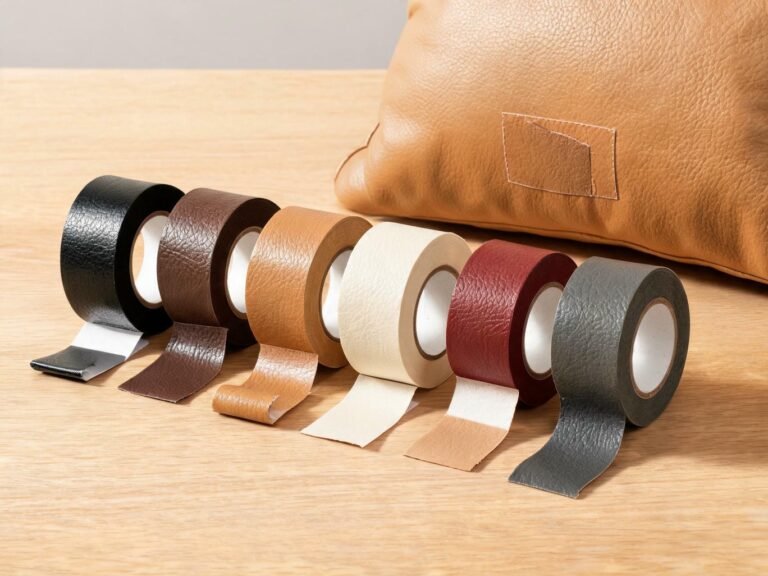
Precision slitting determines width tolerance—the difference between a strip that feeds cleanly through a binding machine and one that jams it.
Adhesive and Bonding: Where Leather Strips Fail in Production
Not all tape leather comes with adhesive backing. Much of it is sewn or heat-bonded. But for applications where self-adhesive leather tape applications make sense—automotive trim, quick-assembly furniture components, or reinforcement near stitching—the adhesive layer is where the strip lives or dies.
We’ve seen PU-backed tape leather peel off furniture frames within 14 months in humid warehouse-to-retail transit. The adhesive breaks down under temperature cycling—cargo containers hitting 60°C in summer shipping, then dropping to 10°C in storage. Silicone-based adhesive systems hold their tack across a wider range, but the real differentiator is the coating itself. A silicone leather strip maintains structural integrity from −40°C to 250°C. A PU strip embrittles below −10°C and softens above 60°C, which means the adhesive and the leather both degrade in the same temperature band.

Flex testing simulates the repeated bending a tape leather strip endures at wrapped edges and curved trim lines.
Silicone vs PU: Wear Data for Edge Binding Tape
The performance gap between silicone vs PU in tape format mirrors what we see in full-sheet testing—but the consequences are amplified because tape leather concentrates stress at the product’s weakest point: the edge. A scuff on a sofa armrest panel is cosmetic. A scuff on the tape leather wrapping that armrest’s edge exposes the frame underneath.
In a controlled comparison of silicone leather tape vs PU leather tape for edge binding, the data consistently shows silicone strips maintaining surface integrity beyond 200,000 Martindale cycles, while PU strips degrade at 20,000 to 50,000. For a commercial sofa that gets 40,000 rubs a year on its armrest edge, that is the difference between a 5+ year lifespan and an 18-month one. The five-year cost math is unambiguous: one silicone strip at $0.40 per linear meter outlasts three PU strip replacements at $0.15 each, before you count rework labor.

Color-matched tape leather in production—each strip must maintain width tolerance and color consistency across the full run.
| Application | Tape Width | Silicone Lifespan | PU Lifespan | 5-Year TCO |
|---|---|---|---|---|
| Sofa edge binding | 25–40 mm | 5–10+ years | 1.5–3 years | PU costs 2.5× more |
| Auto door trim | 15–30 mm | 8–12 years | 2–4 years | PU costs 3× more |
| Bag strap reinforce | 10–20 mm | 6–10 years | 2–3 years | PU costs 2× more |
| Seam piping | 5–10 mm | 7–10 years | 2–4 years | PU costs 2.5× more |
3 Sourcing Traps When Buying Tape Leather Wholesale
After years of auditing furniture applications supply chains, the same three mistakes appear across procurement teams buying tape leather wholesale. Each one turns a cheap unit price into an expensive total cost.
Trap 1: Sourcing tape from a different supplier than the main upholstery. When the panel leather and the edge-binding tape come from different factories, color matching becomes a warranty issue. Dye lots shift. The tape looks right under factory lighting and wrong under retail lighting. Source both from the same supplier—or demand a verified color-matching protocol with Delta E tolerance data.
Trap 2: Ignoring flexibility specs. A stiff tape leather strip cracks at curved edges. We tested PU tape samples that passed initial visual inspection but failed at 5,000 flex cycles on a simulated armrest curve. Silicone tape leather clears 50,000+ flex cycles without surface cracking. If your product has any curved trim line, demand flex testing data—not just abrasion data.
Trap 3: Buying by weight instead of by yield. Some suppliers quote tape leather by kilogram rather than by linear meter. A heavier strip is not necessarily better—it may mean the coating is over-thickened to compensate for a weak backing. Always specify by linear meters with stated width, thickness, and GSM. A supplier that cannot quote by yield is a supplier that cannot control their slitting process. Check our leather tape for sofa guide for a deeper look at sofa-specific tape sourcing.
See how TOPSUN produces custom-width tape leather through precision slitting and OEM-spec coating lines.

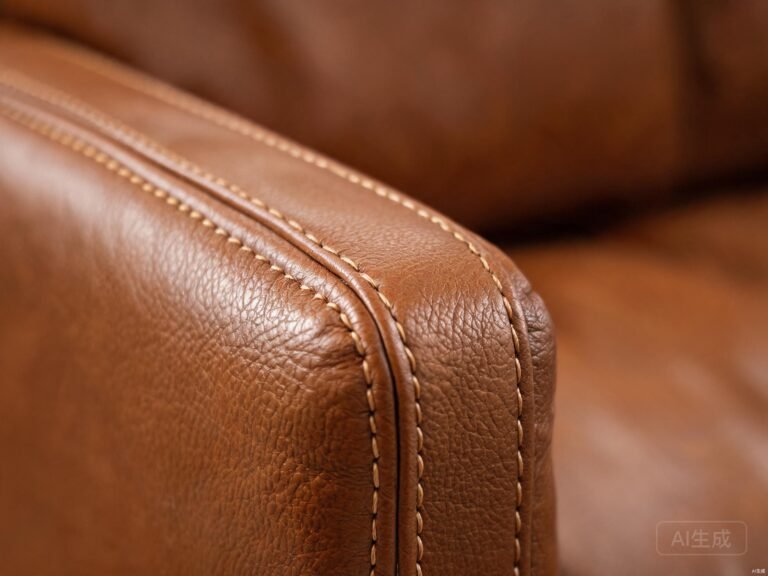
In finished furniture, the tape leather at the armrest edge takes more daily contact than the main seat panel—yet gets a fraction of the spec attention.
Frequently Asked Questions
Can tape leather be used for automotive interior trim?
Yes. Silicone tape leather is well suited for automotive interiors door panel trim, headliner joints, and armrest wraps. Specify 15 to 30 mm width with high-temperature adhesive backing rated for −40°C to 120°C. Demand flex cycle testing data (50,000+ cycles minimum) since automotive trim undergoes constant thermal cycling and vibration.
What width should I specify for furniture edge binding?
For standard sofa and chair edge binding, 25 to 40 mm is typical. The strip must cover the frame edge with 5 to 10 mm overlap on each side. Always specify width tolerance of ±0.5 mm—anything looser will cause automated binding machine jams. You can reference the upholstery leather wholesale sourcing guide for more on tolerance protocols.
The Real Cost of Cheap Tape
Tape leather is 5% of your material spend and 40% of your edge-failure risk. The procurement teams that understand this ratio source silicone strips that last the full product lifecycle, not PU strips that need replacing before the warranty expires. The specs that matter—width tolerance, flex cycles, adhesive temperature range, and coating material—are all verifiable before you place a PO. The question is whether your supplier will show you the data. Ours will.
About TOPSUN
TOPSUN supplies custom-width silicone tape leather for furniture edge binding, automotive interior trim, and leather goods reinforcement—slit to ±0.5 mm tolerance from solvent-free silicone-coated rolls.
Available in 10 mm to 100 mm widths with verified Martindale abrasion data (200K+ cycles), flex testing (50K+ cycles), and full REACH compliance—so your edge binding spec is backed by lab data, not a guess.