An embossed pattern on faux leather looks identical on day one — whether it’s PU, PVC, or silicone. The difference shows up on the Martindale tester. After 20,000 abrasion cycles, most PU textures have flattened to a smooth sheen. After 150,000 cycles, silicone leather’s embossed grain is still deep enough to cast shadows. That’s the gap most embossed faux leather catalogs never mention. This article breaks down why embossing wears off in some materials, how to compare retention data, and what to specify in a B2B purchase order to ensure your texture lasts the product’s full lifecycle.
Request Embossed Texture Samples & Abrasion Data
How Embossing Works on Faux Leather Substrates
Embossing is a mechanical-thermal process: a heated engraved roller presses into the surface coating of faux leather under controlled pressure, deforming the polymer layer into a three-dimensional grain pattern. The depth, sharpness, and repeatability of that grain depend on the coating material’s viscoelastic properties — specifically, how much it resists deformation (determines pattern sharpness) and how much it recovers after the roller lifts (determines pattern retention).
Here’s where material chemistry matters. Silicone leather uses a cross-linked polymer network — once the embossing pattern is set, the cross-links lock it in place. PU and PVC rely on linear polymer chains with plasticizer additives for flexibility. The plasticizers allow the surface to deform under the embossing roller, but they also allow the material to slowly flow back toward a flat state over time.

Beige lychee grain embossing on silicone leather: 3D depth retained through cross-linked polymer structure
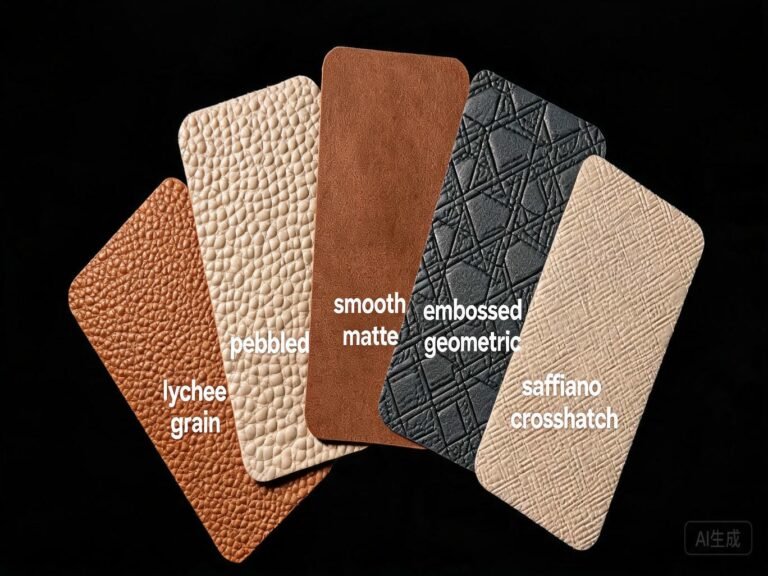
Common embossed faux leather texture patterns include lychee (pebbled), saffiano (cross-hatch), nappa (fine grain), crocodile, and geometric weaves. Each pattern has a different surface area ratio — deeper grains with more relief create more tactile contrast but also more stress concentration points where cracking can initiate under repeated flexing. The pattern isn’t just aesthetic. It’s a structural feature that affects how the material performs.
Why Embossed Faux Leather Loses Its Pattern Over Time
Pattern loss in embossed faux leather isn’t random wear. It’s a predictable chemical process called plasticizer migration. PU and PVC coatings contain 20–40% plasticizers by weight — these are the molecules that make the material flexible enough to emboss in the first place. Over months of use, especially in warm environments, those plasticizers slowly migrate to the surface and evaporate.
As plasticizer content drops, two things happen. First, the material becomes stiffer and more brittle — which is why old PU furniture develops surface cracks at flex points. Second, the polymer chains relax back toward their natural flat state, and the embossed grain progressively shallows. A pattern that was 0.3mm deep on day one might measure 0.1mm after two years of daily use. For a detailed breakdown of this mechanism across material types, see our embossed leather design guide.

Scratch resistance testing: measuring how embossed texture depth changes under controlled abrasion
The plasticizer problem: Silicone leather contains zero plasticizers. Its flexibility comes from the inherent elasticity of the silicone polymer itself — not from additives that evaporate. This is why an embossed silicone grain pattern maintains its depth for the full product lifecycle, not just the warranty period.
Silicone vs PU vs PVC: Embossing Retention Data
The most direct way to compare embossing durability is to run Martindale abrasion testing — the ASTM-standardized method that simulates years of rubbing wear — and measure pattern depth at intervals. Here’s what the data looks like across three material types:
| Material | Embossing Method | Depth Retention at 50K Cycles | Plasticizer Dependency | Recovery Rate |
|---|---|---|---|---|
| Silicone Leather | Heat + pressure (cross-linked) | 92–95% | None | Near-zero relaxation |
| PU Leather | Heat + pressure (plasticized) | 55–70% | High (20–40% by weight) | Progressive flattening |
| PVC Leather | Heat + pressure (plasticized) | 40–55% | Very high (30–50% by weight) | Rapid relaxation + cracking |
In our abrasion lab, we’ve tested embossed silicone leather against PU samples using identical lychee grain patterns at 0.3mm initial depth. At 50,000 Martindale cycles, the silicone sample retained 94% of its pattern depth. The PU sample had dropped to 61% — visible flattening that a customer would notice. At 150,000 cycles, the PU grain was effectively smooth. The silicone grain was still tactile and visually distinct. For a deeper silicone vs PU material comparison, the data is consistent across pattern types: cross-linked polymers hold shape; plasticized polymers don’t.

Black lychee grain on silicone leather: pattern depth stable at 150K+ Martindale cycles
Specifying Embossed Faux Leather for B2B Production
Most purchase orders for embossed faux leather specify pattern name, color, and thickness — and stop there. That’s why texture quality varies between production batches even from the same supplier. A complete spec sheet should include five additional parameters that determine whether your embossed pattern survives real-world use.
If you’re working with custom texture development, start by defining the pattern depth tolerance — typically ±0.05mm for visible grain patterns. Then specify the minimum Martindale abrasion cycles the texture must survive while retaining 80%+ depth. For commercial furniture, we recommend 50,000 cycles minimum. For automotive interiors, 100,000+.
- Pattern depth tolerance: Define the acceptable range (e.g., 0.25–0.35mm) and require measurement reports from each production batch.
- Abrasion retention threshold: Specify the minimum percentage of original depth that must remain after X Martindale cycles. This is the single most predictive spec for real-world texture longevity.
- Recovery rate after flexing: Run a Bally flex test (ISO 1764) and measure whether the grain recovers after 100,000 flex cycles at room temperature.
- Thermal stability: Require pattern depth measurement after 168 hours at 70°C — simulating dashboard or sun-exposed seating conditions.
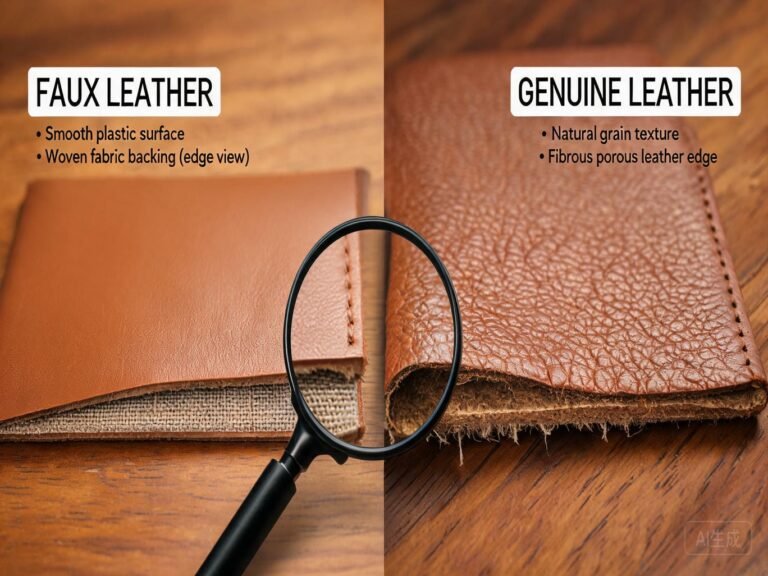
For buyers comparing embossed faux leather vs real embossed leather, the key insight is consistency. Natural hide grain varies unpredictably — some areas hold embossing well, others don’t. Synthetic materials offer 100% pattern uniformity, but only if the base polymer holds its shape. Our leather textures buyer guide covers this in more detail, but the short version: always request an abrasion-cycled sample, not just a fresh swatch.
One more consideration: full silicone vs semi-silicone leather. Full silicone uses a 100% silicone coating, which provides maximum embossing stability. Semi-silicone blends silicone with PU to reduce cost — but the PU component still plasticizer-migrates, compromising long-term pattern retention. Understand the full vs semi-silicone difference before specifying for high-wear applications.

Custom embossed texture samples: each pattern tested for abrasion retention before production approval
See how TOPSUN develops and tests embossed silicone leather textures — from pattern design to Martindale validation.
Frequently Asked Questions
Can you re-emboss faux leather after the pattern wears off?
Technically yes, but it’s rarely cost-effective for B2B applications. Re-embossing requires reheating the surface to its softening point and reapplying the grain roller — which means the material must be removed from the finished product, transported to a processing facility, and reinstalled. For PU and PVC, the plasticizer loss that caused the pattern to fade also makes the material more brittle, increasing the risk of cracking during re-embossing. Silicone leather doesn’t need re-embossing because the original pattern doesn’t fade.
What embossing depth should B2B buyers specify for commercial furniture?
For visible grain patterns on commercial furniture, specify 0.2–0.4mm initial depth with a tolerance of ±0.05mm. Pair this with an abrasion retention requirement: minimum 80% depth retention after 50,000 Martindale cycles. For automotive interiors where UV and heat exposure accelerate texture loss, increase the retention requirement to 85% after 100,000 cycles. Always request a post-abrasion sample — a fresh swatch tells you nothing about long-term pattern stability.
Choosing Texture That Outlasts the Warranty
Embossed faux leather is only as durable as the polymer that holds the pattern. PU and PVC deliver sharp textures on day one but lose depth progressively as plasticizers migrate — a process that no amount of careful specification can fully prevent. Silicone leather solves this at the molecular level: cross-linked polymers lock the embossed grain permanently, with 92–95% depth retention even after 50,000 abrasion cycles.
For B2B buyers, the takeaway is simple: don’t evaluate embossed faux leather on appearance alone. Request abrasion-cycled samples, specify retention thresholds in your PO, and choose a material chemistry that doesn’t depend on evaporating additives to maintain its texture.
Download Pattern Catalog & Abrasion Test Reports
About TOPSUN
TOPSUN engineers embossed faux leather with silicone-based coating technology for automotive interiors, contract furniture upholstery, and fashion accessory manufacturing — with in-house pattern development and abrasion validation for every texture program.
Custom grain development from lychee to geometric weave | 150K+ Martindale abrasion retention verified per batch | Zero plasticizer migration for stable texture over full product lifecycle | Full-silicone and semi-silicone options with documented retention data