Specifying blue leather fabric for a commercial project means signing up for a color that is statistically the most likely to fade. Blue pigments absorb high-energy UV wavelengths more aggressively than neutral tones, which is why a navy restaurant booth can look washed out after one summer near a window. Designers know this instinctively — but most procurement specs still list only “color: blue” without a single test standard attached. That gap between aesthetic intent and material reality costs projects money in reupholstery callbacks and warranty disputes. Here’s what actually matters when you specify blue leather: four tests that separate materials that hold their hue from those that don’t.
Why Blue Leather Fades Faster Than Neutral Colors
The chemistry is straightforward. Blue and cyan pigments absorb wavelengths in the 300–400 nm range — the exact UV band that breaks down chemical bonds in dyes and surface coatings. Neutral colors like beige, gray, and black reflect or scatter UV more effectively, which is why a tan leather sofa can sit in a hotel lobby for years while an identical blue version shows visible shift within months.
The industry measures this using the Blue Wool scale (ISO 105-B02), which rates lightfastness from 1 (worst) to 8 (best), where each level represents roughly double the fade resistance of the one below it. Most PVC-based blue leather fabric achieves only level 3–4 on this scale. PU performs slightly better at level 4. In our lab testing, silicone leather samples maintained a Class 4.5 rating under ISO 105-B06 accelerated weathering — and showed less than 5% color shift after 500 hours of QUV exposure, where PVC samples had already shifted 25–30%.
This matters because silicone leather uses inorganic pigments fused into the silicone matrix during coating, rather than organic dyes sitting on the surface. The pigment becomes part of the material structure — not a layer that UV can strip away.
Key takeaway: A Blue Wool rating of 4 means visible fading starts around 100–200 UV hours. For commercial interiors with any window exposure, specify materials rated 4.5 or higher.
4 Colorfastness Tests Every Spec Sheet Needs
If your current spec sheet says “color: blue, material: PU” and nothing else, you’re leaving performance to chance. These four tests form a minimum colorfastness baseline for any blue leather fabric specified in commercial or automotive interiors:
| Test Standard | What It Measures | PVC Typical | PU Typical | Silicone Leather |
|---|---|---|---|---|
| Lightfastness (ISO 105-B02) | UV fading resistance | Class 3–4 | Class 4 | Class 4.5 |
| Rubbing (ISO 105-X12) | Color transfer under friction | Class 3–4 | Class 4 | Class 5 |
| UV Stability (ASTM D3295 QUV) | Hours before visible fade | 200–300h | 400–500h | 1,500h+ |
| Batch Color Consistency | ΔE between production runs | 3–5 | 2–4 | <1.5 |
The rubbing fastness test matters as much as UV for commercial seating. Blue dye transferring onto light-colored clothing is one of the most common warranty complaints in hospitality furniture. A Class 5 rating means no visible color transfer under standardized rubbing conditions — the highest grade achievable.

Color fastness testing equipment used to verify ISO 105-B02 and X12 ratings for blue leather samples
Blue Leather Fabric for Furniture vs Automotive Applications
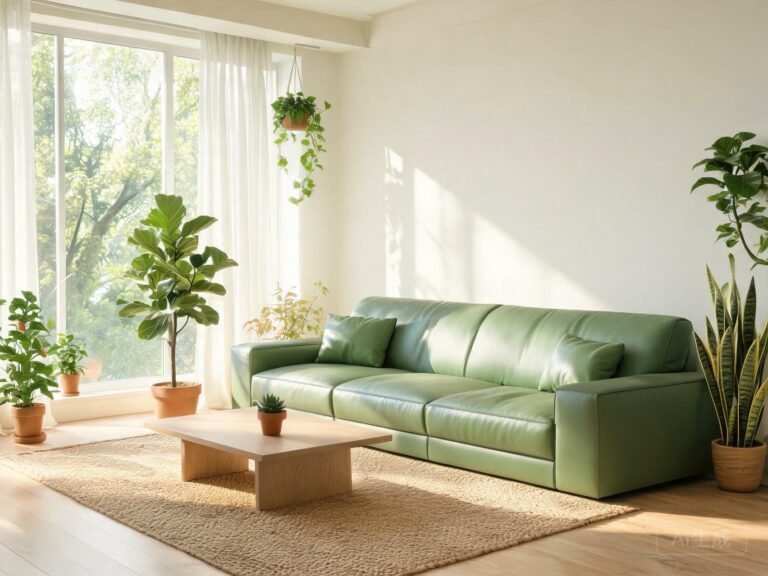
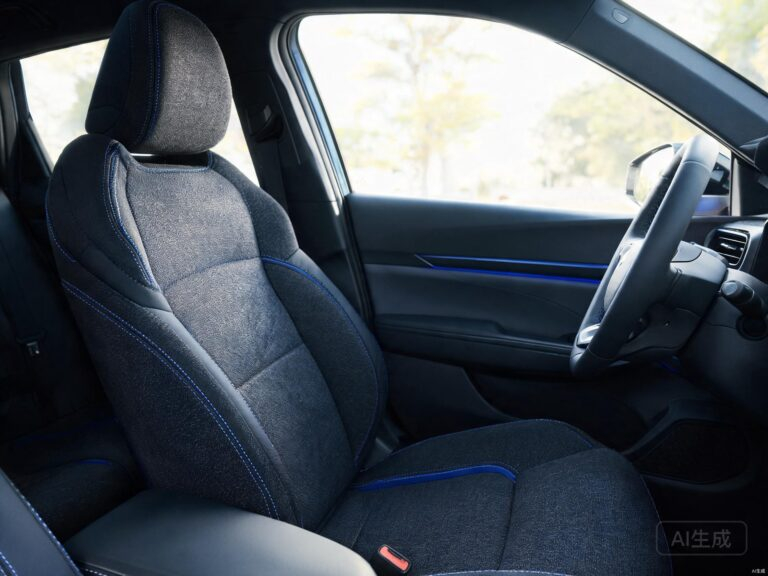
Furniture and automotive specs for blue leather look similar on the surface but diverge sharply in testing requirements. A blue accent chair in a hotel lobby needs strong rubbing fastness and moderate UV resistance — the light source is controlled and the furniture doesn’t move. A blue car interior faces sustained UV through glass, temperature cycling from -30°C to 85°C, and abrasion from daily ingress and egress.
For furniture applications, prioritize Martindale abrasion (25,000+ double rubs minimum for commercial use) and rubbing colorfastness. For furniture sofa upholstery in particular, stain resistance matters because blue surfaces show light-colored stains prominently.
Automotive interiors demand a different hierarchy: UV stability comes first, followed by heat aging and then abrasion. The QUV threshold for automotive is typically 1,000+ hours with less than 15% color shift — a bar that PVC rarely clears and PU achieves only with premium-grade UV stabilizers.

Light blue lychee-pattern silicone leather showing texture retention under folding stress
Custom Color Matching: Getting Pantone-Accurate Blue
“Blue” isn’t one color — it’s a spectrum from icy pastel to midnight navy. The challenge for B2B buyers isn’t finding a blue leather; it’s finding one that matches a brand standard across multiple production runs. Pantone-matched blue is notoriously difficult because even small variations in coating thickness, curing temperature, and pigment dispersion shift the final hue perceptibly.
Traditional PU and PVC blue leather relies on surface dyeing, which means each batch carries inherent variation. The Pantone Matching System remains the industry reference for specifying exact blue shades, but achieving consistent results depends on the coating technology. In our experience working with hospitality clients who needed 500+ meters of a specific navy for a hotel rollout, the ΔE (color difference) between PU batches from the same supplier ranged from 2.5 to 4.0 — enough to see with the naked eye when panels sat side by side. Custom texture and color design with silicone leather consistently hits ΔE below 1.5 because the pigment integrates into the silicone layer during coating rather than sitting on top.

Custom color matching workflow showing Pantone reference alongside produced leather samples
For projects where brand consistency is non-negotiable, the leather textures buyer guide provides additional context on how surface texture affects perceived color — a lychee grain in the same blue appears lighter than a smooth finish due to light scattering.
Eco-Friendly Blue Leather Fabric: Beyond the Color
The environmental profile of blue leather fabric depends heavily on the base material. PVC achieves its blue through phthalate plasticizers that improve flexibility but leach over time — particularly in heat. PU uses solvent-based coatings that off-gas VOCs during manufacturing and, to a lesser degree, throughout the product’s life. Neither is ideal for enclosed commercial spaces where indoor air quality standards are tightening.
Eco-friendly silicone leather eliminates both concerns. It contains zero plasticizers, zero VOC emissions, and carries ISO 10993 biocompatibility certification — meaning the material is safe enough for skin contact in medical settings. For blue leather specified in healthcare, hospitality, or educational interiors, this regulatory profile matters as much as the colorfastness data.
Watch silicone leather color fastness testing — see how blue samples perform under accelerated UV exposure
Frequently Asked Questions
How long does blue leather fabric last before fading?
It depends entirely on the material. PVC blue leather typically shows visible fading after 200–300 QUV hours; PU after 400–500 hours. Silicone leather maintains color accuracy past 1,500 hours under ASTM D3295 accelerated weathering — roughly 5–7 years of real-world interior UV exposure. For outdoor or sun-exposed applications, only silicone leather reliably holds blue without noticeable shift.
Can I get a custom Pantone-matched blue leather?
Yes. TOPSUN offers custom color matching against Pantone TCX references or physical samples. Silicone leather’s integrated dyeing process achieves ΔE < 1.5 between production batches — compared to typical PU batch variation of ΔE 3–5. Minimum order quantities apply for custom colors; contact the engineering team with your Pantone reference for a swatch lead time.
Specifying Blue With Confidence
Blue leather fabric doesn’t have to be a maintenance liability — but only if the spec sheet includes actual test data, not just a color name. The four standards above (ISO 105-B02, ISO 105-X12, ASTM D3295 QUV, and batch ΔE) give procurement teams a defensible framework for comparing materials on equal terms. Silicone leather’s advantage isn’t that it comes in blue; it’s that the blue stays where you put it.
About TOPSUN
TOPSUN manufactures custom silicone leather in over 200 colors — including 40+ blue shades from midnight navy to ice blue — for commercial furniture, automotive interiors, and hospitality projects where color stability is a specification requirement, not an afterthought.
Color fastness verified to ISO 105-B06 Class 4.5 and ASTM D3295 1,500-hour QUV • Pantone-matched batches with ΔE < 1.5 consistency • Full OEM/ODM production from substrate selection to surface texture • 15,000+ Martindale cycles for commercial-grade abrasion resistance