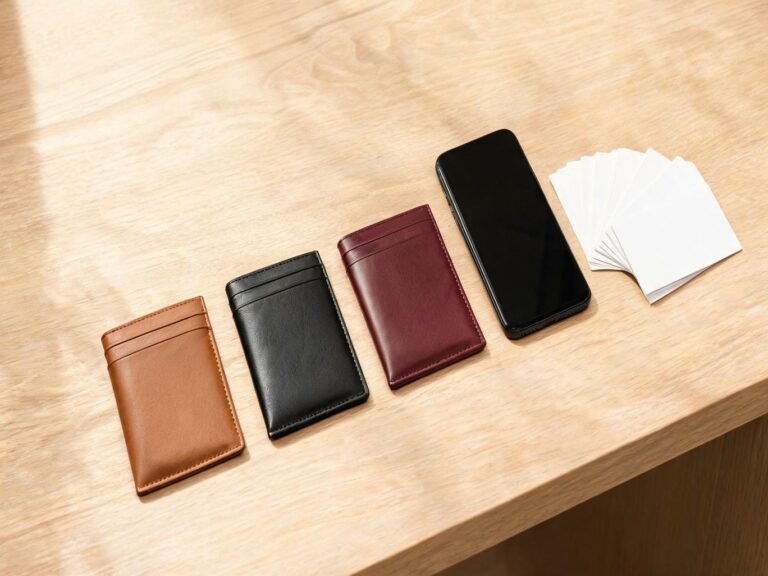
A consumer electronics brand launched a premium 10,000mAh power bank case leather line wrapped in PU leather. The product photographed beautifully. Six months later, 12% of warranty claims cited “case cracking” or “peeling edges.” The battery cells were fine — the leather wasn’t. The failure pattern was consistent: heat from charging cycles caused the PU coating to lose plasticizer, then crack along stress concentration lines at the corners. The brand switched to silicone leather for the next production run. Case-related warranty claims dropped to under 1%.
Power bank case leather is not a cosmetic decision. The material wraps a device that generates heat during charging, gets dropped on concrete, and lives in pockets alongside keys and coins. Most brands specify leather based on texture samples and unit price — then discover why material chemistry matters after the returns start coming in. Here’s what B2B procurement teams need to know before specifying leather for power bank cases.
View 3C Electronics Applications
Why Power Bank Case Leather Material Goes Beyond Aesthetics
A power bank case serves three engineering functions that most product teams overlook when they’re focused on the look and feel of a leather swatch. First, it dissipates heat — a 10,000mAh power bank under fast-charge protocol generates 40-55°C surface temperatures, and the case material either facilitates or impedes thermal transfer. Second, it absorbs impact energy during drops — the most common failure scenario for portable electronics. Third, it resists surface degradation from daily pocket abrasion, fingerprint oils, and occasional spills.
Industry data shows that heat dissipation remains a critical consumer pain point, with a 37% dissatisfaction rate regarding device temperature during charging. When the leather material itself degrades under that heat, the problem compounds — the case not only fails to manage thermal output but actively deteriorates from it. This is why the power bank leather cover heat resistance specification should be the first line item in a BOM, not the last.

Silicone leather for 3C electronics — engineered for thermal cycling, grip retention, and daily abrasion resistance
Heat Dissipation: The Hidden Killer of PU Leather Covers
PU leather is a polyurethane coating applied over a fabric substrate. The coating contains plasticizers — chemical additives that keep the material flexible. When PU leather is repeatedly exposed to charging-cycle heat (40-55°C, sometimes spiking to 60°C during fast-charge protocols), two things happen: plasticizer migration accelerates, and the polymer chains begin to reorient. The visible result is surface stiffening, followed by micro-cracking at stress points, followed by peeling at edges where the coating is thinnest.
This process is called thermal aging, and it’s not gradual — it’s cumulative. Each charging cycle adds stress. A power bank charged daily experiences 365 thermal cycles per year. By month four, PU leather shows measurable surface stiffening. By month six, visible cracking appears at corner radii and bend points. By month nine, edges begin to delaminate from the substrate fabric. The timeline matches the warranty claim pattern exactly.
Field data: Per data from a major B2B marketplace’s buying guide on leather power bank cases, consumers are increasingly moving away from basic PU leather toward full-grain and sustainable bio-leathers, showing a 30% higher willingness to pay for materials that don’t crack and peel. This shift directly reflects the failure patterns described above.
TOPSUN silicone leather for 3C electronics — thermal stability, scratch resistance, and tactile quality for portable devices
Silicone Leather vs PU Leather: Power Bank Case Comparison
Silicone leather solves the thermal aging problem at the molecular level. The base polymer — polydimethylsiloxane (PDMS) — has a Si-O backbone that is inherently thermally stable. Unlike the C-C bonds in polyurethane, which begin to reorient at 50°C, the Si-O bond in silicone remains stable up to 200°C. This means the leather material does not stiffen, crack, or lose plasticizer during normal charging thermal cycles. The material behaves the same on day 365 as it did on day 1.
When comparing silicone leather vs PU leather for power bank cases, the performance gap is measurable across every metric that matters for this application:
| Property | Silicone Leather | PU Leather | Impact on Power Bank Cases |
|---|---|---|---|
| Thermal stability | Stable to 200°C | Reorients at 50-60°C | Silicone survives charging heat cycles indefinitely |
| Martindale abrasion | 150,000 cycles | 20,000-50,000 cycles | Silicone lasts 3-7x longer under pocket abrasion |
| Low-temp flex | 200,000 cycles at -30°C | Cracks below -10°C | Silicone survives winter outdoor use |
| UV stability | 1,500+ hrs (ASTM D329) | 200-400 hrs | Silicone resists sunlight degradation on outdoor use |
| Stain resistance | Highest grade (20+ stains) | Moderate; absorbs oils | Silicone resists fingerprint oils, ink, coffee |
| Color fastness (rubbing) | ISO 105-X12 Class 5 | Class 3-4 | Silicone color won’t transfer to clothing or pockets |
For a deeper technical breakdown of how silicone compares to PU and PVC across all applications, the silicone vs PU vs PVC comparison guide covers molecular structure, aging mechanisms, and cost-per-year analysis. For B2B buyers sourcing materials for phone and device cases, the premium phone case material guide provides additional application-specific data.

Black lychee-texture silicone leather — the grain pattern provides natural grip without additional surface treatment
Drop Protection: What Impact Tests Reveal About Case Materials
A power bank case material drop protection specification should address two failure modes: structural impact on the device, and surface damage to the leather itself. Industry testing typically benchmarks against a 1.5-meter drop — the height of a hand holding a device at standing position. When a power bank in a leather case hits concrete corner-first, the leather material must absorb enough impact energy to protect the internal battery module, while also resisting surface tearing and puncture from the impact.
Silicone leather’s tear strength — rated at 35N+ — combined with its natural elasticity, gives it superior impact absorption compared to PU leather, which stiffens over time and becomes brittle under thermal cycling. A PU leather case that performed well in initial drop testing may fail the same test after six months of use because the material has lost flexibility. Silicone leather’s elasticity is not dependent on plasticizers, so it does not degrade with thermal cycling. The material’s Taber abrasion resistance of up to 4,000 cycles (CS-10, 1,000g load) also means the case surface won’t thin out from daily pocket friction — maintaining consistent impact protection throughout the product’s life.

Silicone leather overmolding on electronics — seamless wrapping that maintains thermal stability and impact absorption
Silicone leather scratch resistance test — the surface withstands daily abrasion from keys, coins, and surfaces without visible damage
Custom Power Bank Case Leather: Specs That Matter for B2B
When sourcing custom power bank case leather from a manufacturer, B2B procurement teams should specify beyond color and texture. The following specification sheet covers the properties that determine whether your product survives 18 months in the field or generates warranty claims at month six:
- Thickness: 0.7-1.2mm for power bank cases. Below 0.7mm, the leather lacks sufficient tear strength for drop protection. Above 1.2mm, it becomes too stiff to wrap tight corners without wrinkling.
- Substrate: Woven polyester fabric backing for dimensional stability. Non-woven backing absorbs adhesive unevenly and causes delamination at edges.
- Thermal cycling resistance: Specify 500 cycles at 25-55°C with no visible surface change. This simulates 500 charging sessions — roughly 16 months of daily use.
- Martindale abrasion: Minimum 100,000 cycles for pocket-worn areas. TOPSUN silicone leather achieves 150,000 cycles — 3x the PU leather benchmark.
- Color fastness to rubbing: ISO 105-X12 Class 5 minimum. Lower classes transfer color onto white clothing and pockets — a top driver of consumer complaints.
- Surface texture: Lychee or micro-pebble grain provides natural grip. Smooth surfaces become slippery with hand oils; embossed textures maintain tactile friction over time.
For brands also producing earbuds cases or keyboard covers, the specification approach is similar. Our earbuds case cover material guide and keyboard cover material guide cover additional 3C accessory specifications. And for broader material sourcing context, the silicone leather FAQ addresses common technical questions from B2B buyers.
Cost reality: PU leather for power bank cases ranges from $1.80-$3.00 per meter depending on volume. Silicone leather commands a 40-60% premium per meter. But when you calculate cost per year of service life — factoring in warranty claims, returns, and brand reputation damage from premature case failure — silicone leather’s 5-10 year service life delivers a lower total cost of ownership than PU leather’s 12-18 month functional lifespan.
Frequently Asked Questions
What leather material is best for power bank cases?
Silicone leather is the best material for power bank cases because its PDMS polymer backbone remains thermally stable up to 200°C, meaning it won’t crack, stiffen, or lose plasticizer during charging heat cycles. PU leather, the most common alternative, begins to degrade at 50-60°C — the exact temperature range a power bank reaches during fast charging. Silicone leather also delivers 150,000 Martindale abrasion cycles vs. 20,000-50,000 for PU, and maintains flexibility at -30°C, making it suitable for outdoor and cold-climate use.
How long does silicone leather last on a power bank case?
Silicone leather typically lasts 5-10+ years in power bank case applications — 2-3x longer than PU leather. The material does not rely on plasticizers for flexibility, so thermal cycling from daily charging does not cause progressive degradation. TOPSUN silicone leather achieves ISO 105-X12 Class 5 color fastness (rubbing), ISO 105-B06 Class 4.5 light fastness (1,500+ hours QUV), and 35N+ tear strength, ensuring the case maintains both appearance and structural integrity throughout the device’s operational life.
Can silicone leather be custom-colored and textured for power bank brands?
Yes. TOPSUN offers custom Pantone color matching across 200+ standard colors for power bank case leather, with batch-to-batch consistency verified via spectrophotometer measurement. Surface textures include lychee, micro-pebble, smooth, and custom embossed patterns. Minimum order quantities for custom colors typically start at 500 yards, with a 4-6 week lead time for color development, approval, and production setup. Existing standard colors and textures can ship within 2-3 weeks.
Specify Material Like Your Warranty Depends on It — Because It Does
The power bank case leather specification is the difference between a product that generates 12% warranty claims and one that generates under 1%. PU leather looks the same in a swatch book and costs less per meter — but it fails predictably under the exact thermal conditions that a power bank creates during daily use. The material chemistry is not a detail; it’s the determinant of product lifespan.
Silicone leather eliminates the failure mode entirely. The Si-O polymer backbone doesn’t reorient at charging temperatures. The material doesn’t contain plasticizers to lose. The abrasion resistance is 3-7x higher than PU. The stain resistance handles fingerprint oils, ink, and coffee without absorbing them. For a B2B buyer specifying power bank case materials, the spec that protects your warranty budget is: “Thermal cycling 500 cycles at 25-55°C with no surface change, Martindale 100,000+ cycles, ISO 105-X12 Class 5 color fastness, tear strength 35N+.” Write those numbers in — and let the material do the rest.
Request Power Bank Case Leather Samples
About TOPSUN
TOPSUN manufactures thermally-stable silicone leather for 3C electronics accessories, including power bank cases, phone cases, earbuds covers, and keyboard covers. The company supplies B2B-customized leather with Pantone color matching, certified abrasion and thermal cycling performance, and flame-retardant options for consumer electronics brands worldwide.
Martindale abrasion 150,000+ cycles · Taber abrasion 4,000+ cycles (CS-10, 1,000g) · ISO 105-X12 Class 5 color fastness · ISO 105-B06 Class 4.5 light fastness · tear strength 35N+ · low-temp flex 200,000 cycles at -30°C · CALB117-2013 flame retardant compliant