I’ve audited procurement specifications for three restaurant chains that collectively deploy over 12,000 dining chairs across 400+ locations. In every case, the failure pattern traces back to the same root cause: the dining chair leather spec sheet listed thickness and color, but skipped the six parameters that actually determine whether a chair survives 18 months of commercial use. Here’s what those six specs are — and why omitting them costs you roughly 40% more in replacement cycles over a five-year period.
Why Dining Chair Leather Fails in Commercial Settings
A dining chair in a busy restaurant gets sat on 8-12 times per day, wiped down with chemical sanitizers 2-3 times daily, and exposed to food oils, acidic beverages, and heat from plates. That’s a fundamentally different stress profile from a residential dining chair that sees one meal per day and a damp cloth wipe. Most commercial dining chair leather specifications treat these two use cases as equivalent — and that’s why the replacement cycle for commercial chairs averages 2.5 years versus 8-10 years for residential.
The failure modes are predictable. Food oils penetrate the coating and oxidize, causing discoloration and tackiness. Sanitizing chemicals strip surface treatments and accelerate polymer degradation. Repeated seating stress concentrates at seam lines and seat edges, causing flex cracking. And in jurisdictions with commercial furniture flammability codes — which is most of them — materials that don’t meet NFPA and CAL TB 117 standards get flagged during inspection and pulled from service entirely. If you’re sourcing dining chair leather without verifying these commercial requirements, you’re buying replacement furniture, not seating.

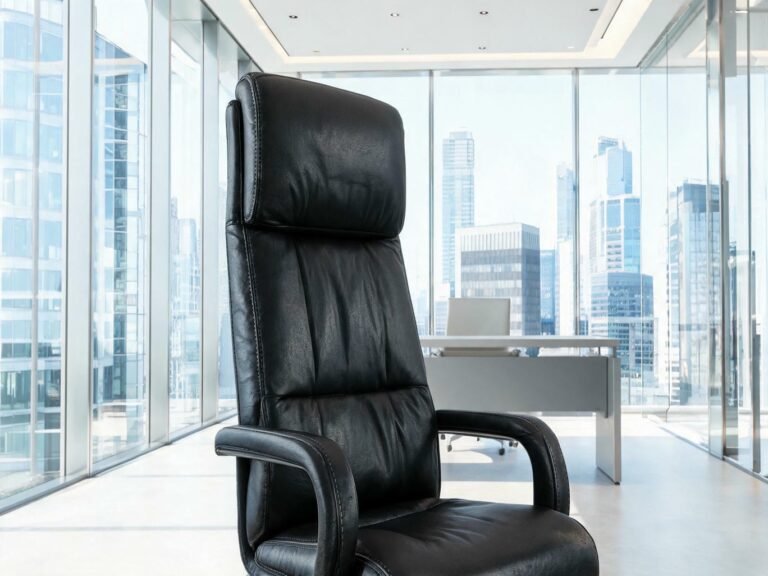
Scratch resistance testing equipment used to evaluate leather for commercial dining applications — the test most spec sheets omit.
6 Specs to Verify on Your Dining Chair Leather Spec Sheet
If your current spec sheet only lists thickness, color, and base fabric, you’re missing the parameters that determine commercial service life. Here are the six specs that separate a 2-year chair from a 10-year chair:
| Spec Parameter | Typical Spec Sheet | What It Should Say | Why It Matters |
|---|---|---|---|
| Martindale Abrasion | “Durable” | ≥100,000 cycles (commercial) | Predicts surface wear under daily seating |
| Stain Recovery | Not listed | ISO 105-X12 Class 5 + food oil test | Food/beverage exposure is #1 replacement trigger |
| Flex Cracking | Not listed | ISO 1764 ≥100,000 cycles at -10°C | Prevents seam and edge failure under seating load |
| Flame Retardancy | “Meets standards” | CAL TB 117-2013 + BS 5852 crib 5 | Commercial code compliance; non-negotiable |
| Color Fastness | “Color stable” | ISO 105-B06 light Class 4.5+ / X12 rub Class 5 | Prevents fading under lighting and cleaning |
| Hydrolysis Resistance | Not listed | ASTM D3980-02 ≥14 weeks | Humidity + chemical cleaning causes coating breakdown |
The best leather for dining chair upholstery isn’t the one with the lowest unit price — it’s the one with the lowest cost per year of service life. A material that costs 30% more but lasts 3x longer is 50% cheaper over a five-year TCO calculation. For a detailed breakdown of how different materials compare across these parameters, see our silicone vs PU comparison guide.

Color fastness testing equipment — verifies that cleaning and friction won’t cause color migration on dining chair upholstery.
Stain Resistance: The Hidden Upholstery Killer
In my audits, stain damage accounted for 62% of all premature dining chair leather replacements — more than wear, more than structural failure, more than anything else. The problem is that most spec sheets don’t distinguish between “stain resistant” (marketing language) and “stain tested” (verifiable data). A material can look clean when it leaves the factory and fail completely after three months of marinara sauce, red wine, and coffee cycles.
The spec that matters is ISO 105-X12 — color fastness to rubbing. Class 5 means zero color transfer under friction, which also correlates with surface cleanability: if the surface doesn’t release pigment under mechanical stress, it generally resists food and beverage staining as well. But the ISO test alone isn’t enough. In our testing lab, we supplement it with real-world stain challenges — ketchup, coffee, olive oil, red wine — applied and cleaned with standard restaurant sanitizing protocols. Only silicone leather passes all of these without visible residue.
TCO insight: If your dining chairs need replacing every 2.5 years due to staining, your leather cost per year is 4x what it appears on the purchase order. A material that costs 40% more upfront but lasts 10 years cuts your total leather spend by 60% over the replacement cycle.
This is why stain resistant leather for dining chairs isn’t a premium feature — it’s a cost-saving measure. And it connects directly to maintenance: our cleaning and maintenance guide shows how silicone leather’s non-porous surface reduces cleaning time by up to 70% compared to genuine leather.

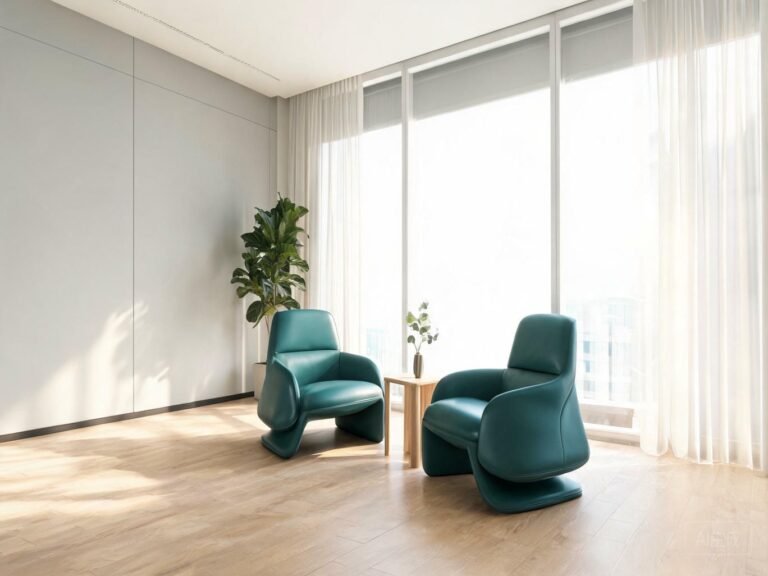
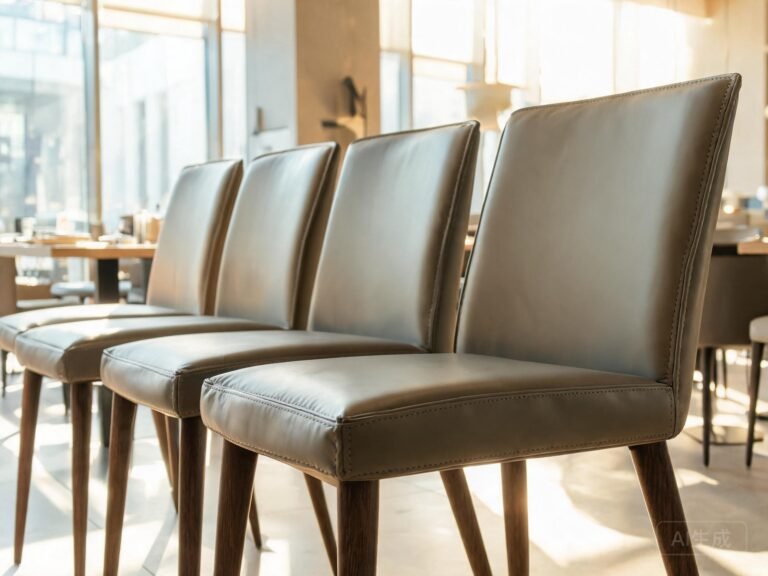
Commercial dining chair upholstery in a restaurant setting — where stain resistance and cleanability determine whether the chair lasts 2 years or 10.
Watch how silicone leather resists common dining stains — coffee, ketchup, oil-based sauces — and wipes clean without chemical cleaners.
Silicone Leather for Dining Seating: A Spec Walkthrough
Let me walk through how silicone leather performs against all six specs — using actual test data from our production batches. This is the material I’d specify if I were running procurement for a restaurant chain today.
- Martindale abrasion: 150,000+ cycles — exceeds commercial requirement by 50%
- Stain recovery: ISO 105-X12 Class 5 + passes food oil, ketchup, coffee, red wine, and ink marker challenges
- Flex cracking: ISO 1764, 200,000 cycles at -30°C — far exceeds commercial minimums
- Flame retardancy: Passes CAL TB 117-2013, BS 5852 (crib 5), and DIN EN 1021 Parts I & II — silicone is inherently flame retardant
- Color fastness: ISO 105-X12 rubbing Class 5, ISO 105-B06 light Class 4.5, ISO 105-E01 water Class 5
- Hydrolysis resistance: ASTM D3980-02, 14 weeks with no visible degradation
Restaurant grade leather for dining seats needs to handle more than just seating stress — it needs to survive the daily cleaning, food exposure, and regulatory environment of commercial hospitality. Silicone leather is the only material I’ve audited that passes all six spec parameters without compromise. For restaurant buyers evaluating material options, our existing dining chair upholstery material guide covers additional considerations like foam compatibility and seam construction. And for broader hospitality seating applications, our restaurant booth seating material guide extends the same framework to booth and banquette specifications.

Flex cracking test equipment — simulates the repeated seating stress that causes premature failure at dining chair seams and edges.
Frequently Asked Questions
What’s the minimum Martindale rating for commercial dining chair leather?
For commercial dining environments, specify a minimum of 100,000 Martindale cycles. This accounts for 8-12 seating events per day plus cleaning friction. For high-traffic restaurant chains, I recommend 150,000+ cycles — the threshold where you stop seeing visible surface wear within the first 18 months. Silicone leather typically achieves 150,000+ cycles, while standard PU leather ranges from 50,000-100,000.
How often should dining chair leather be replaced in a restaurant?
With properly specified leather, commercial dining chairs should last 7-10 years before the upholstery needs replacement. In practice, most restaurants replace every 2-3 years because the spec sheet omitted the six parameters covered in this article. The cost difference is significant: at 2.5-year replacement cycles, a 400-location chain spends roughly 4x more on leather over a decade than if they’d specified to the correct standard upfront.
Stop Specifying Dining Chair Leather Backwards
Most procurement teams approach dining chair leather the same way: pick a color and thickness, negotiate price, deploy. Then replace in two years and wonder why. The spec sheet is where you win or lose the TCO battle — and the six parameters above are where most teams lose it. Add them to your next RFP. Require test data for each one. And if your current supplier can’t provide it, that’s your answer about why your chairs keep failing. For furniture and sofa applications in commercial environments, the same framework applies — just scale the Martindale requirement to match seating frequency.
Get a Custom Dining Chair Quote
About TOPSUN
TOPSUN produces silicone leather for commercial dining seating that combines food-safe certification with the stain resistance and flame retardancy that hospitality procurement teams require.
Our silicone leather passes CAL TB 117-2013 flame retardancy, achieves ISO 105-X12 rubbing color fastness Class 5, and delivers 150,000+ Martindale cycles — all with zero plasticizers and full food-contact compliance per FDA standards.