A procurement manager at a European furniture brand told us their vinyl upholstery shipment was seized at EU customs in early 2026 — three of seven restricted phthalates exceeded REACH limits. The replacement cost: 340,000 euros and a four-month delivery delay. Faux leather vinyl looks like the cheapest option on a sourcing spreadsheet. But when you factor in compliance risk, plasticizer migration over the product lifecycle, and end-of-life disposal liability, the total cost of ownership shifts dramatically. Here’s what every B2B sourcing team needs to verify before the next vinyl leather order.
Request Free Compliance-Tested Samples
What Is Faux Leather Vinyl? Composition and Cost Drivers
Faux leather vinyl is polyvinyl chloride (PVC) sheeting laminated to a fabric backing. The formulation is deceptively simple: PVC resin powder, 30–40% plasticizers by weight, heat stabilizers, pigments, and UV inhibitors. These ingredients are mixed, heated, and pressed through calendering rollers into a continuous flexible sheet. The sheet is then embossed with grain patterns and bonded to a textile substrate.
That 30–40% plasticizer content is the core issue. Plasticizers — historically phthalates like DEHP and DINP — are what make rigid PVC flexible enough to function as upholstery. Without them, PVC is a hard pipe material. With them, it becomes the inexpensive faux leather vinyl that dominates contract furniture, marine, and budget automotive interiors. For furniture manufacturers sourcing at volume, vinyl’s low cost-per-yard makes it the default choice — see our furniture sofa applications for typical use cases.

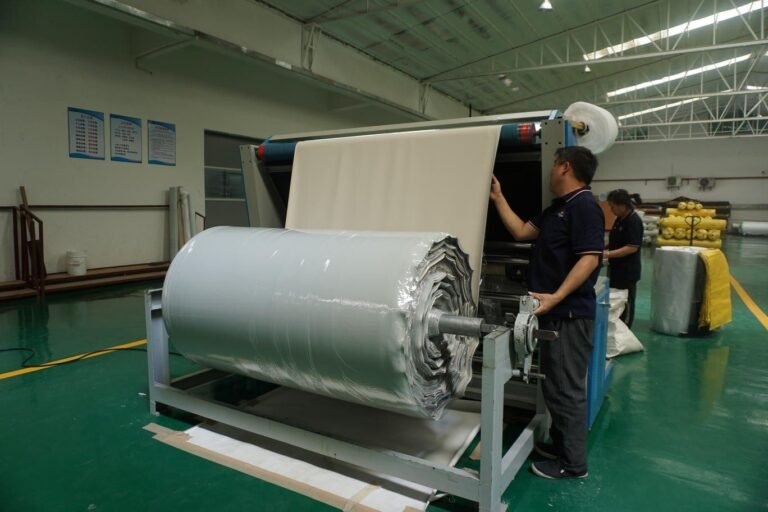
Chemical mixing station where PVC resin, plasticizers, and stabilizers are blended before calendering
The Phthalate Problem Hidden in Your Faux Leather Vinyl Supply Chain
Seven phthalates are restricted under REACH Annex XVII to a maximum of 0.1% individually or in combination: DEHP, DBP, BBP, DINP, DIDP, DNOP, and DIBP. California’s Proposition 65 requires warning labels on vinyl upholstery containing listed phthalates. The regulatory net is tightening — and customs authorities in the EU now routinely test imported vinyl products.
The compliance failure described above isn’t an isolated incident. In our experience working with procurement teams transitioning away from vinyl, the pattern is consistent: suppliers claim compliance, but batch-to-batch variation in plasticizer formulation means some shipments pass and others don’t. A European furniture brand’s vinyl upholstery shipment was seized at EU customs — three of seven restricted phthalates exceeded REACH limits. The cost: 340,000 euros in replacement materials and a four-month delivery delay. After switching to our eco-friendly silicone leather, subsequent shipments cleared customs without a single compliance flag.

Color fastness and chemical compliance testing: verifying phthalate and heavy metal content against REACH limits
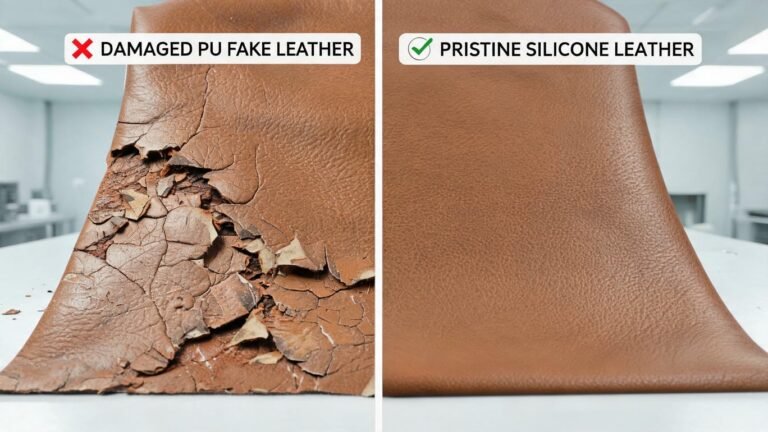
Beyond regulatory compliance, plasticizer migration creates a product-level failure mode. Over 2–5 years, phthalates physically leach from the PVC matrix — especially in warm environments or when exposed to skin oils. The material becomes brittle, sticky, and discolored. End-of-life disposal adds another cost layer: PVC releases dioxins when incinerated and is classified as difficult to recycle due to its chlorine content and additive mixture. Full REACH compliance documentation should be requested from every supplier, not just the first batch.
Key takeaway: A supplier’s REACH compliance certificate covers one batch. Without per-shipment testing, you’re betting your delivery timeline on chemical consistency you can’t verify.
Vinyl vs Silicone vs PU: Where the Numbers Diverge
When B2B buyers compare the three major synthetic leather chemistries, vinyl’s cost advantage narrows quickly once lifecycle performance is included:
| Metric | Vinyl / PVC | PU Leather | Silicone Leather |
|---|---|---|---|
| Phthalate Content | 30–40% (risk) | None | Zero |
| Cold Flexibility | Brittle below 0°C | Cracks below -10°C | Flexible to -40°C |
| VOC Emissions | High (lifespan) | Moderate (DMF) | Zero |
| Recyclability | Very difficult | Difficult | Recyclable |
| REACH Risk Level | High | Moderate | None |
The comparison reveals why vinyl carries the highest compliance risk of the three. For manufacturers evaluating silicone alternatives, our full vs semi silicone leather guide explains the formulation options.
For a detailed breakdown of how vinyl differs from other leather types at the chemical level, our leather vinyl differences analysis covers the molecular structure in depth.
Phthalate-Free Vinyl: Real Fix or Greenwashing?
Some vinyl manufacturers now offer phthalate-free formulations using alternative plasticizers like DOTP (dioctyl terephthalate). This is a genuine improvement — DOTP is not currently restricted under REACH and doesn’t carry the same endocrine-disruption profile as DEHP or DBP. If you must use vinyl for cost reasons, phthalate-free is the safer procurement choice.
But here’s the catch: eliminating phthalates doesn’t fix vinyl’s other structural problems. The material still becomes brittle below 0°C, limiting outdoor and cold-climate applications. It still emits VOCs throughout its lifespan. It remains extremely difficult to recycle. And DOTP itself faces ongoing regulatory review — there’s no guarantee today’s compliant plasticizer won’t be tomorrow’s restricted substance. Our vinyl fabric upholstery trade-offs guide examines these limitations in detail.

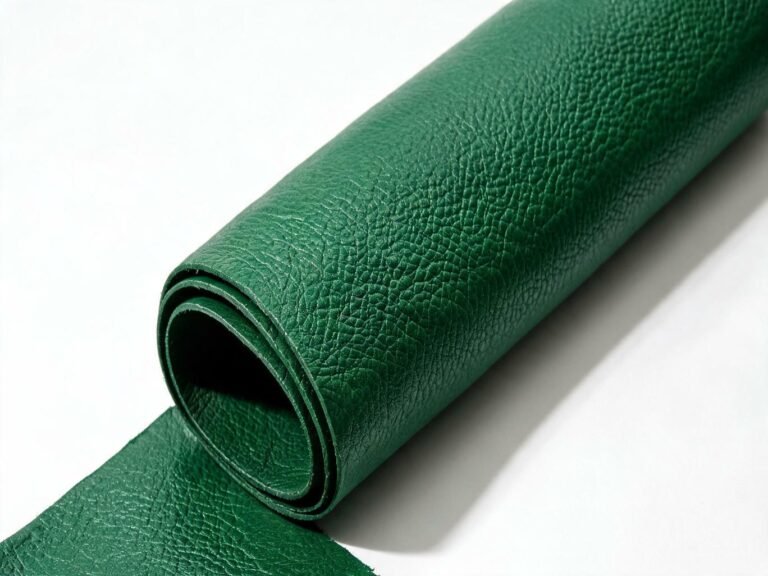
PVC leather closeup: the plasticized surface that becomes brittle and sticky as plasticizers migrate over time
Frequently Asked Questions
Is phthalate-free vinyl leather actually safe for children’s products?
Phthalate-free vinyl reduces the most acute chemical risk, but children’s products face additional scrutiny. Heavy metal stabilizers (lead, cadmium) used in some PVC formulations are restricted under CPSIA in the US. VOC off-gassing in enclosed environments like nurseries remains a concern. Silicone leather, which contains no plasticizers, heavy metals, or volatile compounds, is the lower-risk specification for any product with prolonged skin contact.
Can vinyl leather pass REACH compliance consistently?
It depends on the supplier’s quality control. The risk is batch-to-batch variation: plasticizer formulations can shift between production runs, especially when suppliers switch raw material sources. Request per-shipment REACH test reports from an accredited third-party lab (SGS, Intertek), not just a one-time supplier self-declaration.
The Bottom Line on Vinyl Sourcing Risk
Faux leather vinyl wins on upfront cost — and loses on nearly every other metric that matters to B2B procurement: compliance risk, cold-weather performance, VOC exposure, recyclability, and long-term material stability. If your product lifecycle exceeds 3 years or ships to the EU, the compliance burden alone may exceed vinyl’s cost-per-yard advantage. The procurement teams we work with are increasingly specifying silicone leather not because it’s cheaper, but because it eliminates an entire category of supply chain risk that vinyl creates by its chemical nature.
Get a Custom Quote for Silicone Leather
About TOPSUN
TOPSUN produces solvent-free silicone leather as a phthalate-free alternative to conventional faux leather vinyl for furniture, automotive, and public transport manufacturers facing REACH and Prop 65 compliance pressure.
Every batch is certified to REACH Annex XVII, California Prop 65, and ISO 10993 standards, with zero plasticizer dependency and full recyclability at end-of-life.