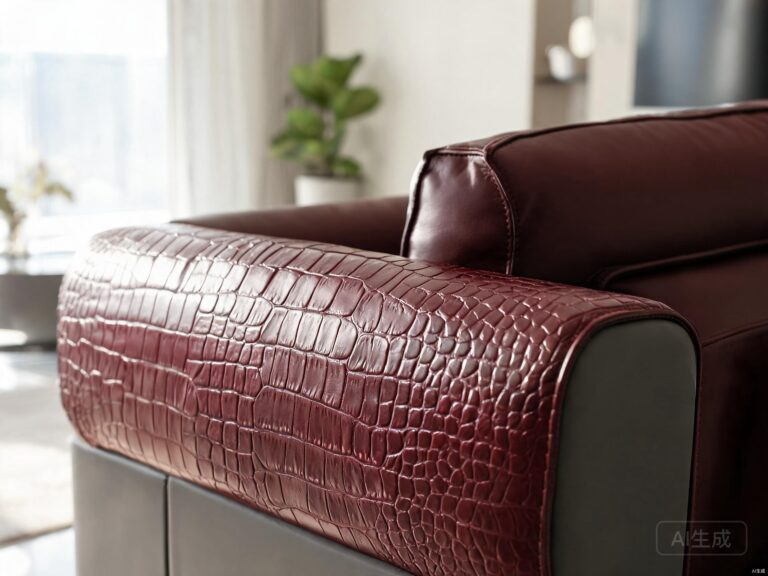
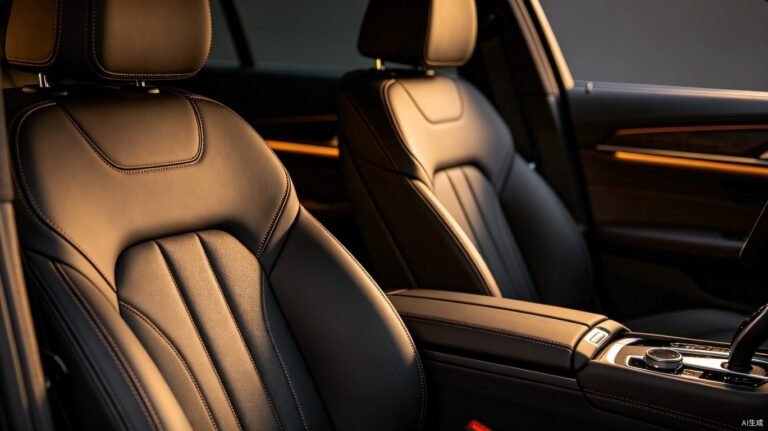
A furniture OEM in Mumbai ordered 5,000 meters of rexine leather for a hotel chain’s guest room renovation. The spec sheet looked solid — decent thickness, nice grain embossing, attractive per-meter pricing. Eighteen months later, the cushions started peeling. The hotel demanded a full replacement, and the procurement manager was left explaining why a “cost-saving” decision had tripled the project’s material budget. Stories like this play out across emerging markets every quarter, and they almost always trace back to the same root cause: buyers evaluated rexine leather on unit price alone, without benchmarking performance, modeling lifecycle costs, or vetting supplier consistency.
If you are sourcing rexine leather for furniture, automotive trim, or commercial upholstery, this guide gives you a structured evaluation framework — five performance criteria, a total-cost-of-ownership model, and a supplier vetting checklist that prevents expensive surprises.
What Defines Rexine Leather Performance
Rexine leather is a PVC-coated fabric — typically cotton or polyester substrate with a polyvinyl chloride surface layer. Its performance depends on five measurable criteria that every B2B buyer should verify with test reports, not spec sheet claims.
Martindale abrasion resistance is the single most telling number. Budget rexine typically tests at 10,000–25,000 cycles. Mid-grade reaches 25,000–50,000. Anything below 15,000 cycles will show visible wear within 12 months in high-traffic commercial settings. Always request the full Martindale test report (ASTM D4966 or ISO 12947), not just a number on a quotation.
Plasticizer migration is the hidden killer. PVC requires plasticizers to remain flexible, and these additives migrate to the surface over time — especially in warm, humid environments. The result is a sticky residue that attracts dirt and eventually causes the coating to crack and delaminate. Ask suppliers for accelerated aging data (70°C, 95% RH, 4+ weeks) and check whether they use phthalate-free plasticizers.
Temperature tolerance matters more than buyers expect. Standard rexine performs adequately between roughly -10°C and 80°C. Below freezing, the PVC layer becomes brittle and cracks under flexing. Above 80°C — think car interiors parked in direct summer sun — the surface softens and loses its embossed grain. For export projects spanning multiple climates, verify cold-crack resistance (minimum -20°C) and heat stability test results.
Color fastness and seam strength round out the critical five. Request UV xenon arc exposure data (minimum Grade 3 at 200 hours) and seam slippage test results. In our testing lab, we have seen budget rexine samples lose 40% of their color saturation after just 100 hours of xenon arc exposure — a failure that only surfaces after installation.

Martindale abrasion tester — the first line of defense against premature surface wear
Key takeaway: A spec sheet without independent test reports is marketing, not data. Require Martindale cycles, plasticizer migration aging, cold-crack temperature, UV color fastness grade, and seam strength — all from third-party labs.
Rexine Leather Cost Factors You’re Probably Missing
Here is the uncomfortable math that most procurement spreadsheets ignore: the unit price per linear meter accounts for only 30–40% of what rexine leather actually costs over a project’s lifespan. The rest hides in replacement cycles, warranty claims, labor for reupholstering, and disposal fees for material that cannot be recycled due to PVC content.
Let’s walk through a real scenario. A commercial furniture buyer sourcing rexine at $3.50/meter for 200 hotel lounge chairs initially budgets $7,000 for materials. But rexine’s typical 2–4 year lifespan means at least one full reupholstery cycle within a 5-year warranty period. Add labor ($45/chair), logistics, and downtime — and the real cost climbs past $18,000. Compare that to a premium material at $12/meter with a 10-year lifespan, and the TCO gap narrows dramatically.
Other hidden cost factors include compliance penalties — rexine containing phthalates or chlorine cannot enter EU markets without REACH compliance documentation, and shipments rejected at customs carry demurrage charges that erase any unit-price savings. Warranty reserve is another line item most buyers forget: if your product carries a 3-year warranty, budget for a 15–20% replacement reserve on rexine-based upholstery.
| Cost Factor | Rexine Leather | Silicone Leather |
|---|---|---|
| Unit price per meter | $2–5 | $8–18 |
| Replacement cycles (10 yrs) | 3–5 | 0–1 |
| Warranty claim rate | 15–25% | <3% |
| Disposal/recycling cost | High (PVC waste) | Low (recyclable) |
| 10-year TCO estimate | $18–28/m | $12–22/m |
Rexine Leather vs Silicone: A Side-by-Side Reality Check
The comparison between rexine and modern silicone-based leather is not about one material being universally “better” — it is about matching material chemistry to your project’s risk profile. Rexine wins on upfront cost. Silicone wins on every lifecycle metric that matters after installation.
Rexine’s PVC foundation gives it water resistance and a low barrier to entry — you can source it from hundreds of suppliers across South Asia at competitive prices. But PVC also means phthalate plasticizers, chlorine-based chemistry, and a ceiling on temperature performance around 80°C. Silicone leather, by contrast, uses 100% silicone polymer cured onto woven backings with zero plasticizers, zero solvents, and a temperature range of -40°C to 250°C. The molecular difference shows up in real-world durability: faux leather durability testing consistently shows silicone outperforming PVC-coated materials by 3–5x in abrasion resistance.

Laboratory durability testing reveals performance gaps that spec sheets often obscure
In our experience working with buyers transitioning from rexine, the breaking point is usually compliance. A buyer who needs REACH-compliant or eco-certified materials for export markets finds that rexine simply cannot meet the documentation requirements — no matter how affordable the unit price. You can read more about this transition in our existing rexine fabric composition guide, which covers the manufacturing process in detail.
How to Vet Rexine Leather Suppliers Without Getting Burned
Supplier evaluation is where most rexine sourcing decisions go wrong. A factory that produces decent samples for trade shows may deliver wildly inconsistent quality in production runs. Here is a four-step vetting protocol we recommend to every buyer evaluating synthetic leather suppliers.
Step 1 — Request batch-to-batch consistency data. Ask for thickness measurements, color delta-E values, and weight per square meter across at least three production batches. Variation beyond ±10% in any parameter signals poor process control. A reliable supplier should provide this data within 48 hours.
Step 2 — Demand third-party test reports, not factory self-tests. SGS, Intertek, or TÜV reports for Martindale abrasion, color fastness, and restricted substances (REACH SVHC, phthalates) are non-negotiable. If a supplier cannot produce current reports (within 12 months), walk away.
Step 3 — Order a pilot run, not just samples. Samples are hand-picked best-case representations. A 200-meter pilot run reveals whether the factory can maintain quality at scale. Inspect the full roll for coating uniformity, embossing consistency, and backing fabric defects.
Step 4 — Verify export compliance documentation. For shipments to EU or North American markets, confirm that the supplier can provide REACH compliance certificates, phthalate test reports, and — if required — REACH SVHC declarations. Many rexine suppliers in emerging markets simply cannot produce this paperwork.

A well-organized swatch wall signals a supplier with systematic color management — not just production capability
When Rexine Leather Stops Making Sense
Rexine leather has a legitimate place in the market — short-lifecycle products, budget-conscious domestic furniture, and regions where PVC regulations are less stringent. But three scenarios should trigger an immediate material reassessment.
First, export to regulated markets. If your product ships to the EU, UK, or California, rexine’s phthalate content and chlorine chemistry create compliance barriers that no price advantage can overcome. The cost of rejected shipments and reformulation far exceeds the savings.
Second, warranty periods exceeding 3 years. If your product carries a 5-year or 10-year warranty, rexine’s 2–4 year real-world lifespan guarantees a high claim rate. One furniture upholstery project we reviewed had a 30% warranty claim rate on rexine seating within 36 months — the replacement cost exceeded the original material budget by 2.5x.
Third, premium brand positioning. If your product competes on quality, sustainability, or skin-contact safety, PVC-based rexine undercuts the brand promise. Consumers and B2B buyers increasingly scrutinize material composition, and “PVC-free” has become a baseline expectation in premium segments. Materials like silicone leather — with 200,000+ Martindale cycles, zero plasticizers, and FDA food-grade certification — offer a direct upgrade path without compromising on aesthetics or hand-feel.

Color fastness testing — verifying UV stability before committing to a bulk order
Watch how silicone leather outperforms PVC-coated rexine in real-world durability and flexing tests
Frequently Asked Questions
Can rexine leather pass European REACH regulations?
It depends entirely on the plasticizer formulation. Standard rexine uses phthalate plasticizers that appear on the REACH SVHC list, making it non-compliant for EU markets. Some suppliers offer phthalate-free variants, but these still face scrutiny over chlorine content and end-of-life recyclability. Always request a current REACH SVHC declaration from an accredited lab before specifying rexine for export projects.
What Martindale cycle rating should I require for commercial rexine leather?
For commercial furniture and hospitality applications, require a minimum of 25,000 Martindale cycles with third-party test documentation. For automotive interiors or high-traffic public seating, aim for 50,000+ cycles. Keep in mind that even at 50,000 cycles, rexine’s plasticizer migration will eventually cause surface degradation regardless of abrasion performance — the Martindale number measures wear resistance, not chemical stability.
The Bottom Line on Rexine Leather Sourcing
Rexine leather remains a viable material for budget-conscious projects with short lifecycles and minimal regulatory exposure. But for any application where durability, compliance, or brand reputation matters, the PVC foundation creates risks that unit-price savings cannot offset. Evaluate performance with test reports — not spec sheets. Model total cost of ownership — not just meter price. Vet suppliers with pilot runs and compliance documentation. And when the math points toward an upgrade, silicone leather offers a proven alternative that eliminates plasticizers, extends lifespan 3–5x, and meets FDA, REACH, and ISO 10993 standards out of the box.
Request Rexine Alternative Samples
About TOPSUN
TOPSUN engineers silicone-coated upholstery materials for furniture, automotive, and healthcare buyers transitioning away from PVC-based rexine and conventional PU leather.
200,000+ Martindale cycles · REACH/PAHs/FDA certified · Zero plasticizer migration · Custom Pantone matching in 7–15 days · 8+ years serving 30+ countries