Procurement teams lose millions annually on “genuine top grain leather” that arrives with inconsistent thickness, faded color, or substandard tear strength — because the PO said “genuine top grain” without specifying which grade, which test standards, or which tolerance bands apply. The phrase sounds specific, but in manufacturing terms, it covers a quality range wide enough to include both premium automotive-grade hides and budget furniture surplus. Here’s how to turn a vague leather category into a precise, testable specification that protects your bottom line.

Top grain leather samples showing different quality grades from A to D
What Is Genuine Top Grain Leather? A Manufacturing Definition
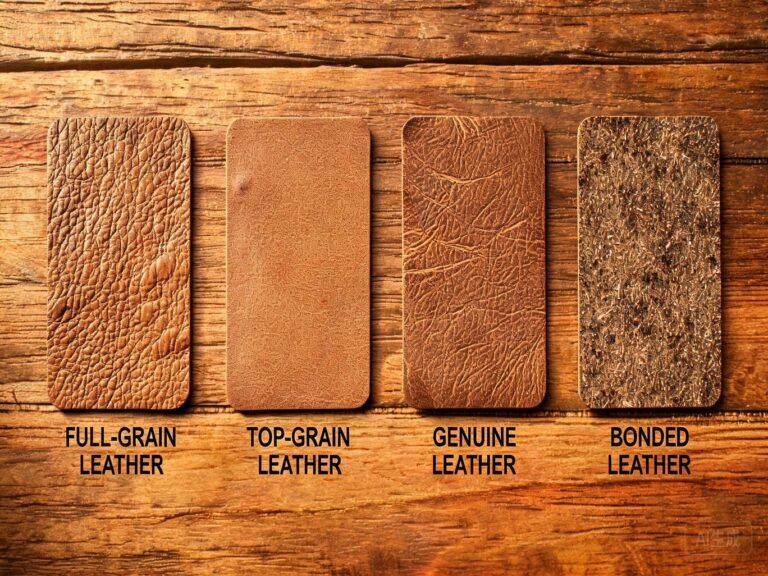
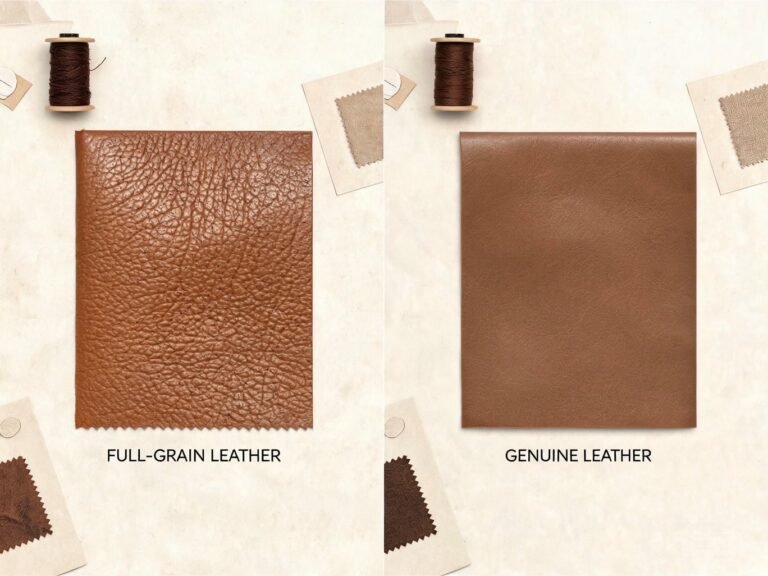
Let’s clear up the terminology confusion that costs buyers money. “Genuine leather” simply means the material comes from an animal hide — it says nothing about quality. “Top grain” is the actual grade: it refers to the outermost layer of the hide that has been sanded or buffed to remove natural imperfections, then refinished with a protective coating. This sanding distinguishes it from full grain leather, which retains the complete natural surface.
So when a supplier quotes “genuine top grain leather,” they’re describing sanded-and-refinished top-layer hide — but the quality within that category varies enormously. A top grain hide destined for a luxury automotive interior undergoes completely different processing than one earmarked for budget office furniture. The sanding depth, coating chemistry, and substrate quality all differ, and without explicit specifications, you’re gambling on which version you’ll receive. That’s why “what is genuine top grain leather” isn’t just a definitional question — it’s a procurement risk question.
Genuine Top Grain Leather Quality Grades Explained
Suppliers classify top grain leather into four sub-grades based on defect density, grain uniformity, and hide area. Understanding these grades is essential for cost optimization — paying A-grade prices for B-grade applications wastes budget, while specifying B-grade for A-grade requirements guarantees quality failures.
- Grade A — Minimal defects (≤3% surface area), uniform grain, highest yield. Priced at a 30–40% premium. Ideal for visible automotive panels and premium furniture upholstery.
- Grade B — Moderate defects (3–8%), acceptable for most visible applications with strategic cutting. The sweet spot for mid-range furniture.
- Grade C — Significant defects (8–15%), requires heavy pigmentation to mask. Suitable for hidden panels, dust covers, and budget furniture.
- Grade D — Defects exceed 15%, heavily corrected. Used only for non-visible components or reconstituted leather products.
Here’s what catches procurement teams off guard: grade directly affects yield. A Grade A hide might yield 85% usable material, while Grade C drops to 60%. That means Grade C leather at 30% lower per-meter cost can actually cost more per usable square meter after waste is accounted for. Top grain leather quality grades matter not just for appearance but for total material economics.

Sample rack displaying top grain leather across multiple grades and color options
Testing Priorities: 6 Benchmarks That Define Acceptable Material
We’ve seen purchasing teams accept supplier test reports at face value — only to discover during incoming QC that the certificates referenced different test methods or tolerance bands. Genuine top grain leather testing standards exist for a reason: they convert subjective “looks good” into measurable pass/fail criteria. These six benchmarks should appear on every specification sheet:
| Test Parameter | Standard | Acceptable Range | Failure Mode |
|---|---|---|---|
| Tensile strength | ISO 3376 | ≥15 N/mm² | Tearing under load |
| Tear strength | ISO 3377 | ≥40 N/mm | Splitting at seams |
| Abrasion (Martindale) | ISO 5470 | ≥15,000 cycles | Surface wear-through |
| Flex endurance | ISO 5402 | ≥50,000 cycles | Cracking at stress points |
| Color fastness (rubbing) | ISO 11640 | Grade 4+ (dry) | Color transfer |
| Thickness tolerance | ISO 2589 | ±0.1mm of nominal | Sewing inconsistency |
In our experience working with leather quality inspection protocols, the flex endurance test is the most commonly falsified or omitted parameter. Suppliers know that flex testing takes 24–48 hours per sample, and many buyers don’t verify it independently. But flex failure is the #1 warranty claim driver for upholstered furniture — the coating cracks at stress points after 6–12 months of normal use. One client who specified ISO 5402 testing at 50,000 cycles reduced their furniture warranty return rate from 4.2% to 0.8% within a single production cycle.

Tensile strength tester evaluating top grain leather samples per ISO 3376
Custom Production Options for Top Grain Leather
Custom top grain leather production gives buyers control over four variables that directly impact both cost and performance. Most procurement teams underutilize these options — accepting supplier defaults rather than engineering the material to their specific application requirements.
- Thickness — 0.8mm for apparel and small goods, 1.0–1.4mm for furniture, 1.2–1.8mm for automotive. Thicker hides cost more but provide better tear resistance and dimensional stability.
- Texture/embossing — Natural grain, pebbled, saffiano, or smooth finishes. Custom embossing rollers add 2–3 weeks to lead time but create brand-differentiating surface patterns.
- Color and finish — Aniline, semi-aniline, or pigmented. Custom color matching to Delta E ≤2.0 typically requires a 500-meter minimum order.
- Backing type — Fabric-backed for upholstery, unbacked for apparel, or foam-laminated for cushioning applications. Backing choice affects both sewability and structural integrity.
The cost implications are real. A 1.0mm pigmented top grain leather might run $8–12 per square meter, while a 1.4mm semi-aniline with custom embossing can reach $18–25. Understanding these trade-offs lets you allocate budget where it matters — spending on thickness for structural components while accepting lighter finishes on non-visible areas.

Bally flexometer running flex endurance testing on top grain leather samples

Color fastness testing equipment verifying dye stability under rubbing per ISO 11640
Genuine Top Grain Leather vs Silicone: When to Switch
Natural top grain leather wins on tactile authenticity — nothing replicates the warmth and patina of real animal hide. But it loses on three fronts that increasingly matter in B2B procurement: consistency, maintenance, and environmental compliance. The genuine top grain leather vs full grain debate often obscures the more practical question: when does switching to silicone leather make commercial sense?
Switch trigger: If your application involves frequent cleaning cycles, exposure to moisture, or regulatory VOC limits (EU REACH, California Proposition 65), silicone leather eliminates the coating degradation and chemical emission issues that plague top grain leather over its lifecycle.
Silicone leather matches top grain’s stain resistance while adding permanent cleanability — there’s no coating to degrade. It also delivers consistent full silicone vs semi-silicone options for different budget tiers, with color consistency controlled to Delta E ≤1.5 — tighter than most top grain leather suppliers can guarantee across batches. For automotive interiors where ISO standards govern VOC emissions, silicone leather’s zero-solvent manufacturing process removes a compliance variable entirely.

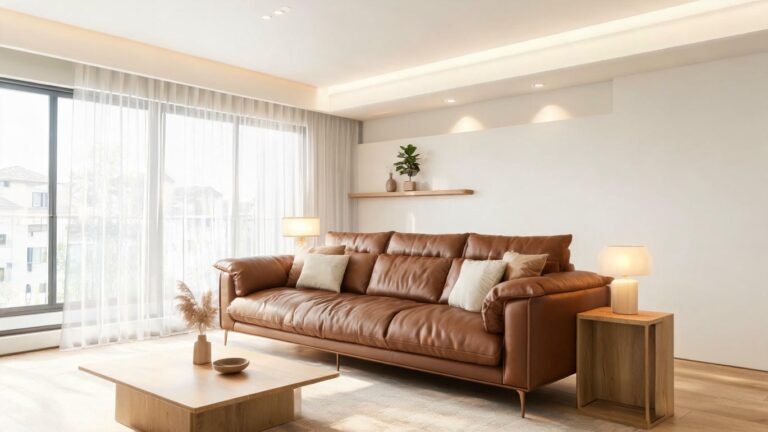
Top grain leather applied to premium furniture upholstery showing natural grain texture
Material comparison video: genuine leather vs silicone leather performance testing
Frequently Asked Questions
Is genuine top grain leather better than full grain leather?
“Better” depends on the application. Full grain retains the complete natural surface, making it more durable and breathable — but also more expensive and visually inconsistent. Top grain is sanded and refinished for uniformity, making it more practical for high-volume production where consistency matters. For automotive and contract furniture, top grain is often the better commercial choice. For luxury goods where patina is valued, full grain wins.
What thickness should I specify for top grain leather in furniture?
For residential furniture, 1.0–1.2mm provides adequate tear resistance without excessive stiffness. For commercial or hospitality furniture, specify 1.2–1.4mm to withstand higher traffic. Always specify a tolerance of ±0.1mm — without it, suppliers may deliver hides varying by 0.3mm or more within the same batch, causing sewing machine tension issues and inconsistent seam appearance.
Specifying Genuine Top Grain Leather Without the Guesswork
The phrase “genuine top grain leather” on a purchase order is not a specification — it’s a starting point. Real procurement precision means naming the grade, locking down the six test benchmarks, specifying custom production parameters, and knowing when natural leather’s limitations justify switching to a synthetic alternative. Buyers who treat leather sourcing as an engineering exercise rather than a commodity purchase consistently achieve better quality, lower waste, and fewer warranty claims. The genuine top grain leather you specify today determines the product returns you avoid tomorrow.
Download Leather Testing Checklist
About TOPSUN
TOPSUN produces silicone leather alternatives that match genuine top grain leather’s aesthetic appeal while eliminating the grading, yield, and consistency challenges inherent in natural hide sourcing for automotive, furniture, and consumer goods manufacturers.
Our materials provide full-color customization with Delta E ≤1.5 consistency, thickness control from 0.6mm to 2.0mm, and certifications including REACH, RoHS, and ISO 10993 for medical-grade applications.