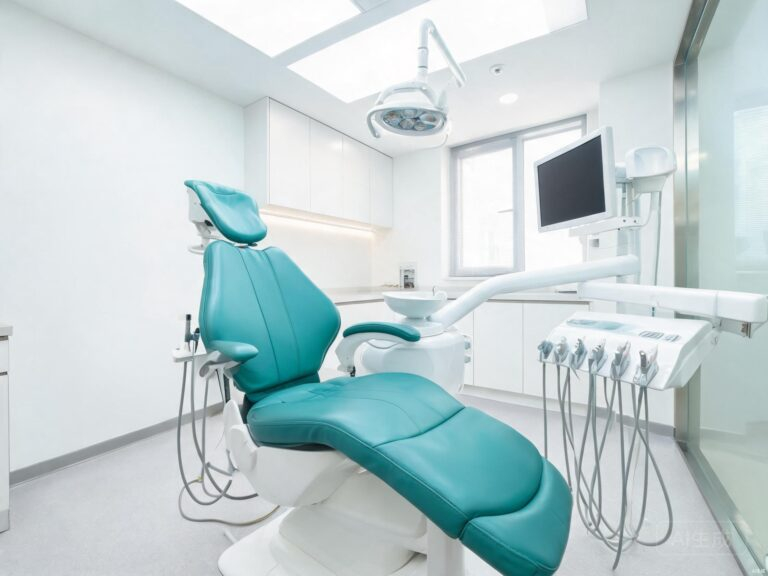
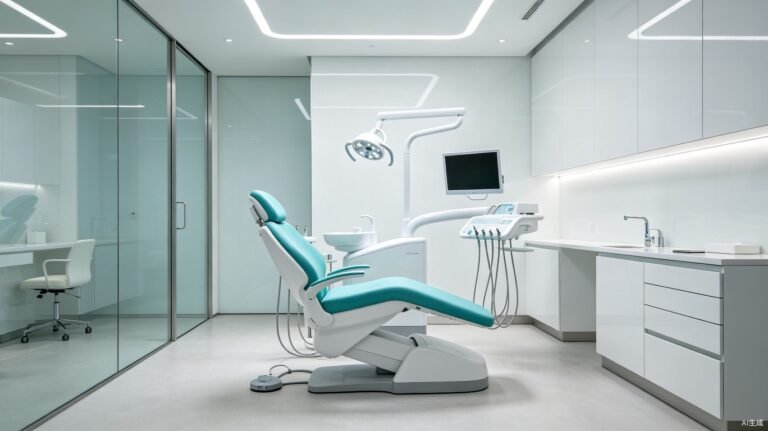
Walk into any dental clinic built more than five years ago, and you will see it: the dental chair upholstery is cracked at the seams, peeling at the headrest, and stained in places that no amount of disinfectant can remove. That visible degradation is not just an aesthetic problem — it is an infection control liability. Every crack and peel creates a micro-environment where bacteria survive standard wipe-down protocols. The CDC considers dental chair surfaces “clinical contact surfaces” that must be either barrier-protected or disinfected between every patient [$TRAE_REF](https://www.cdc.gov/dental-infection-control/hcp/summary/index.html). The upholstery material you specify determines whether that disinfection actually works — or merely creates an illusion of cleanliness.
Request Dental Upholstery Samples

What Dental Chair Upholstery Must Withstand
A dental chair is not a sofa. It is a clinical workspace where the upholstery surface encounters blood, saliva, dental aerosols, chemical disinfectants, and abrasive instruments — sometimes 30-40 times per day. The material must survive this assault cycle for years without degrading into a contamination risk. Understanding dental chair upholstery cleaning disinfection requirements starts with knowing what the surface actually faces during a typical workday.
- Chemical exposure — EPA-registered hospital disinfectants containing quaternary ammonium compounds (quats), sodium hypochlorite (bleach), or 60-90% alcohol are applied between every patient. These chemicals are formulated to destroy biological contaminants — which means they also attack polymer-based upholstery materials.
- Mechanical stress — Patient transfer, instrument placement, and continuous repositioning create flex stress at seams and edges. The upholstery must resist cracking under repeated bending without developing micro-fissures that trap pathogens.
- Thermal cycling — Dental clinics run HVAC systems that cycle temperatures between 18-26°C daily. Materials with high thermal expansion coefficients develop internal stress that accelerates cracking over time.
- Biological contamination — Blood, saliva, and dental aerosols contact the surface directly. The upholstery must be non-porous enough to prevent fluid penetration and easy enough to clean that no biological residue remains after disinfection.
- UV and light exposure — Dental operatory lights generate intense illumination for hours daily. Materials prone to UV degradation will yellow, fade, and become brittle — compromising both aesthetics and structural integrity.
The CDC’s Summary of Infection Prevention Practices in Dental Settings classifies dental chair surfaces as clinical contact surfaces requiring either surface barriers or cleaning and disinfection between patients [$TRAE_REF](https://www.cdc.gov/dental-infection-control/hcp/summary/index.html). Most clinics rely on disinfection rather than barriers — which means the upholstery material itself becomes the primary infection control surface. This is why material specification is a clinical safety decision, not a furniture choice. You can learn more about medical-grade silicone leather applications to understand how material science intersects with healthcare compliance.
Vinyl vs PU vs Silicone: Material Performance Comparison
Three material categories dominate medical grade dental chair upholstery: vinyl (PVC), polyurethane (PU), and silicone. Each has a distinct performance profile under clinical conditions. As a specifier, your material choice should be driven by how the upholstery will perform after 5,000 disinfection cycles — not how it looks fresh out of the box.

| Property | Vinyl (PVC) | PU Leather | Silicone Leather | Clinical Impact |
|---|---|---|---|---|
| Chemical Resistance | Poor — plasticizers leach with quat exposure | Moderate — surface hardens with alcohol | Excellent — inert to all hospital disinfectants | Determines whether disinfection actually works |
| Crack Resistance | Low — cracks within 2-3 years | Moderate — cracks within 3-4 years | High — no cracking at 200K flex cycles | Cracks harbor bacteria and break infection control |
| Cleanability | Fair — surface becomes porous over time | Good initially, degrades with chemical exposure | Excellent — wipe-clean even after years of use | Directly affects CDC compliance and audit results |
| Typical Lifespan | 2-3 years before visible degradation | 3-5 years depending on disinfection frequency | 8-12+ years with proper maintenance | Drives reupholster cost and downtime frequency |
| Biocompatibility | Contains phthalates and chlorine | May contain residual solvents | ISO 10993 certified, zero VOC, phthalate-free | Relevant for patient skin contact compliance |
In our experience working with dental equipment manufacturers, the break-even point between silicone and vinyl typically falls at 18-24 months. Vinyl costs roughly 40% less upfront but requires reupholstering every 2-3 years. Silicone costs more initially but eliminates three to four reupholster cycles over the same period. For a clinic operating 8 chairs, that difference translates to approximately $12,000-15,000 in avoided reupholster labor and downtime over 8 years. For a deeper material science breakdown, our silicone vs PU comparison covers the molecular differences that drive these performance gaps.

How Disinfection Chemicals Break Down Clinic Surfaces
The irony of dental infection control is that the chemicals used to protect patients are the same chemicals that destroy the upholstery meant to keep them safe. Understanding dental chair upholstery chemical resistance requires knowing how each disinfectant class interacts with upholstery polymers:
- Quaternary ammonium compounds (quats) — The most common dental surface disinfectant. Quats work by disrupting cell membranes — but they also dissolve plasticizers in PVC vinyl. With repeated exposure, vinyl becomes rigid, brittle, and prone to cracking. The surface that started soft and seamless turns into a network of micro-fissures within 12-18 months.
- Sodium hypochlorite (bleach) — Used for high-level disinfection in outbreak scenarios. Bleach oxidizes polymer chains in both PVC and PU, causing yellowing, embrittlement, and surface pitting. Even dilute bleach solutions (1:10) cause measurable degradation after 50-100 applications.
- Alcohol-based disinfectants (60-90% ethanol/isopropanol) — Fast-acting and convenient, but alcohol extracts oils and plasticizers from PU leather. The surface initially appears clean but gradually hardens and loses flexibility, leading to stress cracks at flex points like the headrest and armrests.
- Hydrogen peroxide-based cleaners — Increasingly popular as a greener alternative. Less aggressive than bleach but still causes oxidative damage to PU and PVC over extended exposure. Silicone is inherently resistant to oxidation due to its silicon-oxygen backbone.
Silicone leather is chemically inert to all four disinfectant classes. The silicon-oxygen molecular bond is significantly more stable than the carbon-carbon bonds in PVC and PU polymers. This means quats, bleach, alcohol, and hydrogen peroxide can be applied to silicone upholstery thousands of times without degrading the surface. For clinics following proper cleaning and maintenance protocols, this translates to years of reliable infection control without material failure.

When to Replace Dental Chair Upholstery: Warning Signs
Waiting until dental chair upholstery looks visibly damaged is waiting too long. By the time cracks are visible to the naked eye, bacteria have already colonized the micro-fissures beneath the surface. Here are the warning signs that dental chair upholstery cracking vinyl has progressed from a cosmetic issue to an infection control failure:
- Surface texture change — If the upholstery feels stiffer, rougher, or less supple than when new, the polymer has already begun degrading. This is the earliest sign, appearing 6-12 months before visible cracks.
- Color shift at stress points — Darkening or yellowing at the headrest, armrest, and seat pan edges indicates chemical absorption and polymer breakdown in high-contact zones.
- Visible micro-cracks — Hairline fissures along seams and flex points. At this stage, the surface can no longer be effectively disinfected — bacteria shelter in the cracks and survive wipe-down.
- Seam separation — When stitched or welded seams begin to open, fluid penetration becomes possible. This is an immediate replacement trigger — no amount of barrier film can fully compensate for open seams.
- Permanent staining — If stains no longer respond to disinfectant cleaning, the surface has become porous enough to absorb contaminants. The upholstery is now a reservoir rather than a barrier.
A practical guideline: if any two of these signs appear simultaneously, schedule reupholstering within 30 days. If three or more appear, the chair should be pulled from service immediately. The cost of emergency reupholstering and patient rescheduling always exceeds the cost of planned material replacement. Our analysis of silicone leather properties explains why this material resists all five failure modes — delaying each warning sign by years rather than months.
TOPSUN silicone leather for medical and healthcare applications.
Specifying Silicone Leather for Clinical Seating
When specifying silicone leather for dental chair reupholster projects, designers and equipment manufacturers should focus on four specification parameters that determine clinical performance:
- Thickness and hardness — Dental seating typically requires 1.0-1.2mm thickness with Shore A hardness of 40-50. Too soft, and the surface shows compression marks; too hard, and patient comfort suffers. Request samples at both ends of the range to evaluate the trade-off.
- Surface treatment — Specify antimicrobial surface treatment verified by third-party testing (ISO 22196 or equivalent). This is separate from the material’s inherent chemical resistance — it provides an active defense layer against bacterial colonization between disinfection cycles.
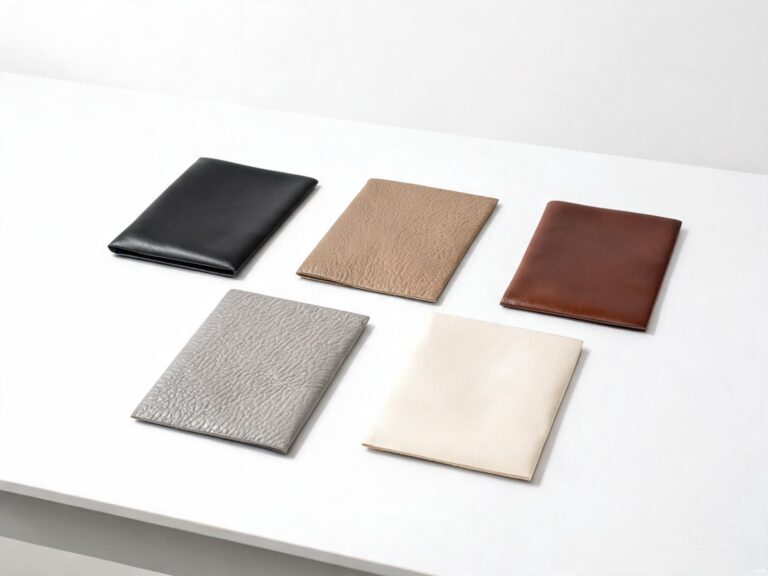
- Color and pattern selection — Light colors show stains more readily but make contamination easier to detect during visual inspection. Mid-tone blues, greens, and grays balance stain-hiding with the clinical aesthetic that modern dental practices prefer. Custom color matching is available for OEM programs.
- Seam construction — Specify high-frequency welding over stitched seams where possible. Welded seams eliminate the needle holes that create fluid penetration paths. If stitching is required for complex contours, use sealed seam tape on the reverse side.
One dental equipment OEM we worked with switched from vinyl to silicone leather on their mid-tier chair line. The material cost increased by approximately $45 per chair. Over the first 18 months, warranty claims for upholstery replacement dropped by 87%, and customer satisfaction scores for “chair quality and cleanliness” improved by 23 points. The dental chair reupholster silicone leather specification paid for itself within the first year through reduced warranty costs alone — before counting the long-term infection control benefits.
Get a Material Specification Sheet
Frequently Asked Questions
How often should dental chair upholstery be replaced?
Vinyl upholstery typically needs replacement every 2-3 years in a busy practice. PU leather lasts 3-5 years. Silicone leather can last 8-12+ years with proper maintenance. However, replacement should be triggered by visible degradation signs — cracking, seam separation, or permanent staining — not by a fixed calendar schedule. Any sign of micro-cracking means the surface can no longer be effectively disinfected and should be replaced immediately.
Can silicone leather withstand EPA-registered hospital disinfectants?
Yes. Silicone leather is chemically inert to quaternary ammonium compounds, sodium hypochlorite (bleach at 1:10 dilution), 60-90% alcohol solutions, and hydrogen peroxide-based cleaners. The silicon-oxygen molecular backbone does not react with these disinfectants the way carbon-based polymers (PVC, PU) do. In testing, silicone leather showed no surface degradation after 10,000+ disinfection cycles with standard hospital-grade products.
Is silicone leather upholstery more expensive than vinyl for dental chairs?
Silicone leather costs approximately 40-60% more per meter than medical-grade vinyl. However, the total cost of ownership over 8 years favors silicone: vinyl requires 3-4 reupholster cycles in the same period, each costing $300-500 per chair in labor and downtime. Silicone’s initial premium is typically recovered within 18-24 months through avoided replacement costs.
Designing for Clinical Reality
Dental chair upholstery is the intersection of design, material science, and infection control. The material you specify today will face thousands of disinfection cycles, chemical exposures, and mechanical stress events before it is replaced. Choosing based on initial cost alone guarantees premature failure and the hidden costs of reupholster labor, patient downtime, and potential compliance gaps. Silicone leather changes the equation by offering a surface that actually improves with age — maintaining its cleanability, structural integrity, and aesthetic appeal through years of clinical use.
For dental equipment manufacturers and clinic designers, the specification decision is straightforward: choose the material that matches the expected service life of the chair itself, not the shortest-lived component. A dental chair designed to last 10 years should not be upholstered in a material that fails in 3. For more on how silicone leather performs across healthcare applications, explore our medical healthcare product line and eco-friendly material properties that support both clinical safety and sustainability goals.
Request Dental Upholstery Samples
About TOPSUN
TOPSUN manufactures medical-grade silicone leather specifically engineered for healthcare seating applications, including dental chairs, examination tables, and rehabilitation equipment used in clinics across 30+ countries.
Our capabilities include ISO 10993 biocompatibility certification for patient-contacting surfaces, antimicrobial surface treatment verified by independent third-party testing, resistance to 10,000+ disinfection cycles with quaternary ammonium and alcohol-based products, and custom color matching to integrate with any clinic interior design scheme. Every production batch ships with full chemical resistance and biocompatibility documentation traceable to original test certificates.