A furniture manufacturer’s design team can perfect a sofa silhouette in CAD, but if the leatherette fabric for upholstery specified for production fails a Martindale abrasion test at 15,000 cycles instead of the required 50,000, the entire production run is at risk. The gap between a beautiful sample swatch and a bulk-order reality often comes down to six specification lines on a technical data sheet — and most procurement teams don’t know which lines matter most.
This guide breaks down the specification framework that separates upholstery-grade leatherette from decorative-grade material, compares PU, PVC, and silicone leatherette options for bulk buyers, and provides a procurement checklist that prevents quality drift between sample approval and mass production.
Explore Furniture Upholstery Solutions
What Defines Leatherette Fabric for Upholstery?
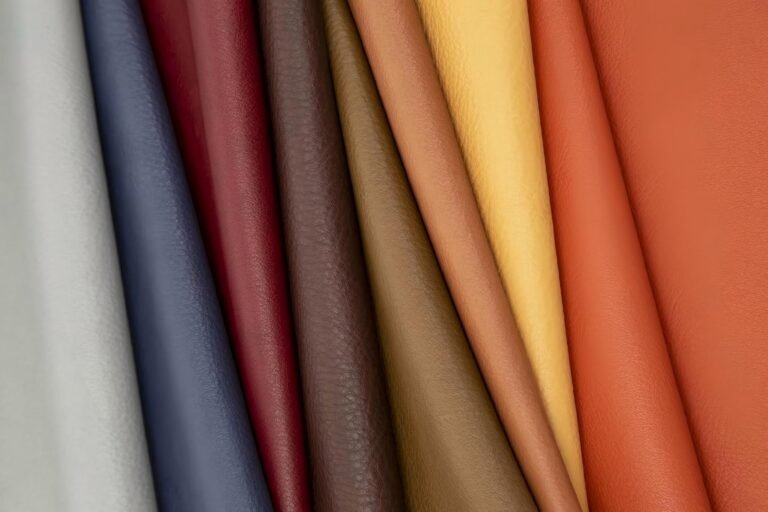
Leatherette is an umbrella term that covers any fabric engineered to look and feel like leather — but not all leatherette is created equal. The three dominant material types in the upholstery market are polyurethane (PU), polyvinyl chloride (PVC), and silicone-coated fabric. Each uses a different base fabric, a different surface coating chemistry, and a different lamination process, which together determine how the material performs under real-world upholstery stress.
For buyers asking what is leatherette fabric for upholstery in a procurement context, the answer goes beyond appearance. Upholstery-grade leatherette must withstand repeated sitting friction, seam stress during tufting and stitching, exposure to cleaning chemicals, and in commercial settings, rigorous fire safety testing. A material that looks identical on a swatch card can have a service life of 18 months or 10 years depending on what’s underneath the surface coating.
The key distinction is this: decorative leatherette (used in packaging, book covers, low-end accessories) typically has a thin coating over a lightweight base fabric, while upholstery-grade leatherette uses a heavier base fabric (often ≥200 g/m² polyester or cotton blend) with a thicker, more durable coating layer. This structural difference is invisible to the eye but determines whether your furniture survives a 5-year warranty claim.
Six Specifications That Determine Upholstery Performance

When evaluating leatherette fabric durability Martindale test results, procurement teams should look beyond the headline number. A material rated at 50,000 Martindale cycles can still fail prematurely if its tear strength, cold-crack resistance, or coating adhesion falls below industry thresholds. Here are the six specifications that together define upholstery-grade performance:
- Thickness (mm): Upholstery-grade leatherette typically ranges from 0.7 mm to 1.8 mm. Below 0.7 mm, the material lacks the body needed for tight upholstery pulls; above 1.8 mm, it becomes difficult to stitch and tuft without specialized equipment.
- Martindale abrasion (cycles): Residential upholstery should meet ≥25,000 cycles; commercial grade requires ≥50,000. The test method (EN ISO 12947) must be specified on the data sheet.
- Tear strength (N): Measures resistance to propagation of cuts. Upholstery-grade leatherette should deliver ≥25 N in both warp and weft directions to survive tufting and stapling.
- Flame retardancy: FMVSS 302 for automotive, EN 1021-1/2 for furniture, and IMO FTP Code for marine. The specific standard must match the end application.
- Lightfastness (blue wool scale): Grade 5 minimum for residential, grade 6+ for commercial and outdoor applications. Prevents color shift in showroom or sun-exposed environments.
- Cold-crack resistance (°C): The temperature at which the coating cracks when folded. For products shipped or used in cold climates, ≤-20°C prevents coating failure during transport.
In our testing lab, we’ve seen leatherette samples that passed Martindale testing but failed cold-crack resistance at -5°C — meaning a container shipped in winter could arrive with visible surface cracks. Always cross-reference multiple specifications, not just the one your competitor quotes.
Leatherette Fabric for Upholstery: Application Fit Matrix
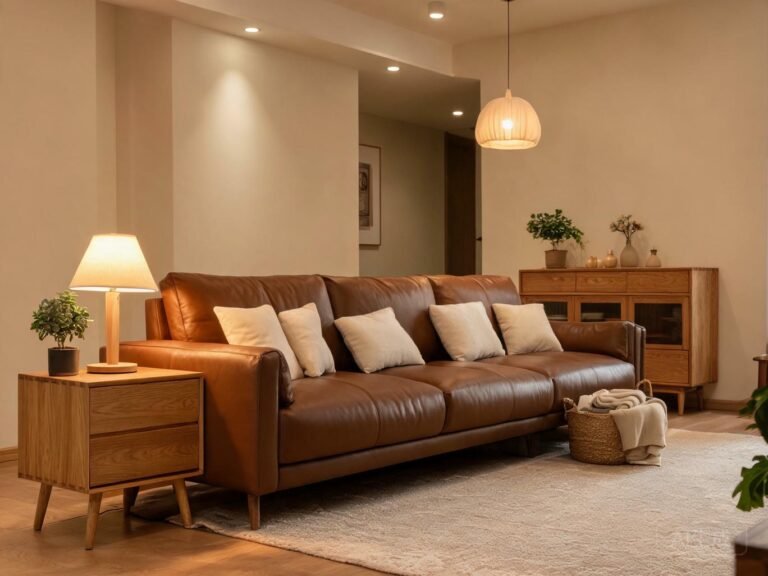
Not every upholstery application demands the same specification profile. The best leatherette fabric for commercial upholstery differs significantly from what’s appropriate for a residential accent chair. Matching material grades to end-use applications is the single most effective way to control both cost and warranty risk.

The application fit matrix below maps common upholstery scenarios to the minimum specification thresholds that procurement teams should enforce:
| Application | Min. Martindale | Flame Standard | Recommended Thickness |
|---|---|---|---|
| Residential sofa | 25,000 | EN 1021-1/2 | 0.9–1.2 mm |
| Commercial furniture | 50,000 | EN 1021-1/2 + B1 | 1.0–1.4 mm |
| Hospitality / hotel | 50,000 | CAL 117 / TB 133 | 1.1–1.5 mm |
| Marine / outdoor | 50,000+ | IMO FTP Code | 1.2–1.6 mm |
One of our hospitality clients initially specified a residential-grade PU leatherette for a 200-room hotel project to save 12% on material cost. Within 14 months, 38% of the headboards showed coating wear at the contact zone. The replacement cost — including labor, logistics, and guest room downtime — exceeded the original material savings by a factor of seven. The lesson: specification grade must match application intensity, not just aesthetic targets.
View Our Production Capabilities
PU vs PVC vs Silicone: What Bulk Buyers Need to Know

When comparing leatherette fabric vs genuine leather upholstery, the conversation often misses a more important comparison: the differences between PU, PVC, and silicone leatherette themselves. Each chemistry produces a material with fundamentally different cost structures, durability profiles, and regulatory compliance paths.
| Property | PU Leatherette | PVC Leatherette | Silicone Leatherette |
|---|---|---|---|
| Typical price ($/meter) | $3.50–$6.00 | $2.00–$4.50 | $8.00–$14.00 |
| Hydrolysis resistance | 3–5 years | 5–8 years | 10+ years |
| VOC emissions | Moderate | High (plasticizers) | Near-zero |
| Chemical resistance | Alcohol-sensitive | Bleach-sensitive | Resistant to all disinfectants |
| Best fit | Budget residential | High-traffic budget commercial | Premium commercial / healthcare |
PU leatherette offers the best tactile feel at a budget price point but is vulnerable to hydrolysis — the chemical breakdown of the polyurethane coating in humid environments. PVC is more durable and cheaper but carries regulatory concerns around phthalate plasticizers and dioxin release during disposal. Silicone leatherette, as detailed in our silicone vs PU comparison, eliminates both issues but comes at a premium price that makes sense only for applications where total lifecycle cost — not upfront material cost — is the metric that matters.
For more on how silicone chemistry achieves its performance advantages, see our guide on commercial upholstery fabric selection.
Bulk Procurement Checklist: From Sample to Container

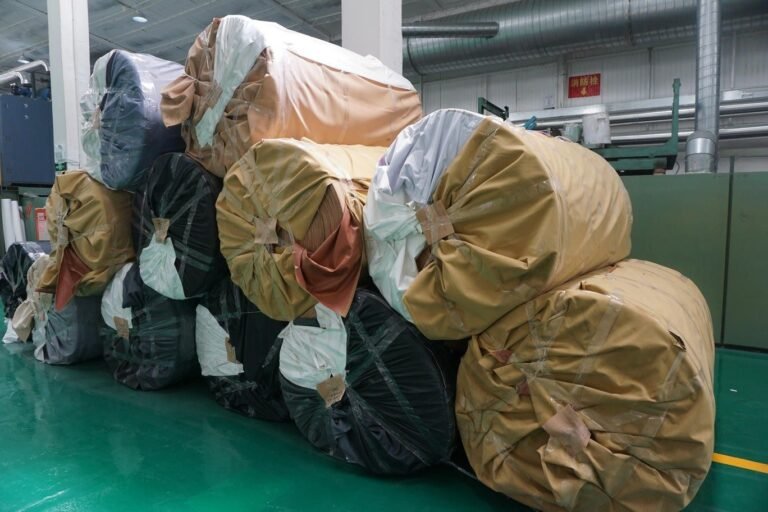
Sourcing wholesale leatherette fabric for furniture upholstery in volume introduces risks that small-sample evaluation doesn’t surface. The most common failure mode is quality drift: the sample you approve in week one looks perfect, but the bulk production in week six uses a slightly different coating formulation, base fabric weight, or curing temperature. Here’s a procurement checklist that catches drift before it reaches your assembly line:
- Request a production-batch sample, not a showroom sample. Showroom samples are often from a dedicated “golden batch.” Require a sample pulled from the actual production line within 7 days of your order confirmation.
- Specify tolerance ranges, not target values. Instead of “1.2 mm thickness,” specify “1.2 mm ±0.1 mm.” Without tolerance bands, suppliers can legally ship material at the edge of acceptability.
- Include a color Delta E clause. Require Delta E ≤ 2.0 between batch samples and your approved master. This prevents visible color mismatch across furniture sets assembled from different fabric rolls.
- Mandate third-party test reports for every shipment. Require Martindale, tear strength, and flame retardancy test reports from an ISO 17025-accredited lab — not the supplier’s in-house QC department.
- Negotiate MOQ by color, not by total volume. A supplier may offer a low total MOQ but require 500 meters per custom color. For multi-color furniture lines, negotiate color-level MOQs of 100–200 meters.
- Build a 48-hour aging test into your QC protocol. Expose samples to 70°C for 48 hours and inspect for coating delamination, color shift, or embrittlement. This catches curing defects that pass initial visual inspection.
For a deeper look at our factory’s full vs semi-silicone leather options and how they affect bulk pricing, or to review our faux leather furniture buyer’s guide for additional procurement context, these resources provide specification-level detail.
Conclusion
Specifying leatherette fabric for upholstery is not a single-decision task — it’s a cascade of interdependent choices. Material chemistry sets the performance ceiling. Thickness and Martindale ratings define the durability floor. Flame retardancy standards gate market access. And procurement protocols determine whether the bulk shipment matches the sample you approved. By treating each specification as a non-negotiable line item rather than a negotiable preference, procurement teams can eliminate the most common causes of upholstery failure — coating delamination, premature cracking, and color mismatch — before they reach the production floor.
Request Upholstery Fabric Spec Sheets & Samples
Frequently Asked Questions
How can I prevent leatherette upholstery fabric from cracking prematurely?
Premature cracking is almost always caused by one of three factors: hydrolysis in PU coatings (accelerated by humidity above 70%), plasticizer migration in PVC (accelerated by UV exposure), or cold-temperature embrittlement during shipping. Specify materials with cold-crack resistance ≤-20°C, require hydrolysis test data (at least 500 hours at 70°C / 95% RH for PU), and for high-risk applications, switch to silicone leatherette which is inherently hydrolysis-resistant and remains flexible to -40°C.
What is the minimum order quantity for custom leatherette fabric?
MOQ varies by material type and customization level. Standard colors in PU or PVC typically start at 300–500 meters. Custom colors require 500–1,000 meters depending on the coating system. Silicone leatherette custom colors start at 300 meters at TOPSUN. Always confirm whether the MOQ is per color or per total order, and negotiate color-level MOQs if your furniture line uses multiple colors.
About TOPSUN
TOPSUN manufactures silicone-based leatherette fabric for upholstery applications across residential furniture, commercial interiors, automotive seating, and marine environments. Our production capabilities include custom thickness from 0.7 to 2.0 mm, Martindale abrasion ratings exceeding 50,000 cycles, flame-retardant certifications meeting FMVSS 302 and EN 1021 standards, and a Delta E ≤ 1.5 color consistency guarantee across production batches. We support B2B buyers with per-color MOQs as low as 300 meters, third-party test reports on every shipment, and production-batch sampling within 7 days of order confirmation.