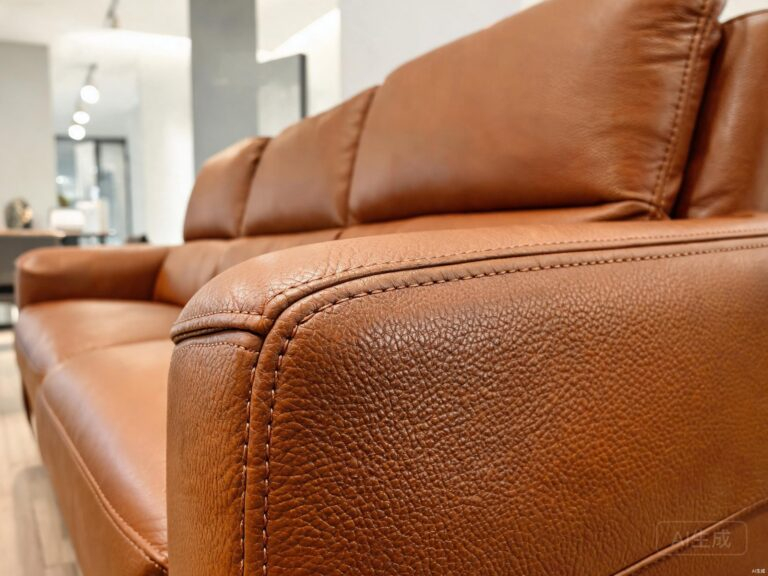
Real leather upholstery fabric carries an unmistakable prestige. The natural grain, the way it ages, the tactile warmth — these qualities have made it the default choice for high-end furniture, luxury automotive interiors, and premium contract seating for decades. But prestige comes at a price that extends far beyond the initial purchase. Having managed furniture procurement for commercial projects where hundreds of upholstered pieces need to look good after years of daily use, I have learned that the real cost of real leather is not on the invoice — it is in the maintenance log.
This analysis examines real leather upholstery fabric from a total cost of ownership perspective, comparing it against modern alternatives that have closed the gap on aesthetics while solving the maintenance and durability problems that make genuine leather expensive to live with. If you are specifying upholstery for a commercial environment, a fleet of vehicles, or a residential project with a long-term horizon, the numbers below may change your material decision.
What Makes Real Leather Upholstery Fabric Premium?
Real leather upholstery fabric earns its premium reputation through a combination of tactile and visual qualities that synthetic materials have spent decades trying to replicate. Full-grain leather — the highest grade, made from the top layer of the hide with natural surface intact — develops a patina over time that many designers consider beautiful. The material breathes naturally, which means it stays comfortable in both hot and cold conditions, adjusting to body temperature rather than trapping heat like vinyl or PVC.
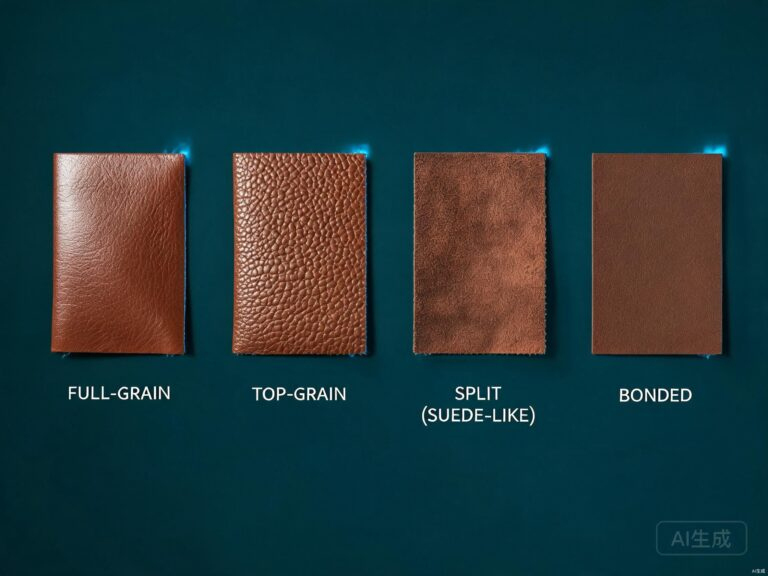
The grading system matters enormously here. Full-grain leather is the strongest and most natural-looking, but also the most expensive and the most variable in appearance. Top-grain leather has been sanded to remove imperfections and coated with a finish, making it more uniform but less breathable and slightly weaker. Split leather (often marketed as “genuine leather”) is the bottom layer, processed and embossed to look like higher grades — and it is where most of the disappointment happens, because it lacks the durability and character that make real leather worth the premium in the first place.
For B2B buyers, the grading distinction is critical. A specification that simply says “real leather” without specifying the grade gives the supplier enormous latitude to substitute split leather for full-grain. Always specify the grade, the hide origin (cowhide is standard for upholstery), and the tanning method (chrome-tanned is softer; vegetable-tanned is firmer and more environmentally contentious).

Softness and fold characteristics — key indicators of upholstery leather grade
The Hidden Costs of Real Leather Upholstery Fabric
The purchase price of real leather upholstery fabric — typically $15-40 per square meter for upholstery-grade hides — is only the beginning of the cost story. In commercial settings, the real expenses accumulate over the product’s lifespan through maintenance, repair, and eventual replacement. Let me break down the costs that procurement teams often overlook when comparing real leather to synthetic alternatives.
First, there is conditioning. Real leather requires treatment with conditioning products every 6-12 months to prevent drying, cracking, and color loss. In a commercial environment with 50 upholstered chairs, that means scheduling regular maintenance visits, purchasing conditioning products, and accepting downtime while pieces are treated. A single conditioning cycle for a mid-sized furniture fleet can cost $2-5 per piece in labor and materials — and it recurs indefinitely.
Second, there is stain vulnerability. Unlike synthetic materials that can be wiped clean with standard disinfectants, real leather is porous. Ink, dyes from clothing (especially denim), body oils, and food spills can permanently stain the surface. Professional cleaning services charge $50-150 per piece for deep cleaning, and some stains simply cannot be removed without damaging the leather’s surface finish. In environments where cleanliness is non-negotiable — healthcare, hospitality, food service — this vulnerability is a significant operational liability.
Third, there is UV sensitivity. Real leather upholstery fabric fades and dries when exposed to direct sunlight. In automotive interiors and near windows in commercial spaces, UV damage can necessitate reupholstering within 3-5 years — well before the structural frame of the furniture has reached end of life. The cost of reupholstering a single commercial sofa in real leather can exceed the original purchase price of the piece.

Color fastness testing — UV exposure simulation reveals real leather’s fading vulnerability
Maintenance Demands: What Real Leather Requires
If you have ever managed a real leather upholstery fleet, you know the maintenance routine by heart. Here is what it looks like in practice — and why it drives total cost of ownership higher than most buyers anticipate at the point of specification:
- Daily wiping: Dust and debris must be removed daily with a dry or barely damp cloth. Abrasive particles ground into the leather surface accelerate wear and create dull spots.
- Quarterly cleaning: A pH-balanced leather cleaner must be applied every 3 months to remove body oils and environmental contaminants that accumulate in the pores.
- Semi-annual conditioning: Leather conditioning products replenish natural oils lost through evaporation and use. Skipping this step leads to cracking within 12-18 months.
- Annual inspection: Professional inspection for early signs of cracking, seam separation, and frame stress — catching issues early can extend the piece’s life by several years.
- Immediate spill response: Any liquid spill must be blotted (not wiped) within minutes to prevent permanent staining. In busy commercial environments, this response time is rarely realistic.
Compare this to the maintenance profile of silicone leather upholstery: wipe with any standard disinfectant, no conditioning required, no special cleaners, and stains that sit for hours can be removed without damage. The labor savings alone — across a 5-year period for a 100-piece furniture fleet — can exceed $15,000. That is money that does not appear on the initial purchase order but shows up clearly in the facilities maintenance budget.

Scratch resistance testing — real leather’s vulnerability to sharp objects is a known weakness
Real Leather Upholstery Fabric vs Modern Alternatives
The gap between real leather and synthetic alternatives has narrowed dramatically. Twenty years ago, the choice was binary: real leather for quality, plastic for price. Today, advanced materials like silicone leather offer performance characteristics that real leather cannot match, while closing the aesthetic gap to a degree that many consumers cannot distinguish in blind tests. Here is how the options compare across the dimensions that determine total cost of ownership:
| Factor | Real Leather | PU Leather | Silicone Leather |
|---|---|---|---|
| Initial cost (per m²) | $15-40 | $3-6 | $7-12 |
| Expected lifespan | 8-15 years (with care) | 2-4 years | 10-15 years |
| Maintenance frequency | Monthly + quarterly deep clean | Weekly wipe | Weekly wipe |
| Stain resistance | Poor (porous) | Good | Excellent |
| UV stability | Moderate (fades) | Poor (cracks) | Excellent |
| 5-year TCO (per m²) | $35-65 | $12-20 | $10-18 |
The total cost of ownership calculation is revealing. Real leather’s 5-year TCO is 2-3 times higher than silicone leather, primarily because of maintenance labor and conditioning products. Silicone leather achieves a comparable or longer lifespan at less than half the total cost — and it does so without the stain vulnerability, UV fading, or specialized cleaning requirements that make real leather expensive to maintain.
Explore Silicone Leather Options
When to Choose Real Leather — and When Not To
Despite the cost analysis, real leather upholstery fabric still has legitimate use cases where its unique qualities justify the premium. The key is matching the material to the application rather than defaulting to leather for every premium specification. Here is a practical decision framework:
Choose real leather when: the application is residential or low-traffic luxury, where the patina development is a desired aesthetic feature, where maintenance staff are dedicated to leather care, and where the budget can absorb the ongoing costs. A private study with a single leather armchair is a perfect fit. A 200-seat restaurant dining room is not.
Choose silicone leather when: the application involves commercial traffic, requires regular disinfection, faces UV exposure, or needs to maintain appearance with minimal maintenance. Silicone leather delivers the premium look without the maintenance burden, making it the smarter specification for hospitality, healthcare, automotive, and contract furniture. Our analysis of upholstery fabric selection and handbag leather material options provides additional comparison context.
How long does real leather upholstery last?
With proper maintenance, full-grain real leather upholstery can last 10-15 years in residential settings and 8-10 years in commercial environments. However, “proper maintenance” is the critical qualifier — without regular conditioning, cleaning, and protection from UV and spills, the same leather can crack, fade, and stain within 3-5 years. The lifespan is as much a function of maintenance discipline as it is of material quality. Silicone leather, by comparison, achieves 10-15 year lifespans with basic wipe-down maintenance and no conditioning.
Can real leather upholstery be repaired?
Minor damage — small scratches, scuffs, and minor tears — can be repaired with leather patch kits or professional re-coloring services. However, deep tears, extensive cracking, and large stains typically require panel replacement or full reupholstering, which can cost 50-80% of the original piece’s purchase price. The repairability of real leather is often cited as an advantage, but in practice, most commercial damage exceeds what patch kits can address, and the repair cost rarely justifies the expense versus replacement.
Real leather upholstery fabric will always have a place in the market — its tactile qualities and aging characteristics are genuinely unique. But for B2B buyers managing commercial fleets, the total cost of ownership math has shifted decisively in favor of advanced synthetics. Silicone leather matches the aesthetic without the maintenance tax, withstands the cleaning protocols that commercial environments demand, and maintains its appearance for a decade or more with nothing more than a wipe-down. Before specifying real leather for your next project, run the 5-year cost calculation including maintenance labor — the number may surprise you.
About TOPSUN
TOPSUN manufactures silicone leather upholstery fabric that eliminates the conditioning, special cleaning, and UV sensitivity costs of real leather — delivering full-grain aesthetics with wipe-clean maintenance for contract furniture, hospitality, and automotive interior applications.
Zero conditioning required · Disinfectant-safe · UV-stable Grade 4-5 · 10-15 year lifespan · REACH compliant