For procurement teams, marine sun pad material sits at the intersection of the harshest forces on any yacht. Maximum UV load, relentless wet-dry cycling, aggressive sunscreen chemicals, and direct foredeck exposure create a failure environment that destroys ordinary surfaces within a single season. The material must stay cool enough for bare skin, reject oil-based stains, and recover from constant saltwater contact. This guide explains how to evaluate boat sun pad fabric for these extreme foredeck conditions and where silicone leather can deliver season-after-season performance without fading or cracking.
Download Material Specifications
Maximum UV Load and Foredeck Exposure for Sun Pads
Sun pad upholstery fails faster than any other marine surface because it is designed to be horizontal, exposed, and in direct contact with skin and chemicals. Reflective UV off water amplifies radiation, while the flat surface pools water and traps heat. For boat sun pad fabric, the buyer should look beyond generic outdoor ratings and ask how the material behaves after maximum UV dosage, prolonged water immersion, and repeated contact with sunscreen and body oils.
Accelerated weathering methods such as ASTM G154 UV exposure practice are critical for sun pads because the horizontal surface receives more cumulative radiation than vertical backrests. They do not replace dockside observation, but they help purchasing teams identify materials that will fade, embrittle, or develop surface cracks after a tropical season. Chemical resistance testing is equally important, since modern sunscreens contain avobenzone and octocrylene that can stain or degrade many synthetic surfaces.
Foredeck geometry matters. A forward sun pad on a performance cruiser, a flybridge lounger on a motor yacht, and a resort poolside daybed may all be called reclined seating, but each has a different mix of sun angle, wave splash frequency, chemical exposure, and cleaning urgency. Good specifications describe the real foredeck environment, not only the product name. This prevents selecting a decorative patio fabric for a high-UV yacht bow, or over-specifying a rigid commercial cover for a light-use resort lounger.

Color fastness testing — sun pad materials must resist fading under intense marine UV exposure.
Wet/Dry Cycling and Chemical Resistance
Waterproofing on a sun pad must survive continuous immersion and rapid drying, not occasional spray. A silicone leather surface must block saltwater absorption during wave contact while releasing moisture during the next dry period. This is important for sun lounger marine because trapped salt crystals and residual oils from skin and sunscreen accelerate hydrolysis and create permanent odor in foam and backing.
In our discussions with yacht builders and resort operators, the most useful sun pad specification is practical: a surface that stays cool under direct sun, releases oil and sunscreen stains with simple wiping, maintains flexibility after repeated saturation, and shows no watermarking after evaporation. Materials used on foredeck sun pads should also carry specific chemical-resistance documentation against common sunscreen ingredients and tanning oils, since these agents are the leading cause of irreversible staining on white and light-colored marine upholstery.

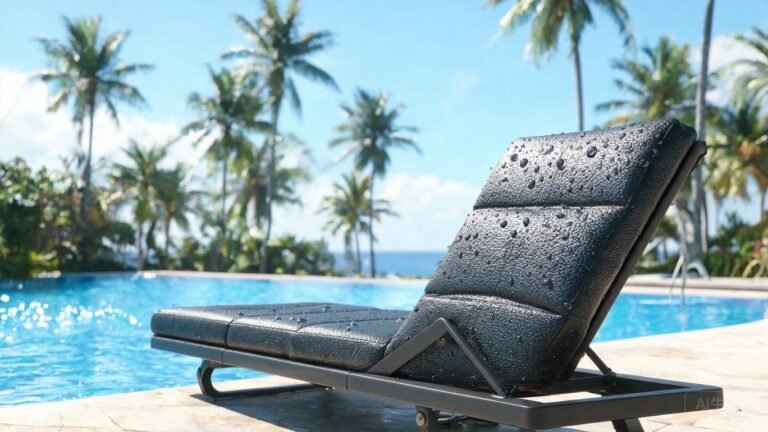
Waterproof droplet test — sun pads face constant splash exposure on yacht foredecks.
Resort-Grade Aesthetics for Foredeck Loungers
Sun pads cannot look like industrial mats on a luxury yacht. Owners and charter guests expect resort-grade visual impact: flawless color, refined grain, and a tactile coolness that invites extended lounging. Silicone leather allows OEM teams to develop crisp resort whites, warm teak-tone accents, deep Mediterranean blues, or custom brand colors that resist the dulling effect of UV and salt. The result is a foredeck that photographs beautifully and maintains its appeal through heavy guest use.
There is also a revenue reason to choose a stable synthetic surface on sun pads. Charter brokers and resort managers market outdoor lounging as a primary amenity. A material that recovers from tanning oil, spilled drinks, and wet towels without staining or odor protects booking ratings and reduces turnaround detailing. In our experience, buyers who test sunscreen stain release, saltwater immersion recovery, and surface temperature under midday sun before approval avoid the mid-season complaints that damage charter reviews.
| Decision Area | What to Specify | Best Fit |
|---|---|---|
| UV and heat load | Specify maximum UV resistance and low surface-temperature formulations | Tropical sun pads, foredecks |
| Chemical resistance | Require documentation against sunscreen, oil, and tanning product staining | Resort loungers, charter yachts |
| Wet/dry cycling | Use hydrolysis-resistant surfaces with quick-drain cushion systems | Open foredecks, bow riders |
| Color and aesthetics | Request batch color consistency and grain uniformity for large surfaces | Luxury cruisers, pool clubs |
TOPSUN Sun Pad and Foredeck Solutions
TOPSUN supplies silicone leather for marine sun pads, foredeck loungers, and open-deck recliners where maximum UV, salt, moisture, and chemical exposure create the most aggressive material requirements. Our marine and outdoor silicone leather applications page shows where UV-stable, quick-dry surfaces are commonly used in sun pad applications. Buyers comparing sun pad alternatives can also review our marine faux leather guide and outdoor furniture waterproof leather for related exterior seating guidance.
For custom sun pad projects, the practical starting point is the foredeck environment: sun angle hours, wave splash frequency, typical sunscreen and oil exposure, cushion drainage design, and guest traffic volume. Once these are documented, TOPSUN can adjust UV-stabilizer concentration, chemical resistance, surface cooling, grain texture, and color tolerance to match the production schedule and foredeck design scheme.

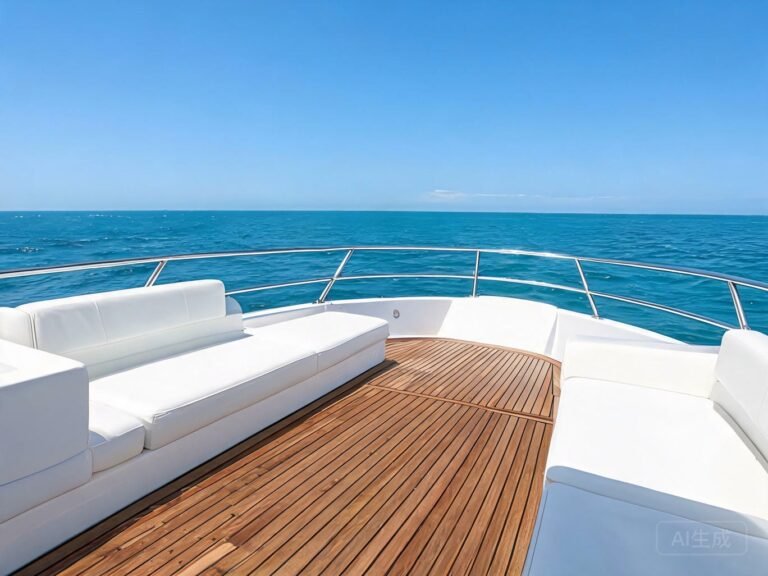
Marine sun pad upholstery on yacht.
Waterproof and scratch resistance test — dual protection for marine sun pad applications.
Specifying Marine Sun Pad Material for Production
Include foredeck layout drawings, cushion dimensions, target color references, expected chemical exposure list, and required sample size in the RFQ. If the project involves tropical charter yachts or resort pool clubs, request additional documentation on UV-aging hours, chemical stain resistance, and hydrolysis performance after repeated wet-dry cycling. A small pre-production trial with combined UV-chemical exposure testing often prevents costly replacement after the first high season.
For large marine or resort programs, approve both appearance and functional behavior under real sun and water loads. Ask the workshop to cut, wrap, stitch, and exposure-test the sample under the same sun angle and wet-dry rhythm the finished cushions will experience. If the material shows temperature buildup under bare skin, permanent staining from sunscreen, or color shift after saltwater immersion, adjust the formulation, grain, or color batch before issuing the purchase order.
Next Step for Buyers
Marine sun pads are exposed to continuous UV, salt water, sunscreen oils, and body sweat. TOPSUN develops silicone leather surfaces with verified UV stability, salt resistance, and quick-dry properties for foredeck and aft-deck lounging. Custom colors, thickness options, and seam sealing configurations are available for sun pad OEM programs.
About TOPSUN
TOPSUN produces marine silicone leather for sun pads, foredeck loungers, and aft-deck daybeds on recreational and charter vessels.
Relevant capabilities include UV stability for continuous sun exposure, salt and sunscreen resistance, quick-dry surface engineering, and custom thickness and backing for cushion integration.