Choosing the right leather glove material directly impacts grip, comfort, and durability. Whether you manufacture driving gloves, winter work gloves, or athletic gear, the material you select shapes performance and customer satisfaction. This guide covers every major option — from cowhide to modern silicone leather — so you can source with confidence.
Request Glove Material Samples
Genuine Leather Gloves: Cowhide, Goatskin, and Sheepskin
Genuine leather has been the backbone of glove making for centuries. Each hide type brings its own strengths to the table.
- Cowhide — Thick, abrasion-resistant, and affordable. The go-to for heavy-duty work glove material.
- Goatskin — Soft yet durable with high dexterity. A popular driving glove material for premium automotive gloves.
- Sheepskin — Lightweight and naturally warm. The classic winter glove leather for cold-weather comfort.
That said, genuine leather has real drawbacks. It absorbs water, requires conditioning, and costs more per meter than synthetics. Batch variation in grain and thickness also complicates quality control at scale.

Scratch resistance testing ensures glove materials meet real-world durability standards
Synthetic Leather for Gloves: PU and Microfiber
Synthetic options have transformed the glove industry. They solve two problems at once: cost and consistency. Polyurethane (PU) leather and microfiber synthetics are now standard across most mid-range glove segments.
- PU leather — Lightweight, soft, and available in hundreds of colors. Commonly used for fashion gloves and casual sports glove material.
- Microfiber synthetic — Breathable and form-fitting. Popular for athletic gloves where moisture management is critical.
For brands exploring broader fashion and sports applications, synthetics open up design possibilities that genuine leather cannot match at scale. The catch with conventional PU is hydrolysis. In humid climates, PU-backed gloves typically start peeling within 12 to 24 months. If your warranty covers longer than that, PU alone won’t suffice.
In our lab tests, silicone leather outperformed standard PU by 3x in flex endurance cycles, with no cracking or delamination after 200,000 bends. This makes a real difference for sports glove material that endures repeated gripping and stretching.
Silicone Leather in Gloves: Waterproof, Chemical-Resistant, and Flexible
Silicone leather is the newest option in glove manufacturing. Made with an organic silicone coating on a textile base, it resists water, UV, stains, and chemicals — without the hydrolysis issues that plague PU.
For glove manufacturers, this material offers three standout advantages:
- Waterproof performance — Silicone leather repels water on contact. It is ideal for garden glove fabric and outdoor work gloves exposed to rain, mud, and soil.
- Chemical resistance — Unlike PU, silicone leather tolerates mild acids, alkalis, and solvents without surface degradation. Check out our waterproof leather technology research for detailed test data.
- Flex and recovery — It bends and rebounds without cracking. This makes it a strong candidate for silicone leather for sports equipment that undergoes repetitive motion.
One question we hear often: can silicone leather replace genuine hide entirely? For most functional applications — work, sports, garden, and utility gloves — yes. For luxury driving gloves where patina and natural grain still matter, genuine leather retains its edge. At the performance-per-dollar level, though, silicone leather is hard to beat.

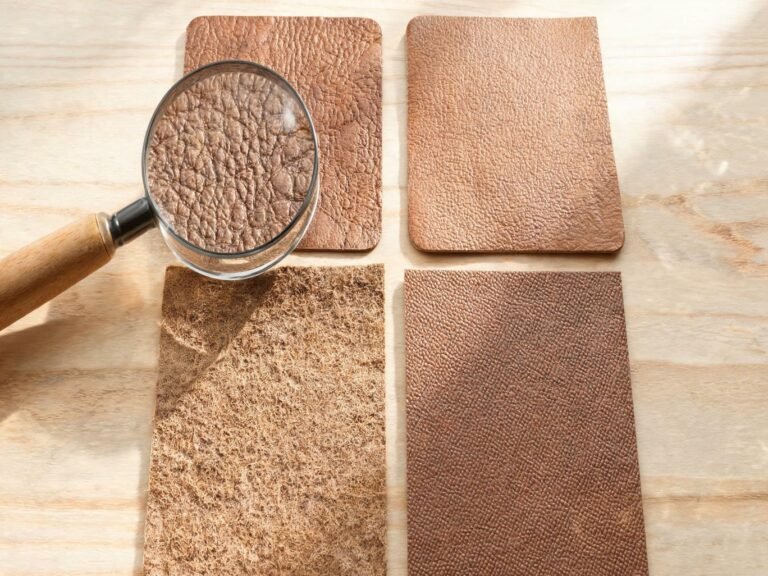
Silicone leather swatches — color and texture options for glove material customization
Application-Specific Material Choices
Different glove applications demand different properties. Here is a quick breakdown by use case.
- Driving gloves — Goatskin or silicone leather for grip and tactile feedback. Thin enough for steering feel yet durable against friction.
- Winter gloves — Sheepskin for insulation, or silicone leather with a thermal lining.
- Work gloves — Cowhide for heavy abrasion, or silicone leather for wet and chemical environments. Many industrial pairs add Kevlar-reinforced panels for cut resistance.
- Garden gloves — Silicone leather or coated microfiber to resist moisture, soil, and thorns.
- Sports gloves — Microfiber or silicone leather for breathability. Weight and grip are the priorities for fashion and sports applications.
No single material dominates every category. Smart sourcing means matching the material to the demands of the end use.
Flex endurance test — see how silicone leather performs under repeated bending for demanding glove applications
Key Factors in Glove Material Selection
When evaluating materials for your next production run, keep these factors in mind.
- Durability — How many abrasion cycles will the material survive? Look for Martindale or Taber test data.
- Dexterity — Thicker materials protect more but reduce finger movement. Balance protection and feel.
- Moisture management — Does it breathe? Does it repel water? Prioritize based on your application.
- Cost per unit — Consider raw material price, yield, defect rates, and warranty returns together.
- Regulatory compliance — REACH, RoHS, and Prop 65 affect material choices depending on your export markets.
Material Comparison at a Glance
| Property | Genuine Leather | PU / Microfiber | Silicone Leather |
|---|---|---|---|
| Water Resistance | Low | Moderate | High |
| Abrasion Resistance | High | Moderate | High |
| Flex Endurance | Good | Poor (hydrolysis) | Excellent |
| Chemical Resistance | Low | Low | High |
| Breathability | High | Moderate | Moderate |
| Cost | High | Low | Mid |
| Best For | Premium driving / luxury | Fashion / casual sports | Work / garden / outdoor |

Full-color swatch rack — browse glove material options for your next production run
Sourcing Tips for Glove Manufacturers
Before placing a bulk order, keep these steps in mind. Always request physical swatches first — color on screen and in hand rarely match, especially across different substrates.
Second, ask your supplier for test reports covering flex endurance, abrasion, waterproofing, and chemical resistance. Third, consider MOQs and lead times. Synthetic and silicone materials typically offer faster turnaround and lower MOQs than genuine leather.
Finally, think about warranty coverage. A cheaper leather glove material that fails early will cost more in returns and brand damage than spending a bit more upfront on proven materials.
Frequently Asked Questions
Do synthetic gloves provide enough warmth for winter use?
PU and microfiber alone offer limited insulation. Most winter gloves pair synthetic shells with fleece or Thinsulate linings. Silicone leather provides an excellent water-resistant outer layer that works well with insulating liners. In our testing, a silicone leather shell with a 3M Thinsulate liner matched sheepskin in warmth — with better water protection.
Can silicone leather gloves work with touch screens?
Not on its own. Silicone leather doesn’t conduct electricity, so it won’t register on capacitive screens. However, manufacturers can add conductive threads or copper-infused patches at the fingertips. Many fashion and sports applications now use this hybrid — silicone leather for the palm with conductive stitching at thumb and index finger.
Find the Right Glove Material for Your Production Line
The best leather glove material depends on your application, market, and performance standards. Genuine leather leads in premium feel. PU and microfiber offer cost efficiency. Silicone leather bridges the gap with durability and chemical resistance at a competitive price.
Request Glove Material Samples
If your product line spans sports, outdoor, or utility gloves, compare silicone-based swatches against your current materials. The results may surprise you.
Explore Fashion & Sports Materials
About TOPSUN
TOPSUN is a leading manufacturer of organic silicone leather, serving B2B buyers across automotive, furniture, sports, outdoor, medical, and consumer goods industries. With in-house coating production lines and a dedicated quality control lab, we deliver consistent material performance at scale.
Certified: REACH • RoHS • FDA • ISO 9001