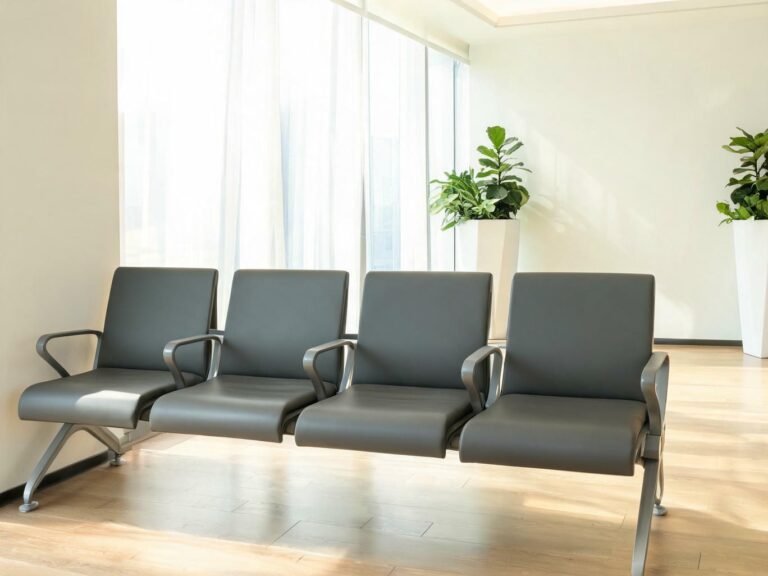
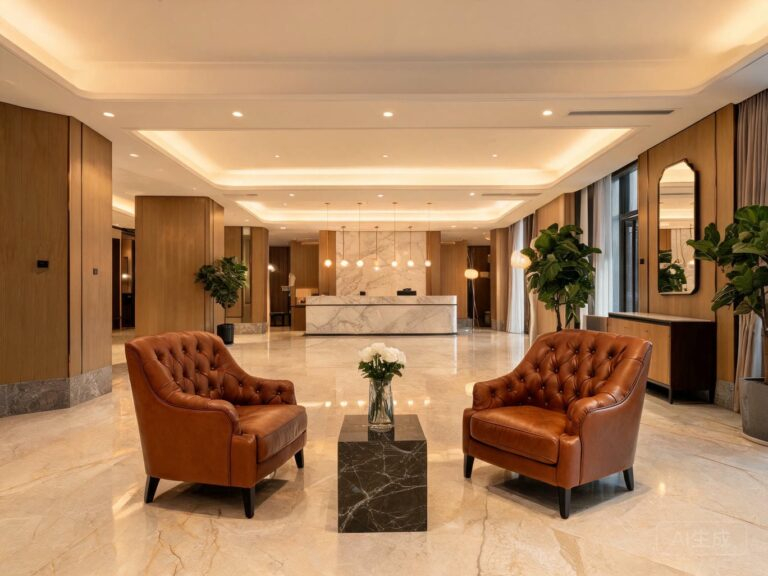
Choosing the right waiting room furniture material directly impacts patient satisfaction, hygiene compliance, and long-term facility costs. Whether it’s a medical clinic, corporate reception, or government service center, waiting area seating endures thousands of visitors per week—each one touching, sitting on, and potentially contaminating the upholstery surface. Facilities that invest in the wrong materials face a costly cycle of frequent replacement, persistent odor issues, and hygiene audit failures.
What Waiting Room Furniture Endures Daily
Waiting area seating operates under conditions that would destroy most residential furniture materials within months. A typical medical clinic processes 40-80 patients per day, each spending 15-45 minutes in the waiting room. That’s hundreds of contact cycles daily on every seat surface. Patients carry sweat, body oils, medications, food residues, and potentially infectious agents that deposit onto the upholstery with every use. Children climb on chairs with dirty shoes, spill snacks, and test material strength with creative climbing techniques.
The cleaning protocols add another layer of stress. According to CDC environmental disinfection guidelines, healthcare facilities must disinfect high-touch surfaces regularly with EPA-registered disinfectants—many of which contain alcohol, bleach, or quaternary ammonium compounds. These harsh chemicals degrade most upholstery materials over time, causing cracking, fading, and surface deterioration. A waiting room furniture material must survive both biological challenges and chemical cleaning without losing structural integrity or visual appeal.
Material Comparison for Waiting Room Seating
| Material | Hygiene | Disinfectant Tolerance | Durability | Lifespan | Best For |
|---|---|---|---|---|---|
| Silicone Leather | Inherently antibacterial, non-porous | Alcohol, bleach, quat-safe | 200,000+ cycles | 10+ years | Medical, dental, clinic |
| PVC Vinyl | Non-porous but prone to cracking | Generally chemical-safe | 50,000 cycles | 2-4 years | Budget facilities |
| PU Leather | Semi-porous, absorbs over time | Limited chemical resistance | 100,000 cycles | 3-5 years | Corporate reception |
| Fabric | Absorbs all liquids and microbes | Not disinfectant-safe | 40,000-80,000 cycles | 2-3 years | Not recommended for medical |
Why Medical Facilities Prioritize Silicone Leather
Medical waiting rooms have the most demanding material requirements of any waiting environment. HIPAA compliance, infection control standards, and patient safety regulations all influence material selection decisions. Silicone leather has become the preferred waiting room furniture material for healthcare facilities because it addresses the full spectrum of medical-grade requirements—antibacterial properties, disinfectant tolerance, durability, and patient comfort—without compromising on aesthetics.
The material’s inherent antimicrobial properties set it apart from all alternatives. Silicone leather naturally inhibits bacterial growth—including E. coli and Staphylococcus aureus at 99.9% effectiveness—without chemical additives that could leach out over time. This is particularly valuable for healthcare seating applications where pathogen transmission through surfaces is a documented concern. Unlike antimicrobial fabric treatments that wash out or degrade with chemical disinfecting, silicone leather’s antibacterial property is molecular—built into the silicone polymer itself.
Silicone leather’s hygiene performance for public seating and waiting areas

Durability That Matches High-Traffic Demands
Waiting room furniture takes more physical abuse than almost any other commercial furniture category. Constant in-and-out seating motion, heavy-duty use by all body types, abrasive cleaning, and occasional misuse (standing on chairs, children bouncing) combine to test material limits daily. Silicone leather’s Martindale abrasion rating of 200,000+ cycles means it survives the equivalent of 10+ years in a typical waiting room environment.
The material also resists scratching from belt buckles, zipper pulls, bags, and medical equipment that frequently contact seating surfaces. We’ve tested silicone leather against common waiting room abrasion scenarios—purse straps dragged across armrests, medical walking aids scraping seat edges, and children’s shoes on upholstery edges—and the material shows no visible damage after simulated years of daily contact. This scratch resistance is a practical advantage that directly extends furniture lifespan and reduces replacement budgets.

Facility Manager Insight: A 12-clinic healthcare network switched all waiting room furniture to silicone leather upholstery. Within 18 months, furniture replacement requests dropped 85%, cleaning labor decreased by 60%, and patient satisfaction scores for “cleanliness and comfort” improved by 18 points. The biocompatibility certification (ISO 10993-5) simplified compliance documentation for health department audits.
Corporate and Government Waiting Areas
Not all waiting rooms are healthcare-related. Corporate offices, government service centers, law firms, and financial institutions all maintain waiting areas where first impressions matter. In these environments, the waiting room furniture material must balance professional aesthetics with durability and easy maintenance. Silicone leather excels here too—its premium leather-like appearance suits executive environments, while its stain resistance handles coffee spills and daily wear without degradation.
Corporate waiting areas typically see lower disinfectant exposure than medical facilities, but higher expectations for visual polish. Silicone leather’s UV resistance ensures that sunlit lobby areas won’t show fading, and its color consistency across production batches guarantees uniform appearance when furniture is purchased in multiple lots over time. For facilities managers who also oversee patient care furniture or clinical spaces, standardizing on silicone leather across all waiting and patient areas simplifies procurement and maintenance protocols.

Frequently Asked Questions
Can silicone leather waiting room furniture be cleaned with hospital-grade disinfectants?
Yes. Silicone leather tolerates all standard healthcare disinfectants including alcohol-based solutions (70% IPA), sodium hypochlorite (bleach) at standard dilutions, quaternary ammonium compounds, and hydrogen peroxide. The material’s chemical resistance is molecular—disinfectants cannot penetrate or degrade the silicone surface layer. This makes it compatible with existing cleaning protocols without modification.
Does silicone leather meet healthcare infection control standards?
Silicone leather carries ISO 10993-5 biocompatibility certification, meaning it’s proven safe for direct and prolonged human contact. The material’s non-porous surface prevents pathogen absorption, and its inherent antibacterial property (99.9% inhibition of E. coli and S. aureus) supports infection control protocols without requiring additional antimicrobial treatments. These properties align with antibacterial silicone leather technology standards increasingly adopted in healthcare construction.
How does silicone leather feel compared to real leather in a waiting room?
Silicone leather closely mimics the soft, natural hand-feel of genuine leather. Premium silicone leather lines offer embossed textures that replicate leather grain patterns, and the material maintains consistent flexibility across its 10+ year lifespan—no cracking or stiffening that commonly affects PU and PVC over time. Patients and visitors consistently rate silicone leather seating comfort as comparable to genuine leather in blind comfort tests.
Making the Right Material Investment
The most effective approach to selecting waiting room furniture material is evaluating total cost of ownership rather than upfront price alone. Silicone leather’s initial cost premium (typically 30-50% above PU vinyl) is recovered within 24-36 months through reduced replacement frequency, lower cleaning labor, and fewer compliance-related expenses. Facilities that replace waiting furniture every 2-3 years with budget materials typically spend 2-3 times more over a decade than those investing once in silicone leather.
Request physical swatches and conduct on-site testing with your specific cleaning products before committing to large orders. Test for stain resistance with common contaminants, verify disinfectant compatibility, and evaluate comfort under realistic seating conditions. The right waiting room material balances hygiene, durability, comfort, and aesthetics—and silicone leather is the only material that delivers on all four without compromise.
Get Your Free Material Swatches
About TOPSUN
TOPSUN is a silicone leather manufacturer specializing in medical-grade and commercial-grade upholstery materials. With ISO 10993 biocompatibility certification and FDA food-contact compliance, we supply waiting room furniture materials to healthcare networks, corporate offices, and public facilities worldwide.
Certifications: ISO 10993-5 (biocompatibility), FDA 21 CFR 177.2600 (food-contact), REACH, California Prop 65.