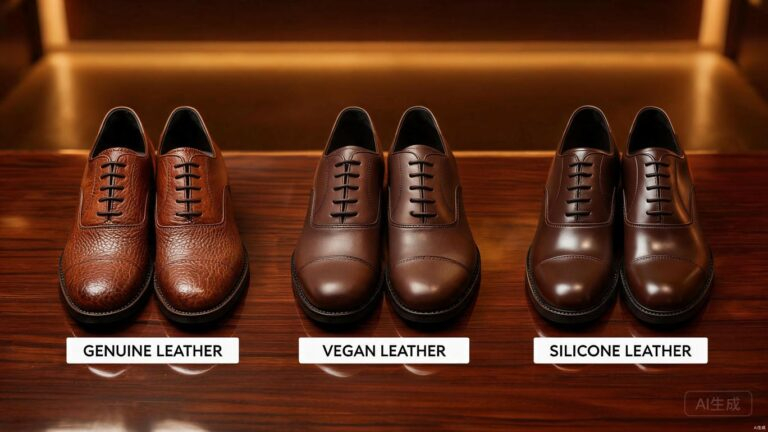
Footwear manufacturing is one of the most material-intensive segments of the fashion industry, and the pressure to move beyond animal leather has never been stronger. Major brands from Nike to Stella McCartney have publicly committed to increasing the share of sustainable shoe leather and vegan materials in their product lines. But for footwear manufacturers and sourcing teams, the real question isn’t whether to switch — it’s what to switch to.
Shoe uppers, linings, and insoles each demand different material properties. A material that performs brilliantly as an upper may fail completely as a lining. This guide breaks down the viable vegan alternatives specifically for shoe manufacturing — with honest assessments of where each material excels and where it falls short.
Request Free Shoe Material Samples
Why the Footwear Industry Is Moving Away from Animal Leather
The drivers are both market-facing and operational. On the consumer side, surveys show that over 60% of Gen Z and Millennial shoe buyers consider sustainability when making a purchase decision — and “vegan leather” is one of the most searched terms in footwear e-commerce.
On the supply side, the economics are increasingly compelling:
- Price stability — Synthetic and plant-based materials aren’t subject to the livestock market fluctuations that affect genuine leather pricing.
- Color consistency — Vegan materials can be produced in exact color matches across batches, reducing the sorting and grading labor that leather requires.
- Waste reduction — Synthetic materials have more predictable yields during cutting, meaning less scrap per pair. We’ve seen manufacturers report 15–20% better material utilization compared to natural leather.
- Regulatory compliance — As the EU strengthens its sustainability regulations for leather production, brands using alternative materials face fewer compliance hurdles.
Material Performance by Shoe Component
One size doesn’t fit all in shoe manufacturing. Here’s how leading vegan materials perform across three key components:

| Material | Shoe Upper | Shoe Lining | Insole/Cover |
|---|---|---|---|
| Silicone Leather | Excellent | Very Good | Good |
| Microfiber Leather | Excellent | Excellent | Very Good |
| PU Synthetic Leather | Good | Good | Moderate |
| Recycled PET Fabric | Moderate | Good | N/A |
| Mushroom Mycelium | Moderate | Low | N/A |
| Apple Bio-Leather | Moderate | Low | N/A |
Key insight: For shoe uppers — the most visible and mechanically stressed component — silicone leather and microfiber leather are the two vegan materials that consistently deliver leather-equivalent performance in flex testing, abrasion resistance, and appearance retention.
Silicone Leather for Shoe Uppers: What Sets It Apart
Shoe uppers face a punishing combination of stresses: constant flexing at the toe crease, abrasion from contact with surfaces, exposure to rain and sweat, and UV fading from sunlight. In our testing, silicone leather shows distinct advantages over both PU and PVC in several critical areas.
The most significant is hydrolysis resistance. PU-coated shoe uppers — still the most common vegan option — have a well-documented tendency to peel and crack after exposure to moisture over time. This is a chemical degradation of the polyurethane itself, not a manufacturing defect. Silicone leather doesn’t suffer from this failure mode because the silicone polymer is inherently resistant to hydrolysis.

What this means in practice: a shoe made with a silicone leather upper maintains its appearance and structural integrity significantly longer in wet conditions. For brands selling in markets with rainy seasons or high humidity, this translates directly to better product reviews and fewer warranty claims.
From a manufacturing perspective, silicone leather also handles the lasting process well — the stretching and shaping step where the upper is pulled over the last (the foot-shaped form). The material has enough elasticity to conform to the last without tearing, yet enough recovery to maintain dimensional stability after the lasting pins are removed.
The Role of Microfiber Leather in Footwear
Microfiber leather deserves its reputation as the closest vegan equivalent to genuine leather in terms of hand feel and drape. Made from ultra-fine polyester fibers impregnated with polyurethane, it’s been the go-to material for brands like Nike and Adidas in their vegan sneaker lines.
For shoe linings in particular, microfiber leather is often the better choice over silicone leather because of its softer hand feel and superior breathability. A shoe lining needs to feel comfortable against bare skin — and in this specific application, microfiber’s silk-like texture gives it an edge.
The trade-off? Microfiber still uses a PU binder, which means it shares PU’s vulnerability to hydrolysis over very long timeframes. For most consumer footwear with a 12–18 month replacement cycle, this isn’t a practical concern. But for work boots or shoes expected to last 3+ years, silicone leather’s chemical stability becomes a meaningful advantage.
Plant-Based Materials: Promising but Not Ready for Volume
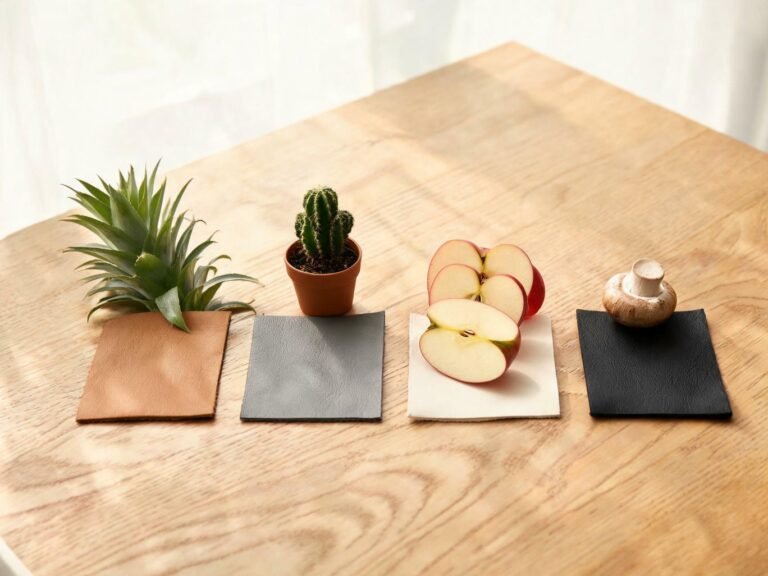
Materials derived from agricultural waste — apple peel leather, mushroom mycelium, grape leather — generate enormous media interest and genuine excitement about the future of sustainable fashion materials. Several major brands have launched limited capsule collections using these materials, and the results have been encouraging from a sustainability metrics standpoint.
The problem for volume footwear production is threefold:
- Supply consistency — Agricultural feedstocks vary by season, geography, and harvest quality, making it difficult to guarantee uniform material properties across large production runs.
- Performance ceiling — Current bio-leathers achieve moderate flex and abrasion resistance, but they don’t yet match the performance of silicone leather or microfiber in rigorous shoe upper applications.
- Cost at scale — Unit prices remain 2–4x higher than established synthetics, and MOQs from bio-leather suppliers are often restrictive for mid-size manufacturers.
Our recommendation: keep bio-leathers on your radar for seasonal limited editions and sustainability storytelling, but don’t stake your main line on them — yet. The technology is advancing rapidly, and we expect production-viable bio-leathers within the next 3–5 years.

Practical Sourcing Tips for Shoe Manufacturers
Based on our experience supplying materials to footwear factories across Asia, here are the non-obvious factors that separate a smooth production run from a costly one:
- Test the material through your actual lasting process — Lab test results don’t always predict how a material behaves when stretched over a shoe last at factory speed and temperature.
- Verify adhesive compatibility — Some vegan materials require specific adhesives or surface treatments. Check bonding strength with your actual cement before committing.
- Request production-run samples, not just lab samples — Lab-produced material and bulk production material can differ in thickness uniformity and surface quality.
- Consider the full shoe system — Don’t evaluate materials in isolation. The upper, lining, and insole need to work together as a system in terms of breathability, flexibility, and weight.
Get Production-Grade Shoe Material Samples
Building a Sustainable Shoe Material Strategy
The most successful approach we’ve seen is a tiered material strategy: silicone leather or microfiber leather for your core production line where consistency and performance are non-negotiable, plant-based materials for seasonal drops and sustainability-focused collections, and recycled materials for entry-level products. This gives you both manufacturing reliability and a compelling sustainability narrative.
The transition doesn’t have to happen overnight. Start with a single model or colorway using an alternative material, gather customer feedback, and scale from there. We work with brands at every stage of this journey.
Consult Our Material Engineers
Frequently Asked Questions
Is silicone leather breathable enough for shoe uppers?
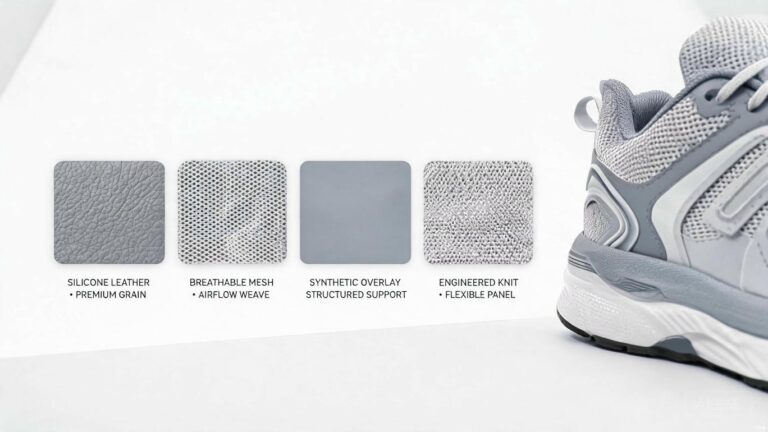
Modern silicone leather uses breathable fabric substrates that allow air circulation while the silicone surface provides water resistance. For most casual and athletic shoes, the breathability is adequate. For high-performance athletic shoes where maximum vapor transmission is critical, consider pairing a silicone leather upper with a breathable mesh panel.
Can vegan shoe materials be used for safety/work boots?
Silicone leather with flame-retardant grades can meet many industrial safety footwear requirements. It offers excellent resistance to water, oil, and chemicals — common hazards in industrial environments. Check specific EN ISO 20345 compliance with your material supplier.
How does the cost of vegan shoe materials compare to genuine leather?
At volume, silicone leather and microfiber are typically 20–40% lower in material cost than mid-range genuine leather. When you factor in better cutting yields and reduced grading labor, the total cost advantage can reach 30–50% per pair. Premium bio-leathers are currently more expensive than leather.
About TOPSUN
TOPSUN supplies silicone leather materials to footwear manufacturers worldwide, offering custom thicknesses, textures, and colors optimized for shoe uppers, linings, and accessories. Our ISO 9001-certified production processes ensure consistent quality across bulk orders, with solvent-free formulations that support your brand’s sustainability goals.
Certifications: REACH compliant | RoHS compliant | ISO 9001 | OEKO-TEX Standard 100