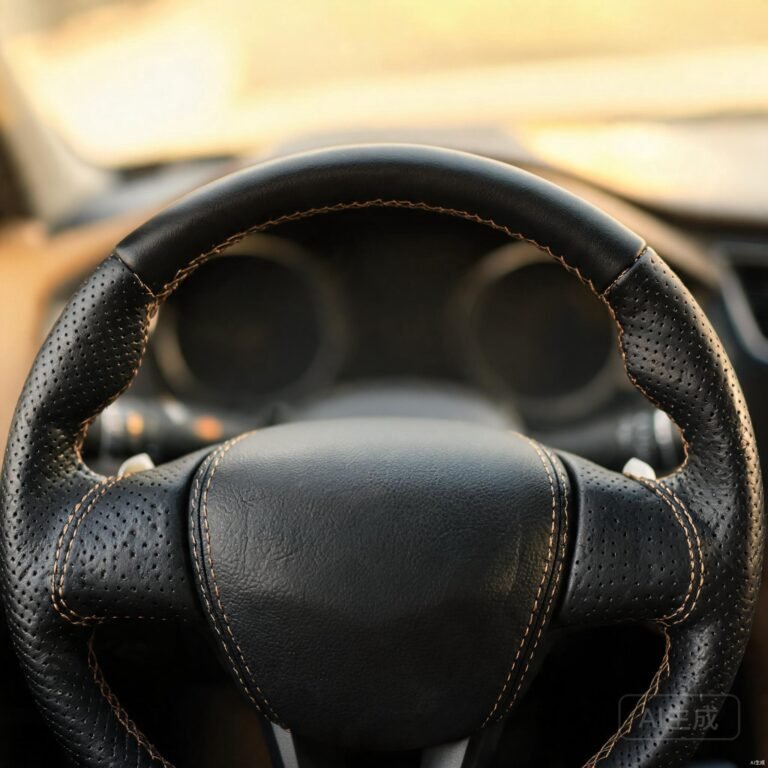
Heated seats have moved from a luxury option to an expectation across mid-segment vehicles, and that change has quietly raised the bar for the leather wrapped over the heating element. A carbon-fiber or resistance-wire mat typically holds the surface between 30 °C and 50 °C, but localized hotspots and summer cabin soak can push trim far higher. The wrong heated car seat leather will plasticize, fog, embrittle or fade within a warranty cycle. This guide walks through what the heating system actually does to a covering, how the main material chemistries compare under sustained heat, and which test thresholds separate a trim that lasts from one that fails in year two.
What Heated Seats Demand from Covering Leather
A heating element bonded beneath upholstery creates a thermal environment the covering was never designed for in a non-heated seat. The material sits at elevated temperature for thousands of hours over a vehicle’s life, cycling between heated and ambient with every drive. Three failure modes dominate warranty claims: plasticizer migration that leaves a sticky, fogged surface; hydrolytic breakdown that turns the coating brittle; and color shift where UV and heat combine to bleach the dye.
Here’s the catch most buyers miss: the heat from the element is only half the story. A cabin parked in summer sun can exceed 70 °C at the seat surface, and the heating mat sits beneath that already-hot layer. So the trim must tolerate repeated thermal cycling across a range far wider than the element’s setpoint. OEMs typically validate with 85 °C heat-aging for 1,000 hours, and the covering must show no significant deformation, discoloration or embrittlement afterward.

Heated Car Seat Leather: The Thermal Stability Test
Thermal stability is the single property that determines whether heated car seat leather survives its service life. The key is the polymer’s operating window — the temperature range over which it retains flexibility and does not break down. When a material’s ceiling sits close to the seat’s working temperature, every hour of use eats into its margin.
| Material | Typical Operating Range | Behavior Under Sustained Heat | Plasticizer Migration |
|---|---|---|---|
| PVC | −10 °C to 65 °C | Softens, sticky residue | High — fogging risk |
| PU (solvent) | −20 °C to 80 °C | Hydrolysis, embrittlement | Medium |
| Silicone leather | −40 °C to 250 °C | Stable, no migration | None — plasticizer-free |
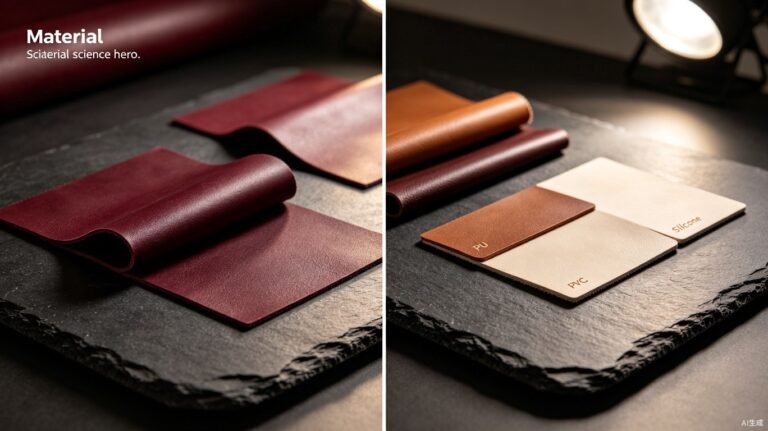
The gap is stark. PVC’s ceiling sits right inside a heated seat’s working zone, which is exactly why plasticized PVC trim grows sticky and fogged over time. PU stretches higher but hydrolyzes under the moisture a heated, occupied seat generates. Silicone leather’s 250 °C ceiling leaves enormous headroom above any realistic seat temperature, so the polymer simply never enters its degradation range. For a full breakdown across more properties, see our silicone leather vs PU vs PVC comparison.

Silicone vs PU vs PVC at Elevated Temperatures
Numbers tell the story more honestly than spec sheets. When you place a PU sample and a silicone sample under 85 °C heat aging for 1,000 hours, the differences become visible to the naked eye. The PU surface loses flexibility and begins micro-cracking at stress points; the silicone sample is visually unchanged. That is not marketing — it is polymer chemistry. Silicone’s inorganic backbone is inherently heat-stable, while PU and PVC rely on organic bonds and additive packages that deplete over thermal cycling.
From our test bench: TOPSUN silicone leather showed zero surface change after 1,000 hours at 85 °C, with flexibility retained above 100,000 flexing cycles (ISO 5402). Cold-crack testing confirmed no brittleness down to −40 °C — critical for heated seats that must also survive winter.
There is a comfort angle too. Heated seats work best when warmth transfers quickly and evenly, without hotspots. Silicone’s thermal conductivity and consistent thickness (tolerance ±0.05 mm) help distribute heat uniformly across the contact surface, avoiding the “striped” warmth pattern cheaper materials produce. For OEM teams building heated-seat programs, our faux leather automotive OEM guide covers the broader specification workflow.

Flame Safety for Heated Upholstery
Any material sitting over an electrical heating element must pass interior flammability standards. The global baseline is FMVSS 302 (ISO 3795), which caps horizontal burn rate at 100 mm/min for passenger-car interior materials [1]. Some OEMs and regions demand more — vertical burn tests, low smoke and limited toxic-gas emission, especially in EVs where battery thermal events raise cabin-fire stakes.
Silicone leather self-extinguishes without chemical flame retardants — see the burn test for yourself.
This is where silicone’s chemistry pays off again. It is inherently flame-retardant and self-extinguishing without added retardants, meeting EN 13773 Class 4 and FAR 25.853. PVC and PU typically need additive flame packages to pass — and those additives can themselves raise VOC and smoke-toxicity readings under heat. So a material that clears the burn test cleanly without additives is safer both in a fire and over years of heated use. The full set of automotive interior certifications is available on request, and our durability testing results page shows the raw data behind these claims.
Frequently Asked Questions
What temperature can silicone seat leather withstand?
Silicone leather remains stable from −40 °C to 250 °C. A heated seat element operates at 30–50 °C, with summer cabin soak pushing the surface higher — all well within silicone’s operating window, leaving large safety margin against degradation.
Does heated car seat leather need flame-retardant additives?
Silicone leather does not. It is inherently self-extinguishing and meets EN 13773 Class 4 and FAR 25.853 without chemical retardants. PVC and PU usually require additive packages to pass the same standards, which can increase VOC and smoke toxicity.
Will the heating element cause the leather to fade?
Not with silicone leather. Its light-fastness grades 4–5 (ISO 105-B02) and it passed 1,500 hours of xenon-arc UV testing with no color shift. The combination of heat from the element and UV through glass is the real fade risk — silicone handles both.
Specifying the Right Heated Car Seat Leather
Selecting heated car seat leather comes down to matching the material’s thermal window to the seat’s real-world temperature exposure, then validating with hard test data. Silicone leather’s −40 °C to 250 °C stability, plasticizer-free chemistry, inherent flame retardancy and uniform heat transfer make it the most defensible choice for heated and ventilated seat programs. The cost gap versus PU narrows once warranty claims and rework are factored in, and the safety margin is unmatched. The next step for any sourcing team is to request heat-aged samples and run them against the OEM’s own cycling protocol — the results tend to speak for themselves.
About TOPSUN
TOPSUN Silicone Leather Co., Ltd. produces heat-stable, plasticizer-free silicone leather from three manufacturing bases with 18 automated lines. Our automotive-grade materials are validated for heated-seat applications with full thermal-aging and flame-test documentation.
Relevant certifications: EN 13773 Class 4, FAR 25.853, FMVSS 302 compliant, VDA 270 odor ≤ 3, ISO 10993-5 biocompatibility, REACH SVHC-free, PAHs-free.