Vinyl material for upholstery is the budget workhorse of commercial furniture. It’s cheap, it’s water-resistant, it passes basic flame tests — and for a procurement manager looking at per-yard pricing, it looks like the obvious choice for high-volume projects like restaurant seating, hotel lobbies, and healthcare facilities.
But here’s what the vinyl sales sheet doesn’t show you: the total cost of ownership (TCO) of vinyl upholstery is typically 2–3x the upfront material price over a 5-year period. Between plasticizer migration, cold cracking, replacement labor, and customer complaints about the “plastic feel,” vinyl saves you money on day one and costs you money for years afterward.
Let’s break down the five hidden costs of vinyl upholstery, compare vinyl to alternatives on real total cost, and give you a spec checklist so you can make apples-to-apples comparisons on your next tender.
Why Vinyl Upholstery Is So Common (and Why That’s Changing)
PVC vinyl upholstery became ubiquitous for three solid reasons: cost, water resistance, and inherent flame retardancy. At $5–$15 per yard, it’s significantly cheaper than genuine leather or premium synthetics. The PVC coating is inherently waterproof — spills bead up and wipe away easily. And because PVC contains chlorine, it passes flame tests (BS 5852 Crib 5, FMVSS 302) that other materials struggle with without chemical additives.
For decades, these advantages made vinyl the default choice for commercial high-traffic seating. But three shifts are causing procurement teams to reconsider:
- Chemical regulations are tightening. EU REACH restricts phthalate plasticizers commonly used in vinyl. Prop 65 in California and similar regulations elsewhere require disclosure of harmful chemicals in consumer products. “Phthalate-free” vinyl exists, but the replacement plasticizers have their own questions and typically cost more.
- Customer expectations are rising. Hospitality and healthcare buyers want materials that feel premium, not plastic. The stiff, rubbery hand of budget vinyl doesn’t match the guest experience expectations of modern hotel and restaurant brands.
- New alternatives are cost-competitive on TCO. Materials like silicone leather used to be premium-priced. As production has scaled and competition has increased, the per-yard gap has narrowed — and the 10-year total cost advantage is decisive.

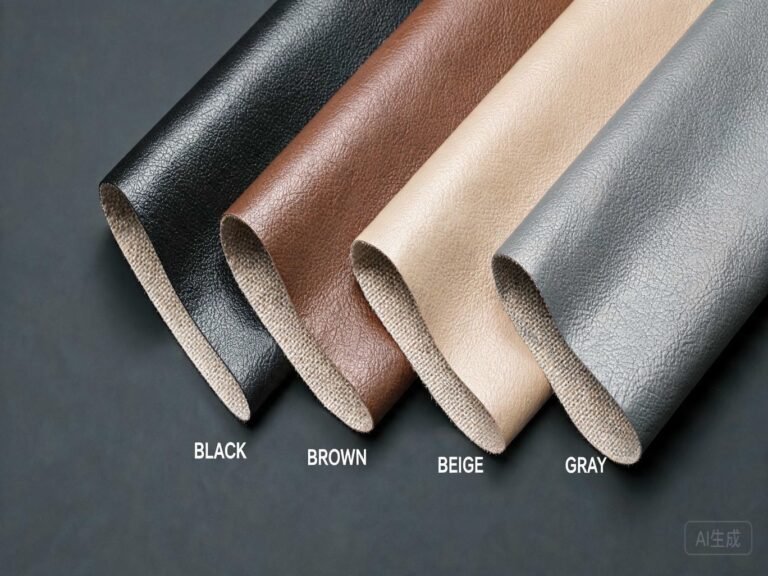
Material texture comparison — premium silicone leather has a supple, natural feel compared to stiff vinyl
The 5 Hidden Costs of Vinyl Upholstery
Per-yard pricing only tells you the cost on day one. The real cost of vinyl shows up over the 3–5 year lifespan of the material. Here are the five cost categories that most RFPs don’t account for:
1. Plasticizer migration and surface degradation. Flexible PVC needs plasticizers to be soft — without them, it’s as rigid as a plastic pipe. But plasticizers slowly migrate to the surface over time, leaving the material stiff, brittle, and prone to cracking. The rate depends on temperature, UV exposure, and the specific plasticizer used, but it’s a question of when, not if. Once vinyl starts cracking, there’s no fixing it — you’re looking at reupholstery.
2. Cold cracking in low temperatures. Standard vinyl upholstery becomes stiff and brittle below about -10°C. In cold climates, or even in air-conditioned spaces near vents, vinyl can develop cracks at fold lines and stress points — typically on seat edges, armrests, and cushion corners. Marine-grade vinyl handles cold better, but it costs significantly more.
| Cost Factor | Budget Vinyl | Premium Vinyl | Silicone Leather |
|---|---|---|---|
| Material Cost (per yard) | $5–$10 | $15–$25 | $20–$35 |
| Expected Lifespan (commercial) | 2–3 years | 3–5 years | 10+ years |
| Reupholstery Labor (per seat) | $40–$80 | $40–$80 | $40–$80 |
| 5-Year TCO (100 seats) | $18,000–$27,000 | $11,000–$16,500 | $7,000–$10,500 |
| Plasticizer Risk | High | Moderate | None |
| Cold Crack Resistance | Poor (-10°C) | Moderate (-20°C) | Excellent (-40°C) |
5-year TCO estimates based on 100 seats, 2 yards per seat, including material + labor for replacements. Actual costs vary by project size and region.
3. Replacement downtime and labor. When vinyl fails, it’s not just the material cost — you’re paying labor to remove the old upholstery, reupholster, and potentially take furniture out of service during the work. For a 100-seat restaurant, that’s 1–2 weeks of partial closure or reduced capacity. Each reupholstery cycle costs almost as much in labor as the material itself.
4. Cleaning chemical damage. The stronger cleaners you need to sanitize commercial upholstery — bleach, alcohol, quaternary ammonium compounds — accelerate PVC degradation. Disinfectant-resistant vinyl exists but costs 2–3x more than standard vinyl. For healthcare and food service environments, chemical resistance isn’t optional — it’s a requirement.
5. Brand and customer experience cost. Hard, sticky, plastic-feeling upholstery doesn’t communicate “premium” or “care.” For hospitality brands, the perceived quality of seating directly affects guest satisfaction scores, online reviews, and return rates. This is the hardest cost to quantify, but it’s often the largest.
TCO reality check: A 200-seat restaurant chain using budget vinyl at $8/yard might spend ~$9,600 on initial material. But with replacement every 2.5 years and labor costs, the 10-year TCO climbs to ~$48,000. Silicone leather at $28/yard costs ~$33,600 upfront but lasts 10+ years — saving roughly $14,400 over a decade, plus zero downtime for replacements.

Martindale abrasion testing — vinyl typically achieves 50,000–100,000 cycles, while silicone leather reaches 200,000+
Vinyl vs. Silicone Leather: Side-by-Side for Commercial Upholstery
When evaluating vinyl material for upholstery against silicone leather, the comparison comes down to upfront cost vs. long-term value. Let’s look at the specific factors that matter most for commercial buyers:
Durability and wear. Standard commercial vinyl typically rates 50,000–100,000 Martindale abrasion cycles. Silicone leather achieves 200,000+ cycles — double to quadruple the abrasion resistance. In practical terms, that means silicone leather upholstery will show significantly less wear on high-traffic seat cushions and armrests over the same time period.
Flame retardancy. PVC vinyl has inherent flame resistance due to its chlorine content, which helps it pass tests like BS 5852 and FMVSS 302. Silicone leather achieves flame retardancy differently — through char-forming behavior rather than chemical additives — and meets EN 13773 Class 4, FAR 25.853, and FMVSS 302 standards. The key difference: silicone’s flame resistance is permanent, whereas vinyl’s FR performance can degrade as plasticizers migrate out over time.
Chemical resistance and cleanability. Both materials are wipe-clean and water-resistant. But silicone leather goes further — it’s compatible with bleach solutions, alcohol disinfectants, and hospital-grade cleaners without surface damage. Vinyl can be damaged by repeated exposure to strong cleaners, causing discoloration and surface cracking over time.

Commercial restaurant booth seating — high-traffic applications where material durability directly impacts operating costs
Comfort and feel. This is where vinyl loses the most ground. Budget vinyl has a distinctly plastic, rubbery feel that gets sticky when warm. Premium vinyl is better but still doesn’t match the supple, leather-like hand of silicone leather. For premium hospitality, healthcare, and furniture applications, the tactile experience matters — and customers can tell the difference immediately.
One of our hospitality clients recently switched their restaurant chain from premium vinyl to silicone leather. After the first year, they reported 40% fewer guest complaints about seating comfort and 60% less maintenance time spent cleaning and conditioning the upholstery. The material paid for itself in under 3 years through reduced labor and replacement costs alone.
See Furniture & Hospitality Applications
Stain resistance test — see how silicone leather handles coffee, wine, and other common spills compared to vinyl
Upholstery Material Spec Checklist: What to Put in Your RFP
If you want an apples-to-apples comparison on your next upholstery tender, stop asking for “vinyl” and start specifying performance requirements. Here’s what we recommend including in your RFP or material specification:

Quality control testing — verify all performance claims with third-party lab results before specifying upholstery materials
- Abrasion resistance (Martindale, ISO 12947-2). Specify minimum cycles — we recommend 100,000+ for commercial, 200,000+ for heavy-traffic applications. Don’t accept “high abrasion resistance” — demand the actual number and the test standard.
- Flame retardancy (specific standard). Name the exact standard your project needs: BS 5852 Crib 5, FMVSS 302, EN 13773, etc. Require test reports from accredited labs. Be aware that some materials achieve FR through additives that degrade over time — ask about long-term FR performance.
- Chemical resistance (specific cleaners). List the exact cleaning products your facility uses (bleach concentration, alcohol type, quaternary ammonium compounds) and require the material to withstand repeated cleaning without damage. Generic “easy to clean” is not enough.
- Temperature range. Specify minimum and maximum service temperatures. For cold climates, require cold crack resistance data. For outdoor or vehicle applications, require UV resistance and high-temperature stability.
- Warranty and lifespan guarantee. A 5-year warranty tells you the manufacturer stands behind the material’s longevity. A 1-year warranty should raise questions. Also ask about the expected service life under your specific application conditions.
- Chemical composition disclosure. Require REACH SVHC declaration, phthalate content statement, and VOC emission data. For healthcare and education applications, this is not optional — it’s a compliance requirement.
Frequently Asked Questions
Is all vinyl upholstery phthalate-free now?
Not necessarily. While many low-molecular-weight phthalates (DEHP, DBP, BBP) are restricted under EU REACH, vinyl manufacturers have switched to alternative plasticizers like DINP, DIDP, DINCH, and TOTM. These are generally considered safer but are still chemical additives that can migrate out over time. Truly phthalate-free and plasticizer-free options like silicone leather eliminate the migration issue entirely.
Can vinyl upholstery be used outdoors?
Marine-grade vinyl is designed for outdoor use and has better UV resistance and water resistance than indoor vinyl, but it still has limitations. UV exposure eventually breaks down the PVC polymer, causing fading and brittleness. For long-term outdoor use — especially in sunny climates — marine vinyl typically needs replacement every 3–5 years. Silicone leather, with 1,000+ hours UV resistance and a 10+ year service life, is increasingly the preferred choice for premium outdoor furniture and marine applications.
Look Beyond Per-Yard Pricing
Vinyl material for upholstery will always have a place in budget applications where upfront cost is the primary driver and lifespan expectations are low. But for most commercial projects — restaurants, hotels, healthcare facilities, offices — the total cost of ownership math increasingly favors longer-lasting materials like silicone leather.
The procurement teams getting ahead of this curve are the ones rewriting their RFPs to focus on performance specifications instead of material names. When you specify 200,000+ Martindale cycles, bleach-safe cleanability, and a 10-year warranty, you’re no longer comparing vinyl vs. silicone on price — you’re comparing them on value. And in that comparison, vinyl rarely comes out ahead.
Request a TCO Analysis for Your Project
About TOPSUN
TOPSUN supplies high-performance silicone leather as a vinyl alternative for commercial upholstery — delivering lower total cost of ownership through 10+ year service life, superior durability, and zero plasticizer migration.
200,000+ Martindale cycles, EN 13773 Class 4 flame retardant, bleach and alcohol safe, REACH compliant, 500m MOQ, custom colors and textures with 7–15 day lead times.