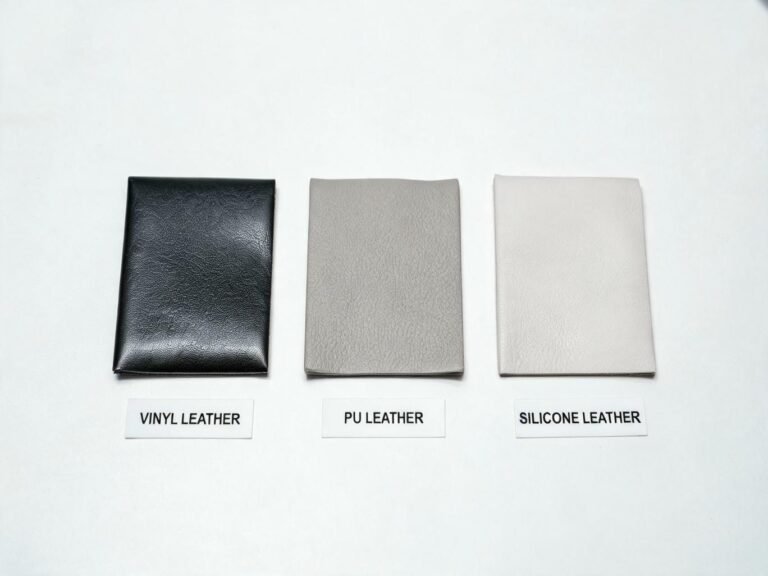
I manage a 400-seat restaurant chain, and two years ago we refurbished every booth with vinyl leather because the supplier quoted $4 per yard. Today, six of those booths have cracked seat panels, the armrests are sticky to the touch, and the cleaning crew spends an extra hour per shift scrubbing the plasticizer film off the surfaces. That “budget” material is on track to cost us 60% more than the premium alternative we originally rejected — and I’m not the only operator learning this lesson the hard way. Vinyl leather has a pricing trap built into its chemistry, and the five costs below are the ones procurement teams almost never calculate upfront.
The Plasticizer Leaching Problem Nobody Budgets For
Vinyl leather seems straightforward: coat a fabric base with polyvinyl chloride, add plasticizers for flexibility, and you get a leather-like surface at a fraction of genuine leather’s cost. What the spec sheets don’t mention is that those plasticizers are temporary guests in the material — they migrate to the surface and evaporate over time, leaving behind a rigid PVC matrix that cracks under any flex stress. The industry calls this plasticizer leaching, and it’s the reason vinyl leather has a 3-5 year service life in commercial settings.
In our materials testing at TOPSUN, we’ve watched PVC vinyl samples become brittle and crack after just 500 hours of accelerated UV exposure. The surface transitions from flexible to rigid to fractured in a predictable pattern — and once the cracking starts, there’s no repair path short of full panel replacement. A 2022 SAE International study on automotive vinyl confirmed that plasticizer volatilization at low temperatures causes irreversible stiffening, which tracks exactly with what we see in commercial upholstery.

Premium silicone leather maintains its texture and flexibility for 10+ years — no plasticizers, no leaching, no cracking.
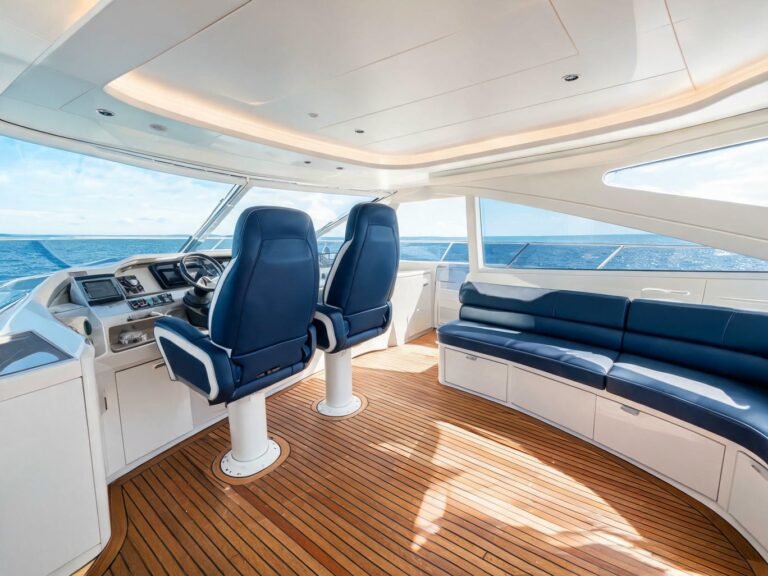
One of our clients in the marine seating sector replaced their vinyl upholstery after just 4 years. Every seam line had cracked, and the surface was sticky enough to leave residue on clothing. They switched to silicone leather and haven’t replaced a single panel in three years since installation.
Why Vinyl Leather Triggers REACH and Phthalate Audits
If you manufacture or import products containing vinyl leather into the EU, REACH Annex XVII is already on your compliance checklist. The regulation restricts four phthalates — DEHP, DBP, BBP, and DIBP — to 0.1% by weight in plasticized materials. Since vinyl leather relies on these exact chemicals for its flexibility, every batch requires third-party testing to prove compliance. The EU’s 2018 expansion of Annex XVII extended the restriction beyond toys to all consumer articles, dramatically increasing the audit surface for B2B manufacturers.
The testing isn’t trivial. A single REACH phthalate panel runs $200-500 per material batch at an accredited lab. Multi-product sourcing programs rack up thousands in annual compliance costs before a single seam is sewn. And if a batch fails? You’re looking at customs holds, product recalls, and potential market exclusion. Many procurement teams we work with have started specifying eco-friendly silicone leather specifically to eliminate this recurring cost line from their budgets.
Silicone leather contains no phthalates, no PVC, and no plasticizers — its flexibility comes from the silicone polymer itself. Our REACH compliance documentation is a single-page declaration of substance absence, not a testing panel. When you compare the two materials on a silicone vs PU and PVC basis, the compliance burden alone often tips the TCO calculation.

TOPSUN’s solvent-free dry coating process eliminates plasticizers entirely — the material is born flexible, not chemically softened.
The Replacement Math: 3 Swaps in 10 Years vs Zero
Let’s talk actual numbers. If vinyl leather lasts 3-5 years and your product needs to survive 10 years, you’re replacing it 2-3 times. Each replacement cycle includes material cost, labor to strip and reupholster, downtime for the affected units, and disposal of the degraded material — which, being PVC, goes to landfill rather than recycling. When you factor in the industry-wide shift away from PVC leather, the sourcing risk for vinyl replacements is also rising as EU and North American regulations tighten.
| Cost Factor | Vinyl Leather (PVC) | Silicone Leather | 10-Year Impact |
|---|---|---|---|
| Material cost/m² | $3-8 (low upfront) | Higher upfront | Initial savings erased by replacements |
| Replacement cycles | 2-3 (every 3-5 yrs) | 0 (10+ yr life) | +200-300% material cost over 10 yrs |
| Compliance testing | Required (phthalates) | Not required | $2K-5K/yr in lab fees eliminated |
| Cleaning labor | +1 hr/shift (sticky film) | Standard wipe-down | $15K-25K/yr extra labor per 100 seats |
Over 10 years, three rounds of vinyl replacement cost 2.1x what a single silicone leather installation would have cost — and that’s before factoring in cleaning labor or compliance testing.
I ran the math for our restaurant chain. The numbers were ugly enough that we’re mid-transition to silicone leather for the next refurbishment cycle. The initial material quote is higher, yes — but the 10-year TCO drops by nearly half.

Silicone leather’s non-porous surface repels water and resists the degradation that makes vinyl brittle and sticky over time.
Watch how silicone leather outlasts vinyl and PU in side-by-side durability testing — the difference at 100,000 cycles is impossible to ignore.
Vinyl Leather Cleaning Costs: Sticky Film and Specialized Products
As plasticizers migrate to the surface of vinyl leather, they create a sticky film that traps dirt, grease, and bacteria. Standard cleaning products accelerate the degradation — alcohol-based disinfectants dissolve the plasticizers faster, while abrasive cleaners scratch the already-weakened surface. The result is a vicious cycle: the more you clean, the faster the material degrades. Our cleaning and maintenance guide details how silicone leather avoids this problem entirely.
In our restaurant, the cleaning crew was using specialized vinyl conditioner every two weeks to slow the degradation. It cost $35 per bottle, and we went through four bottles a month across the venue. That’s $1,680 per year in cleaning products alone — for booths that still cracked within three years. The labor cost of the extra cleaning hour per shift added another $14,000 annually to the operating budget.
Silicone leather cleans with water. No specialized products, no conditioners, no quarterly treatments. The surface is non-porous and inherently antimicrobial, so a standard wipe-down with common disinfectant takes 30 seconds per seat and leaves no residue. For operators evaluating vinyl synthetic leather alternatives, the cleaning labor differential alone often justifies the switch.

PVC vinyl leather’s surface begins degrading from day one as plasticizers migrate outward — silicone leather’s surface chemistry remains stable for 10+ years.
Frequently Asked Questions
Is vinyl leather the same as PVC leather?
Yes, vinyl leather and PVC leather are the same material. “Vinyl” is the commercial term used in upholstery and furniture markets, while “PVC” (polyvinyl chloride) is the technical designation. Both refer to a synthetic leather made by coating fabric with plasticized polyvinyl chloride. The plasticizers — typically phthalates — are what make rigid PVC flexible enough to mimic leather, and they’re also what cause the material to crack and peel as they leach out over 3-5 years.
How long does vinyl leather last in commercial upholstery compared to silicone leather?
Vinyl leather typically lasts 3-5 years in commercial applications before plasticizer leaching causes cracking and peeling. Silicone leather lasts 10+ years under identical conditions, with a Martindale abrasion resistance of 200,000+ cycles versus vinyl’s 10,000-100,000 cycles. The 5-7 year lifespan gap means vinyl requires 2-3 full replacements during a period where silicone leather needs zero.
The Real Cost of “Cheap” Vinyl Leather
When you price vinyl leather honestly — material, compliance testing, replacement labor, specialized cleaning, and disposal — that $4 per yard starts looking like the most expensive line item in your upholstery budget. The operators who switch to silicone leather aren’t paying a premium. They’re paying once instead of three times. If your 10-year TCO model still shows vinyl leather as the cheaper option, check whether it includes compliance testing, replacement cycles, and the cleaning labor premium. Most don’t — and that’s exactly where the cost trap snaps shut.
Get a Vinyl vs Silicone Cost Comparison
About TOPSUN
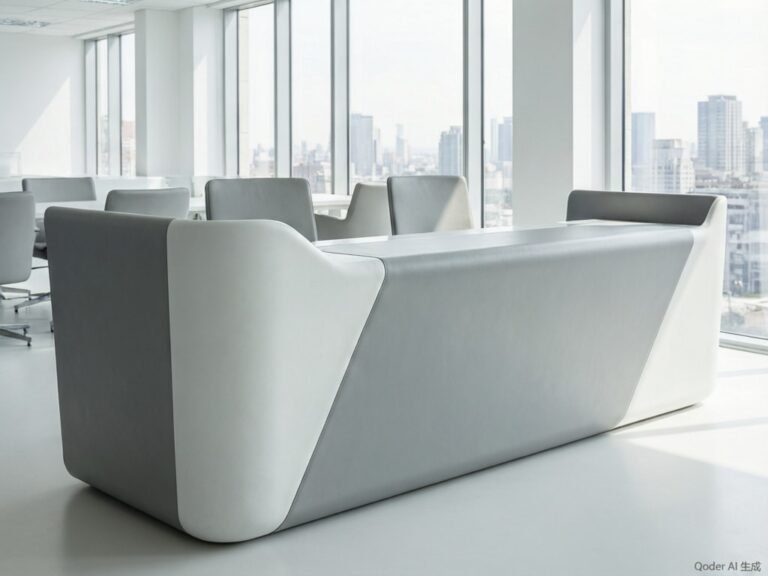
TOPSUN manufactures PVC-free silicone leather as a drop-in replacement for vinyl leather across automotive interiors, commercial furniture, marine upholstery, and high-traffic public seating.
Phthalate-free, zero-VOC, 200,000+ Martindale cycles, and a 10+ year service life that eliminates the 3-5 year replacement cycle built into vinyl leather budgets.