Companies like United Leathers have built impressive reputations supplying premium genuine leather hides — cowhide, lambskin, and exotic skins — to designers and luxury brands. With 40 years of industry expertise and 2,000+ options in every color and texture, they represent the gold standard for genuine leather sourcing in the fashion and interior design markets.
But here’s the problem: the B2B manufacturing landscape has changed. Brands no longer just need beautiful leather — they need consistent, certified, scalable material that meets stringent environmental and safety regulations across global markets. Genuine leather suppliers, including united leathers, face structural limitations that synthetic and silicone leather manufacturers simply don’t.
This isn’t about genuine leather being “bad” — it’s about recognizing when genuine leather’s supply chain constraints make it the wrong choice for high-volume, compliance-driven B2B production.
Compare Genuine vs. Silicone Samples

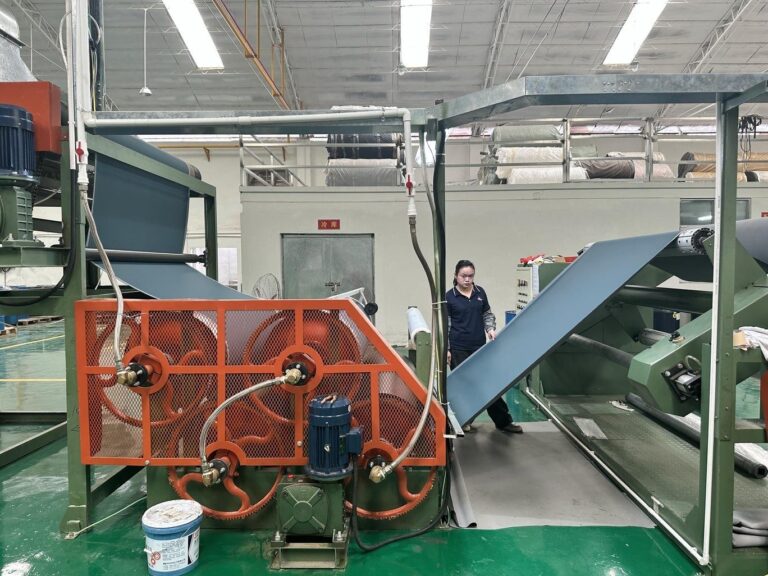
Synthetic leather production at scale — consistent color, texture, and quality across every roll
The Genuine Leather Supply Chain: Beautiful But Inconsistent
Genuine leather suppliers like United Leathers source from tanneries that process animal hides. Each hide is unique — the grain, thickness, flexibility, and color vary by animal, tannery, and even the season. For a designer hand-picking individual hides for a luxury project, this variation is a feature. For a B2B manufacturer producing 50,000 identical automotive seat covers, it’s a defect.
The fundamental challenges of genuine leather for volume B2B production:
- Batch inconsistency: No two hides are identical. Color matching across a production run requires sorting by hand, adding labor and waste.
- Limited supply: Premium hides (full-grain, top-grain) are a finite resource. You can’t manufacture more cowhide on demand — the supply is constrained by the livestock industry.
- Thickness variation: Natural hide thickness varies across the same animal — the belly is thinner than the back. This makes automated cutting and stitching difficult.
- Compliance complexity: Tanning processes use chromium, formaldehyde, and other chemicals. Meeting REACH, RoHS, and VOC standards requires extensive testing — and some tanneries can’t provide the documentation.
For brands selling into the EU, US, or any market with strict chemical compliance regulations, genuine leather’s compliance documentation gaps are a growing problem. A silicone vs. PU comparison shows how synthetic materials offer complete documentation — something genuine leather suppliers struggle to match.
Key distinction: Genuine leather suppliers excel at premium, low-volume, design-led sourcing. Synthetic leather manufacturers excel at high-volume, spec-driven, compliance-critical production. The right choice depends on your product’s requirements — not on which material is “better.”

Automated production line — synthetic leather can be produced at 16,000m daily output with consistent quality
Scale and Consistency: The Synthetic Advantage
When B2B brands need 500+ meters of leather material with consistent color, thickness, and texture — and they need it in 7–15 days — synthetic leather manufacturing is the only option that reliably delivers. Here’s why:
| Factor | Genuine Leather (e.g., United Leathers) | Silicone Leather Manufacturer |
|---|---|---|
| Daily output capacity | Limited by hide supply | 16,000m/day |
| Batch consistency (Delta E) | Variable — natural variation | ≤ 1.0 color accuracy |
| Thickness tolerance | Varies across hide | ±0.05mm across roll |
| Lead time (500m order) | 2–6 weeks (sourcing + sorting) | 7–15 days |
| Compliance documentation | Variable — tannery-dependent | Full REACH, RoHS, FDA certs |
| Environmental impact | High — tanning chemicals, land use | Low — solvent-free, recyclable |
For brands targeting automotive interiors, medical equipment, or any product requiring 50,000+ identical parts with full compliance documentation, synthetic leather’s production consistency is a strategic advantage that genuine leather can’t match.
Factory production capacity — how synthetic leather manufacturing scales for B2B volume orders

Leather supplier selection — comparing genuine hide suppliers with synthetic leather manufacturers
When Genuine Leather Still Wins (And When It Doesn’t)
Let’s be clear about where genuine leather suppliers like United Leathers still hold the advantage:
- Premium fashion: For luxury handbags, bespoke footwear, and one-of-a-kind accessories where each piece’s unique grain pattern is a selling point, genuine leather’s natural variation is a feature, not a defect.
- Low-volume artisanal products: When you need 10 hides, not 10,000 meters, genuine leather suppliers provide the curation and expertise that mass production can’t.
- Patina and aging: Genuine leather develops a patina over time that many consumers value. Synthetic leather — including silicone — maintains its original appearance instead.
But for the growing majority of B2B applications — automotive interiors, furniture upholstery, medical surfaces, consumer electronics, baby products, and public transport seating — the requirements have shifted toward consistency, compliance, and scalability. In these applications, genuine leather’s natural variation becomes a manufacturing problem, not an aesthetic asset.
Choosing the Right Leather Supplier for Your Production
If you’re deciding between genuine leather suppliers and synthetic leather manufacturers, here’s the decision framework we recommend:
- Volume: Under 50 hides → genuine leather supplier. Over 500 meters → synthetic leather manufacturer.
- Consistency requirement: If every unit must look identical → synthetic. If natural variation is acceptable or desired → genuine.
- Compliance: If you need REACH, RoHS, FDA, or VOC documentation → synthetic leather manufacturers provide complete test reports. Genuine leather documentation varies by tannery.
- Lead time: If you need 500m+ in under 3 weeks → synthetic (7–15 day lead time). Genuine leather sourcing typically takes 2–6 weeks.
- Environmental positioning: For vegan, cruelty-free, or low-carbon-footprint branding → silicone leather. For “genuine” or “authentic” positioning → genuine leather.
Many brands end up using both: genuine leather for flagship, limited-edition products and silicone leather for volume production lines. For more on manufacturing capabilities, explore our factory production overview.
The Right Supplier for the Right Job
United leathers and similar genuine leather suppliers serve an important market — and they do it well. But B2B brands sourcing leather material for volume production face different requirements than a designer hand-picking hides for a luxury collection. Consistency, compliance, scalability, and lead time are the metrics that matter for production runs of 500+ meters.
The smartest procurement strategy is to match the supplier type to your product’s lifecycle. For artisanal, low-volume, patina-valued products, genuine leather remains the right call. For everything else — the growing majority of B2B manufacturing — silicone leather delivers the consistency, documentation, and production scale that genuine leather can’t.
About TOPSUN
TOPSUN operates 60,000+ m² of silicone leather manufacturing capacity across three facilities, delivering consistent, fully-certified material at 500,000+ m monthly for B2B brands that need volume production without quality compromise.
500,000m monthly capacity | 7–15 day lead time | REACH & RoHS | Delta E ≤ 1.0 | 500m MOQ | Free A4 swatches