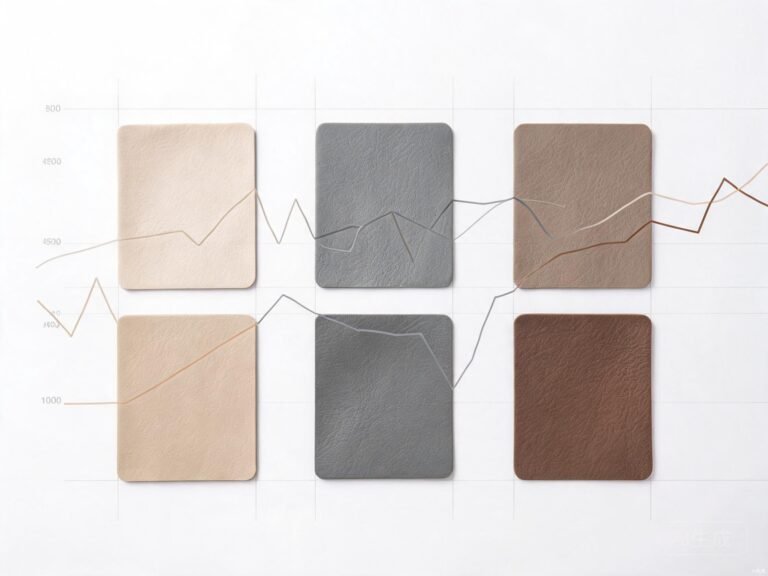
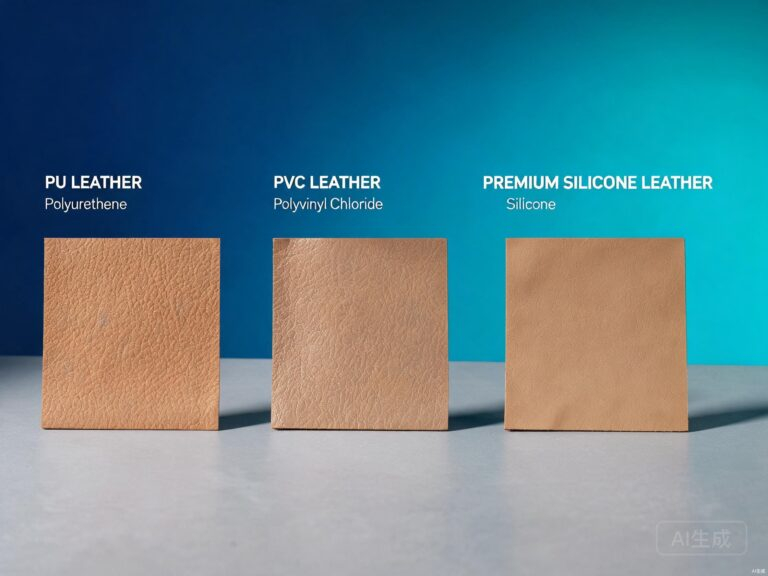
The silicone leather market size is projected to reach $536 million by 2030, growing at a 14.0% compound annual growth rate from 2024 to 2030, according to QYR Research. Multiple independent market reports confirm the trajectory: the global silicone synthetic leather market was valued at $270 million in 2025 with a 9.0% CAGR, while the broader waterproof silicone leather category reached $1.83 billion in 2025. For B2B procurement teams, the question isn’t whether the market is growing — it’s understanding which forces are driving that growth and how to position supply chain strategy accordingly.
Three forces are accelerating market expansion faster than baseline material substitution: regulatory pressure is eliminating PU and PVC from regulated applications, EV adoption is creating new material requirements that traditional leather can’t meet, and corporate sustainability mandates are driving material switching across industries. Here’s what the market data shows and what it means for procurement teams sourcing silicone leather at scale.
Request Market Intelligence Pack
The $536M Question: Where Is the Silicone Leather Market Today?
Multiple research firms track the silicone leather market with slightly different scopes and methodologies, but the direction is unanimous: this market is growing significantly faster than the overall synthetic leather industry. Here’s what the data says across sources.
| Source | 2025 Value | Forecast | CAGR |
|---|---|---|---|
| QYR Research | — | $536M by 2030 | 14.0% |
| 24ChemResearch (Silicone Synthetic) | $270M | 2026–2033 | 9.0% |
| PMResearch (Waterproof Silicone) | $1.83B | $3.23B by 2032 | 8.5% |
| China Market (RMB) | ¥5.46B (2026) | ¥77.2B (2029) | 12.2% |
The variance in absolute numbers reflects different market definitions — “silicone synthetic leather” is a narrower category than “waterproof silicone leather” which includes broader coated fabric applications. But the directional signal is clear: every research firm tracking this market projects above-GDP growth, with the highest-growth forecasts exceeding 14% CAGR. For context, the traditional PU leather market grows at 3-4% annually — silicone leather is growing 3-4x faster.

TOPSUN production line — the manufacturing capacity behind market growth projections
Force 1: Regulatory Pressure Is Eliminating PU and PVC
The single largest driver of silicone leather market growth isn’t consumer preference — it’s regulation. Three regulatory regimes are actively removing PU and PVC leather from regulated applications, creating a compliance-driven demand pipeline that’s independent of market cycles.
EU formaldehyde limits: The EU’s tightened formaldehyde emission standard (0.062 mg/m³) bars non-compliant materials from the EU marketplace for furniture and wood-based articles. TOPSUN’s silicone leather — with zero formaldehyde content — meets this requirement without reformulation, while PU leather suppliers face costly reformulation or market exclusion. This regulatory shift creates immediate demand from European furniture and automotive interior supply chains.
VDA 277 emission standards: Automotive OEMs and Tier-1 suppliers are adopting zero-VOC silicone leather for cabin interiors to meet VDA 277 emission standards and respond to consumer demand for “new-car smell” elimination. PU leather’s solvent-based production process makes VDA 277 compliance expensive and inconsistent. TOPSUN’s solvent-free coating process produces zero-VOC silicone leather that passes VDA 277 by design, not by post-treatment. For more on TOPSUN’s eco-friendly silicone leather, the production process uses heat curing rather than chemical crosslinkers.
China’s green additive rules: In March 2026, China’s MIIT and Ministry of Ecology published the “Green Evaluation Rules for Silicone Leather Functional Additives” — the first government standard establishing biodegradability (≥60%), migration toxicity (EC50 >100mg/L), and carbon footprint (≤8.2kg CO₂e/kg) thresholds. This standard is expected to cover 75%+ of China’s silicone leather additive suppliers by end of 2026, creating a compliance framework that rewards producers like TOPSUN who already meet these thresholds while accelerating the exit of non-compliant competitors.
Force 2: EV Adoption Creates New Material Requirements
The transition from internal combustion to electric vehicles is changing what automotive interiors need from leather materials. EVs generate different thermal profiles — battery heating scenarios, regenerative braking heat, and cabin pre-conditioning systems all create sustained temperature exposure that PU leather (80°C max) cannot withstand. Silicone leather’s 250°C stability makes it uniquely suited for EV applications where thermal management is critical.

Automotive interior 2026 — the segment driving fastest silicone leather adoption
EV brands also weight cabin air quality more heavily than traditional automakers. Without engine exhaust masking interior material off-gassing, EV cabin VOC levels come entirely from interior materials. Silicone leather’s zero-VOC profile aligns with EV brand positioning around clean, technology-forward interiors. The $4.1B vegan automotive leather market projected by 2031 captures this trend — and silicone leather is the premium tier within that category. For automotive interior applications, the EV segment alone is projected to account for 35-40% of silicone leather demand growth through 2030.
Force 3: Sustainability Mandates Drive Material Switching
Corporate ESG targets are creating procurement-level pressure to switch from PU/PVC to silicone leather. The driver isn’t marketing — it’s Scope 3 emissions reporting. PU leather production uses DMF (dimethylformamide) as a solvent, a substance under REACH restriction. PVC production involves phthalate plasticizers under regulatory scrutiny worldwide. Silicone leather production uses a solvent-free dry coating process with zero DMF, zero phthalates, and zero heavy metals.

Finished goods warehouse — the supply chain capacity behind market growth projections
For procurement teams, this means silicone leather is increasingly the path of least regulatory resistance. Materials that require exemptions, special handling protocols, or end-of-life disclaimers create procurement friction. Silicone leather — 100% recyclable, PVC-free, phthalate-free, BPA-free, formaldehyde-free, DMF-free — clears most corporate material restriction lists without exception. Learn more about what makes silicone leather different from PU and PVC at the molecular level.
The 4 High-Growth Segments: Where Market Expansion Is Concentrated
QYR Research identifies four segments driving above-average growth in the silicone leather market. Each segment has distinct demand drivers and specification requirements.

Full silicone leather swatch range — the product diversity serving 4 high-growth market segments
Automotive / EV: The largest segment by volume. Driven by VDA 277 compliance, EV thermal management, and zero-VOC cabin requirements. Silicone leather is specified for seats, door panels, steering wheel covers, and headliners. The EV sub-segment is growing 3x faster than traditional automotive.
Medical / Healthcare: The fastest-growing segment by percentage. ISO 10993 biocompatibility certification, alcohol/bleach disinfectability, and intrinsic antimicrobial properties make silicone leather the material of choice for hospital seating, examination tables, and medical device covers. Medical applications demand the highest certification burden — and silicone leather is the only synthetic leather that clears it.

Medical-grade antimicrobial silicone leather — the fastest-growing segment in the market
Marine / Yacht: UV stability (1,000+ hours) and salt spray resistance (1,000+ hours) make silicone leather ideal for marine environments where PU degrades in 1-2 years and genuine leather requires constant conditioning. The marine segment is driven by luxury yacht refits and commercial vessel interiors.
3C / Electronics: Ultra-thin silicone leather (0.23-0.8mm) for phone cases, tablet covers, and wearable bands. The growth here is driven by premium accessory brands differentiating from commodity PU cases through material quality and durability.
What This Means for B2B Procurement Strategy
A market growing at 14% CAGR with regulatory tailwinds creates specific procurement implications that B2B buyers should plan for now, not later.
First, supply security. Markets growing this fast can develop supply constraints as demand outpaces production capacity. TOPSUN’s 60,000+ m² production base and 500,000+ meter monthly capacity provide scale, but B2B buyers should establish supply relationships before capacity allocation becomes competitive. Lock in annual volume commitments to secure production slots.
Second, price trajectory. In a 14% CAGR market, prices are unlikely to decrease — they may increase as demand pressures capacity. B2B buyers who establish pricing agreements now will benefit as the market tightens. Request a samples and pricing package to benchmark current costs.
Third, specification future-proofing. Materials specified today will face increasingly stringent regulatory requirements over the next 3-5 years. Specifying silicone leather now — with its zero-VOC, zero-formaldehyde, REACH-compliant profile — positions products ahead of regulatory tightening rather than behind it. See our eco-friendly credentials for the compliance details.
Watch: Silicone leather market outlook — growth segments, regulatory drivers, and supply chain strategy
Frequently Asked Questions
How large is the silicone leather market and how fast is it growing?
According to QYR Research, the silicone leather market is projected to reach $536 million by 2030, growing at a 14.0% CAGR from 2024 to 2030. Multiple independent research firms confirm above-average growth: 24ChemResearch reports a 9.0% CAGR for silicone synthetic leather, while PMResearch projects the waterproof silicone leather category at $1.83 billion in 2025 growing to $3.23 billion by 2032. The variance reflects different market definitions, but all sources project growth 2-4x faster than the overall synthetic leather market.
Which industries are driving silicone leather market growth?
Four segments drive above-average growth: automotive/EV (largest by volume, driven by VDA 277 emission standards and EV thermal management requirements), medical/healthcare (fastest-growing by percentage, driven by ISO 10993 biocompatibility and disinfectability requirements), marine/yacht (driven by UV stability and salt spray resistance needs), and 3C/electronics (driven by ultra-thin premium accessory demand). The EV sub-segment within automotive is growing approximately 3x faster than traditional automotive applications.
A Market Where Being Early Is Being Right
The silicone leather market isn’t growing because of a trend — it’s growing because regulation is eliminating alternatives, EV adoption is creating new requirements, and sustainability mandates are forcing material switching. These are structural drivers, not cyclical preferences. For B2B procurement teams, the strategic question isn’t whether to adopt silicone leather, but when — and the market data suggests that establishing supply relationships before capacity allocation becomes competitive is the right move for buyers who want both supply security and price stability through the 2030 forecast horizon.
Get Market Intelligence + Samples
About TOPSUN
TOPSUN is a silicone leather manufacturer with 60,000+ m² production capacity and 500,000+ meter monthly output, positioned to serve B2B procurement teams across the four high-growth market segments driving the $536M silicone leather market toward 2030.
$536M projected market by 2030 (QYR Research) · 14.0% CAGR · 4 high-growth segments: Auto/EV, Medical, Marine, 3C · 60,000+ m² production base · Zero-VOC, zero-formaldehyde, REACH-compliant