Global PU synthetic leather output reached 28.51 billion US dollars in 2025, and analysts project 40.79 billion by 2032. Most of that volume ships as rolls and sheets. Yet the term PU leather sheets still creates confusion at the order stage. Buyers mix sheet gauges with roll widths. Others match a craft-grade 0.8 mm panel to a sofa program that needs 1.4 mm. This guide explains what a PU leather sheet is, how thickness bands map to real applications, and which spec lines to lock before you pay a deposit.

What PU Leather Sheets Actually Are
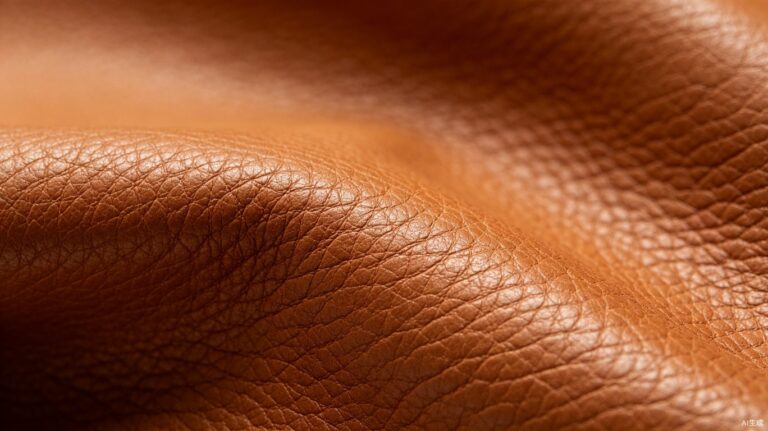
A PU leather sheet is a polyurethane surface layer bonded to a textile backing, supplied as a flat panel or a cut piece. The coating carries the look and the hand feel. The backing carries the strength. Together they decide how the sheet bends, stretches, and wears. Three construction details matter most at the quote stage.
- Coating thickness. Surface PU runs from a thin finish to a heavy wear layer. More coating usually means better abrasion life, but a stiffer feel.
- Backing type. Knit fabric drapes well for garments and soft goods. Woven fabric holds shape for upholstery panels. Microfiber backing pushes durability to the top of the range.
- Release-paper texture. Lychee, saffiano, and nappa grains all come from the release film. The same chemistry can look budget or premium depending on this step.
Unlike full-grain hide, a sheet is uniform by design. Every panel from the same batch shares gauge, grain, and shade. That consistency is the main reason brands specify sheets for panel programs.
Thickness Bands: Matching PU Leather Sheets to the Job
Thickness is the first filter in any sheet order. Trade listings cluster between 0.6 and 2.0 mm, with craft panels going thinner and structural panels going thicker. Use these bands as a starting point, then confirm with samples.
| Thickness | Typical Applications | Watch-Out |
|---|---|---|
| 0.6 – 0.8 mm | Craft panels, notebooks, garment trims, labels | Tears at staples; not for tensioned seats |
| 0.9 – 1.2 mm | Bags, shoe uppers, light upholstery, headboards | Check flex life at fold points |
| 1.3 – 1.6 mm | Sofa seating, office chairs, booth seating | Confirm hydrolysis data, not just gauge |
| 1.7 – 2.0 mm+ | Heavy-duty upholstery, wall panels, industrial covers | Heavier to sew; needle and thread changes |
Two notes on this table. First, thicker does not automatically mean better. A 1.0 mm sheet with a microfiber backing can outlast a 1.5 mm sheet on a weak knit. Second, ask for gauge tolerance. A supplier who controls thickness within plus or minus 0.05 mm runs a tighter line than one who quotes a nominal figure only.

Backing and Coating: Where Sheet Quality Diverges
Two sheets with identical gauge can differ by years in service life. The gap usually traces back to three choices made in production. Know them before you compare prices, because they explain most quality differences between quotes.
Primer bonding. A weak primer lets the PU layer separate from the fabric after repeated flexing. Ask how the supplier tests adhesion between coating and backing. Topcoat chemistry. Solvent-based topcoats carry VOC load, while water-based systems cut emissions and odor. Curing control. Under-cured coating feels sticky at first and cracks early. A line with temperature verification at the oven avoids both problems.
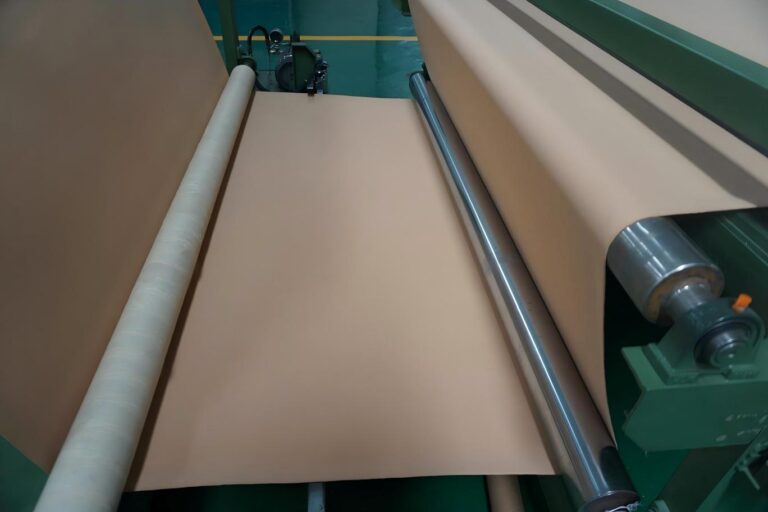
These points matter more than any catalog photo. If a supplier cannot answer them with test data, treat the quote as unfinished. Our factory production overview shows how each stage is monitored on a modern coating line.
Six Spec Lines for Your Next PU Leather Sheets RFQ
A clear RFQ gets accurate quotes and fewer sample rounds. It also signals to suppliers that you buy on data, not on price alone. Put these six lines in writing before you contact anyone.
- Gauge and tolerance, for example 1.2 mm plus or minus 0.05 mm.
- Backing construction, knit, woven, or microfiber, with weight in grams per square meter.
- Width and sheet size, since rolls commonly run 1,350 to 1,400 mm and sheets are cut to order.
- Color standard, referenced to a Pantone or RAL number rather than a photo.
- Performance floor, minimum Martindale cycles, flex cycles, and color fastness grade you will accept.
- Compliance set, REACH, RoHS, and any market-specific rules your goods must clear.
Send this list with your inquiry. Suppliers respond faster when the spec is complete, and you remove the ambiguity that causes rework later. If your program needs custom grain or color development, request panels cut to your target gauge before you commit.
Request Sheet Samples With Grain Options

When to Upgrade to Silicone-Coated Sheets
PU covers most mid-range programs well. There are cases where the chemistry itself becomes the limit. PU degrades through hydrolysis, where moisture attacks the polymer over time. In humid climates, standard PU upholstery can show cracking within three to five years.
Silicone-coated sheets resist hydrolysis, tolerate alcohol disinfection, and hold flexibility from minus 40 degrees Celsius upward. For hospitality, healthcare, marine, and outdoor programs, that difference decides the total cost. Our silicone vs PU guide compares both chemistries in detail. If your sheets face moisture, heat, or heavy disinfection cycles, also review the hydrolysis-resistant silicone leather data before finalizing the spec.

A Decision Path for Your Next Sheet Order
Work through the path below in order. Each step narrows the field before price becomes the topic. The sequence mirrors how experienced buyers qualify a new sheet supplier for a program.
- Step 1: Define the duty level. Craft and trim goods can use light gauges. Seating and contract work need 1.3 mm or more with a performance floor in the RFQ.
- Step 2: Pick the backing before the surface. Drape needs knit. Shape retention needs woven. Maximum life needs microfiber.
- Step 3: Set the environment. Dry indoor use keeps PU viable. Humidity, disinfection, or outdoor exposure points to silicone-coated sheets.
- Step 4: Demand data with the sample. A panel without test reports is only a picture. Ask for Martindale, flex, and adhesion figures tied to the batch.
- Step 5: Confirm batch continuity. Lock the batch reference for reorders so shade and grain stay consistent across production runs.
Buyers who follow this sequence cut sample rounds and avoid the most common failure: a sheet that looks right in the sample room and fails in the field. When the environment or the duty cycle is demanding, specify a material engineered for it. Silicone microfiber leather pairs a tough microfiber backing with a hydrolysis-proof surface, and it is supplied in the same sheet and roll formats.
Get a Sheet Quote With Test Data
About TOPSUN: TOPSUN manufactures silicone-coated leather sheets and rolls for B2B buyers in more than 30 countries. The range spans 0.23 to 3.0 mm in thickness, more than 100 textures, custom Pantone and RAL colors, and a monthly capacity of 500,000 meters, with SGS reports provided for every order.