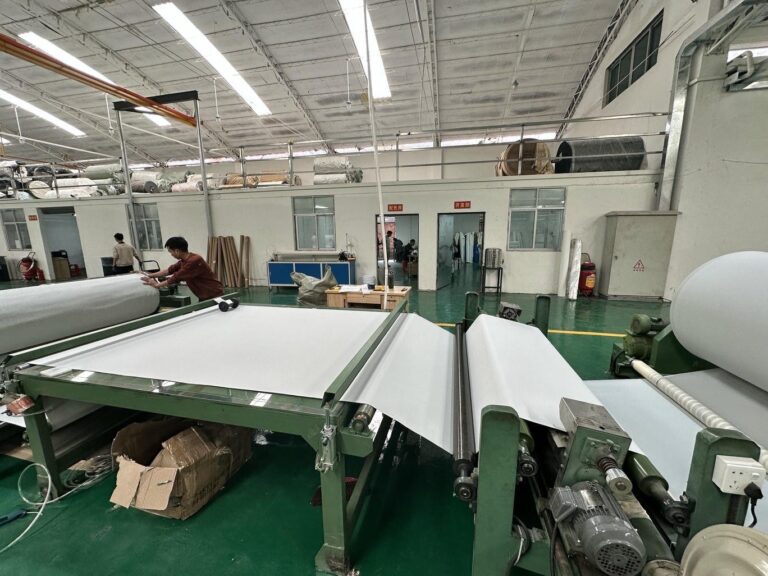
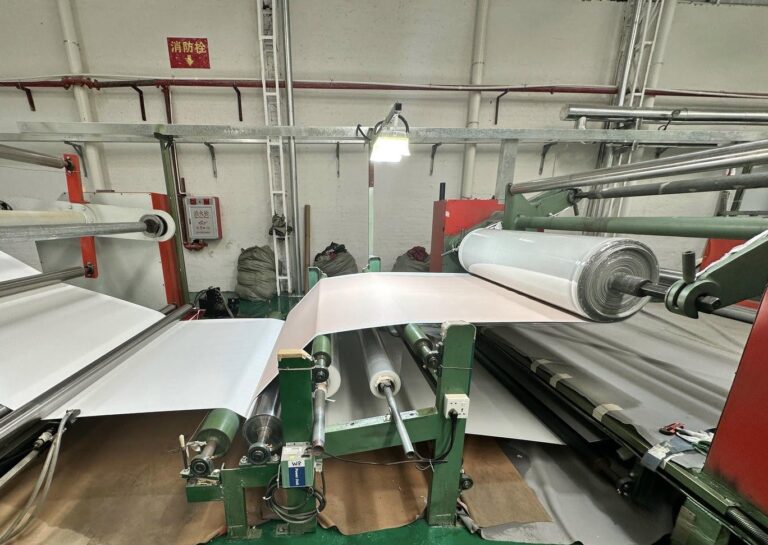
Thirty thousand Martindale cycles. That is the gap between the best PU roll and the worst one we re-covered last quarter, and both carried the same supplier label. PU leather quality is not a feeling or a price band. It is a set of measurable properties, and after twenty years of cutting, wrapping, and returning failed covers, I rely on five tests that any buyer can run on a sample table.
What Actually Decides PU Leather Quality
Four inputs set the ceiling before the roll ever ships. Coating thickness controls how much wear layer exists to lose. Base fabric quality controls tear strength and how the material drapes. Bond quality between the two decides whether the surface peels. Finally, the finishing pass controls color consistency and surface feel. Change any one of them and the same “PU leather” becomes a different material in service.
Five Tests You Can Run on a Sample
Order a swatch, then work through this list in order. It takes ten minutes and catches most failures before they reach production:
- 1. Bend and hold. Fold the sample tightly and hold it for thirty seconds. Quality PU springs back without a lasting crease. Cheap coating keeps the fold line, and that line becomes the first crack.
- 2. Stretch and release. Pull gently along and across the grain. Good material stretches slightly and returns. Low-grade material splits, whitens, or delaminates at the bond.
- 3. Look at the coating. Under strong light, the surface should be even, without bubbles or thin patches. Bubbles mean coating trapped air, and each bubble is a future failure point.
- 4. Smell it. A mild, neutral odor is normal. A sharp chemical smell signals solvent residues and VOCs that will off-gas in a finished room.
- 5. Check the sheen and color. A subtle, even sheen reads as quality. Harsh gloss usually means heavy plastic coating, and streaks or blotches mean sloppy finishing.
Any single failure is a question. Two or more failures are a rejection.

Hands-on inspection still catches what certificates miss.

Bench tests turn quality from an adjective into a number.
The Numbers That Separate the Grades
When a supplier claims lab-grade performance, match the claim to these benchmarks. Industry testing puts commodity PU below 25,000 Martindale cycles, with the cheapest coatings failing before 10,000. Quality grades run 30,000 to 100,000. Our own high-performance silicone line is specified at 200,000 and up, which shows how much headroom the chemistry allows.
| Grade | Martindale cycles | Realistic service |
|---|---|---|
| Commodity PU | Below 25,000 | 1-3 years, light use |
| Quality PU | 30,000-100,000 | 3-5 years, daily use |
| Silicone (upgrade path) | 200,000+ | 10-15 years, contract use |
Ask for the test report behind the number, with the lab name and the grade designation on it. Buyers who want to see how the upgrade path is built can review our silicone microfiber product page.

Color consistency under controlled light separates premium finishing from luck.
Questions Buyers Ask About PU Leather Quality
Does a higher price always mean higher PU leather quality? Usually, but verify anyway. Price tracks coating thickness and base fabric, yet a slow-moving warehouse can age even good material. The five tests above cost nothing and cut through both pricing games and storage damage.
Can damaged PU leather be restored? Surface stains can be cleaned, but peeling and cracking cannot. Once the coating separates, no treatment rebuilds the bond. That is exactly why the bend and stretch tests matter before purchase.
Quality Is a Measurable Habit
Workshop crews learn PU leather quality through their hands long before any report confirms it. The five tests simply turn that craft judgment into a checklist you can hand to a purchasing team. Run them on every sample, match every claim to a numbered benchmark, and keep the reports with the order file. Materials measured before purchase rarely disappoint after delivery, and that consistency is the whole point of quality control in our production process.
About TOPSUN
TOPSUN supplies silicone leather tested across abrasion, hydrolysis, UV, and fire protocols for buyers who need benchmarks, not brochures, serving 30+ countries over 8+ years.
Martindale 200,000+ grades, multi-stage QC from raw material to final roll, SGS reports with every order.
References
- https://pubagfactory.com/how-to-test-pu-leather… — quality PU commonly achieves 30,000-100,000+ Martindale cycles; cheap coating fails below 10,000; pre-bulk testing plan covering thickness, adhesion, abrasion, color fastness
- https://fjyudeng.com/id/how-to-identify-high-qu… — high-quality PU inspection framework: thickness, grain texture, flexibility, odor, backing material, surface finish; strong chemical odor indicates VOC off-gassing