Premium leather is one of the most overused and least defined terms in the materials industry. Walk through any trade show and you’ll find dozens of suppliers — from top-tier Italian tanneries to budget PU factories — all claiming to offer “premium” leather. For B2B buyers trying to source materials for luxury products, this is a serious problem. How do you separate genuinely premium leather from marketing hype?
The global full-grain leather market — the true premium end of the natural leather spectrum — is projected to reach $22.19 billion in 2026, growing at 8.23% CAGR to $35.81 billion by 2032. But simultaneously, premium synthetic alternatives like silicone leather are growing even faster as luxury brands re-evaluate what “premium” means in the 21st century. After 15+ years sourcing materials for automotive OEMs, high-end furniture brands, and luxury goods manufacturers, I’ll share what actually makes leather premium, how to verify quality claims, and why the definition of premium is expanding beyond animal hide.
Experience Premium Silicone Leather
The 5 Grades of Leather (and Where “Premium” Actually Starts)
Before we can define premium leather, we need to understand the leather quality hierarchy. Not all “genuine leather” is premium — in fact, most of it isn’t. Here’s the complete quality pyramid from lowest to highest:
| Grade | Hide Layer | Premium? | Price / Hide |
|---|---|---|---|
| Bonded Leather | Leather fibers + PU binder | No | $10–$25 |
| Split Leather | Lower fibrous layer | No | $20–$50 |
| Genuine (Corrected-Grain) | Top layer, sanded & coated | Entry-level | $40–$80 |
| Top-Grain Leather | Top layer, lightly corrected | Mid-premium | $80–$150 |
| Full-Grain Leather | Top layer, untouched grain | True premium | $120–$300+ |
Notice that “genuine leather” is actually in the lower half of the quality pyramid. In consumer marketing, “genuine leather” sounds like a mark of quality — but in the industry, it usually means the lowest grade of real leather that’s still legally allowed to use the term. True premium leather starts at top-grain and peaks at full-grain. If a supplier is calling their material “premium” but it’s actually corrected-grain or split leather — that’s greenwashing, plain and simple.

Premium leather is defined by the quality of the grain — full-grain leather preserves the hide’s natural surface, which is both its aesthetic signature and its structural strength.
8 Markers of Truly Premium Leather
So how do you verify that leather is actually premium? Any supplier can say “premium.” These eight verifiable characteristics separate real premium leather from marketing claims:
1. Full-grain or high-quality top-grain
Premium leather starts with the best part of the hide. Full-grain leather keeps the entire grain layer intact — no sanding, no buffing, no correction. This is the strongest, most durable part of the hide, and it develops a rich patina over time. High-quality top-grain leather (lightly corrected, with a thin protective coating) also qualifies as premium — it’s more uniform and stain-resistant than full-grain, but slightly less breathable and doesn’t patina the same way.
2. Premium tanning and dyeing
The tanning process defines a leather’s character. Vegetable-tanned leather (using tree bark and plant extracts) is the traditional premium method — it produces a rich, warm patina and has a lower environmental impact than chrome tanning. Premium chrome-tanned leather is also available; it’s more water-resistant and color-stable. What matters is that the tanning is done properly — with clean chemicals, adequate processing time, and thorough quality control. Cheap tanning shows up as chemical odors, inconsistent color, and premature degradation.
3. Consistent thickness and density
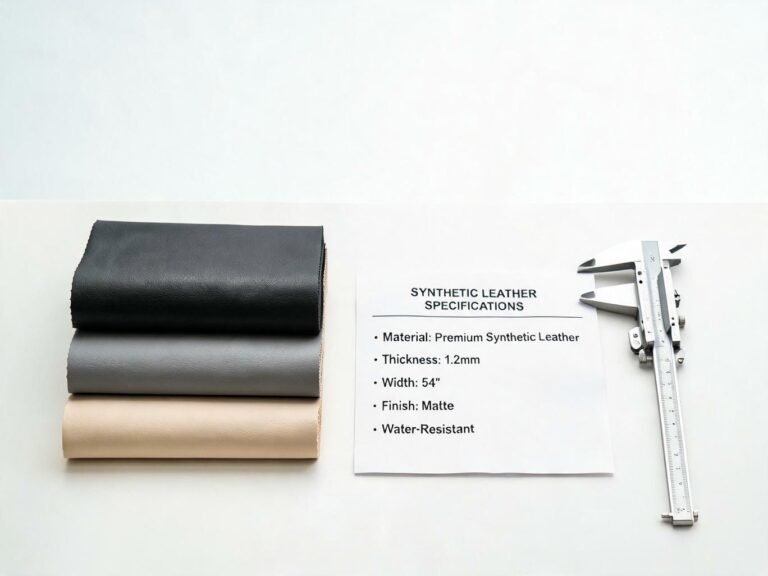
Premium leather has consistent thickness across the entire hide — typically ±0.05mm tolerance. Budget leather varies by ±0.15mm or more, which causes problems in cutting, sewing, and final product quality. Premium hides are also denser — more fibers per square millimeter — which translates to better tear strength and abrasion resistance. You can feel the difference: premium leather has substance and weight; budget leather feels thin and flimsy.
4. Natural, breathable hand feel
Premium leather feels alive. It’s warm to the touch, has a natural give, and breathes — meaning moisture vapor can pass through it. Cheap leather coated with thick polyurethane feels plastic-y, stiff, and unnatural. The “hand feel” of leather is hard to quantify but instantly recognizable once you’ve experienced genuinely premium material. It’s one of the reasons luxury consumers are willing to pay more — they can feel the difference.
5. Excellent color fastness
Premium leather holds its color. Light fastness, rub fastness, perspiration fastness, and water fastness all meet high standards — typically Grade 4+ on all tests. Cheap leather fades quickly in sunlight, transfers dye onto clothing, and bleeds when wet. For premium products, color fastness isn’t optional — it’s a basic expectation. Customers paying premium prices expect their purchase to look good for years, not months.
6. Clean edge cuts and uniform grain
Look at the cut edge of a leather sample. Premium leather has a clean, straight edge with consistent cross-section color. Cheap leather has ragged edges, loose fibers, and color that only penetrates the surface. Also examine the grain pattern — premium leather has a natural, irregular grain that varies across the hide. Uniform, perfectly repeating grain suggests corrected-grain leather with an embossed pattern — not premium.
7. Traceable supply chain
Truly premium leather comes from known sources. The tannery can tell you where the hides came from, what breed of cattle, what tanning method was used, and even which batch produced which hides. Traceability is both a quality indicator (you know what you’re getting) and a sustainability requirement for many luxury brands. If a supplier can’t tell you where their leather comes from, it’s probably not premium.
8. Certifications and compliance
Premium leather suppliers have the certifications to back up their claims. This might include Leather Working Group (LWG) certification for environmental responsibility, ISO quality management certification, REACH compliance for chemical safety, or specific brand approvals for automotive or furniture use. Certifications don’t guarantee quality, but they’re a baseline filter — any supplier without them probably isn’t operating at a premium level.
Quick test for sales meetings: If a supplier says their leather is “premium,” ask them three questions: 1) Is it full-grain or top-grain? 2) What’s the light fastness rating? 3) Can you provide hide source traceability? If they hesitate on any of these, the “premium” label is probably marketing, not reality.
The New Premium: How Synthetic Leather Is Redefining the Category
Here’s the shift that’s reshaping the premium leather market: the definition of “premium” is no longer tied to whether the material comes from an animal. More and more luxury brands — from automotive OEMs to high-end furniture designers — are recognizing that premium quality can come from synthetic materials too, and in some cases, synthetic delivers a better premium experience.
Consider what “premium” actually means to consumers and businesses:
- Premium quality — excellent performance, long lifespan, no defects
- Premium feel — luxurious touch, satisfying weight, sensory pleasure
- Premium consistency — every unit is identical, no variation
- Premium experience — easy to care for, ages well, delivers on expectations
- Premium values — ethical production, environmental responsibility
On many of these dimensions, premium synthetic leather — particularly silicone leather — matches or exceeds genuine premium leather:
| Premium Dimension | Full-Grain Genuine | Premium Silicone |
|---|---|---|
| Durability / Lifespan | 15–25+ years | 10–15+ years |
| Hand Feel | Natural, warm, develops patina | Supple, smooth, consistent |
| Consistency | Natural variations | Perfectly uniform |
| Cleanability | Requires conditioning | Wipe clean, stain-proof |
| Environmental Profile | High water use, tanning chemicals | Zero VOC, fully recyclable |
| Animal-Free | No | Yes |
| Custom Color Matching | Approximate, long lead time | Precise Pantone, fast turnaround |
| Supply Reliability | Subject to hide market fluctuations | Stable, scalable production |

Premium automotive interiors are increasingly using high-performance synthetic leather — the material delivers a luxury feel with better consistency and lower VOCs than genuine leather.
Why Luxury Brands Are Adding Premium Synthetic to Their Lines
The trend toward premium synthetic leather isn’t about replacing genuine leather entirely — it’s about expanding the premium category to include materials that deliver different but equally valid forms of luxury. Here’s why leading brands are adding premium synthetic options:
Consumer demand for sustainable luxury
Luxury consumers — especially younger demographics — increasingly expect premium products to align with their values. A 2025 survey found that 67% of Gen Z and millennial luxury buyers are willing to pay a premium for sustainable materials. For these buyers, “premium” includes environmental responsibility, and a zero-VOC, recyclable, animal-free material can feel more premium than traditional leather.
Performance advantages in commercial applications
For premium hospitality, healthcare, and contract furniture, the practical advantages of premium synthetic leather are hard to ignore. Stain resistance, disinfectant compatibility, zero VOC emissions, and consistent color across large installations — these are premium features that genuine leather can’t match at any price. When your product is a $5,000 hotel suite or a first-class airline seat, the “premium” experience includes knowing it will still look great after 5 years of heavy use.
Supply chain stability
Genuine leather prices and availability are tied to global cattle markets, which fluctuate with disease outbreaks, trade policies, and meat demand. Premium synthetic leather, by contrast, is produced in controlled factory environments with predictable costs and scalable output. For luxury brands that need reliable supply to support product launches and maintain pricing integrity, supply chain stability is a premium attribute in itself.
How to Source Premium Leather (Genuine or Synthetic)
Whether you’re going with genuine full-grain leather or premium silicone leather, the sourcing principles are the same. Here’s a framework for finding and qualifying premium suppliers:
- Define what “premium” means for your product — Is it natural patina? Perfect consistency? Stain resistance? Sustainable sourcing? Be specific about which premium attributes matter most for your application.
- Request full technical data sheets — Not marketing brochures. You need actual test data: abrasion resistance, tear strength, light fastness, chemical resistance, thickness tolerance. If a supplier can’t provide a TDS, they’re not premium.
- Ask for traceability — Where does the material come from? What’s the production process? Can they trace a specific shipment back to its source batch? Premium suppliers can.
- Run your own tests — Don’t just take the supplier’s word for it. Test samples in your real-world conditions: sunlight, cleaning chemicals, abrasion, temperature cycling. Premium material should perform as advertised.
- Visit the production facility — Or have a third-party auditor do it. The factory environment tells you everything about quality culture. Clean, organized, well-equipped facilities produce premium materials. Chaotic, dirty facilities don’t.
- Consider both genuine and synthetic — Don’t assume genuine is automatically premium or synthetic is automatically budget. Compare materials side by side on the attributes that matter to you. You might be surprised by what qualifies as premium in 2026.
The future of premium: Premium leather isn’t going anywhere — there will always be demand for the unique character of full-grain genuine leather. But the premium category is expanding. The fastest-growing segment of the premium market is high-performance synthetic materials that deliver a different kind of luxury: perfect consistency, practical performance, and environmental responsibility. Smart brands are offering both.
Final Thoughts
“Premium leather” used to be simple: it meant the highest grade of genuine animal hide. Today, the definition is broader — and better for it. Premium is about quality, performance, and value, not about whether the material comes from a cow or a factory. Full-grain genuine leather is still the king of traditional premium, and for heritage luxury brands and products that celebrate natural materials, it will remain the standard. But premium silicone leather is establishing its own position at the table — delivering a modern form of luxury that’s more consistent, more practical, more sustainable, and in many ways, more reliable.
The smartest B2B buyers aren’t choosing sides — they’re evaluating both options based on what their customers actually value. Sometimes that’s the warmth and character of full-grain leather. Sometimes it’s the performance and consistency of premium synthetic. And increasingly, it’s both, offered as different tiers or options within the same product line.
Experience Premium Silicone Leather
About TOPSUN
TOPSUN manufactures premium silicone leather for B2B buyers who want luxury-grade material quality with modern performance advantages — zero VOC, fully recyclable, stain-proof, and perfectly consistent across every production run for automotive, furniture, healthcare, and consumer electronics applications.
Zero VOC · 100% recyclable · 10–15+ year lifespan · Stain resistant · 40+ colors · Custom Pantone matching · ISO & REACH certified