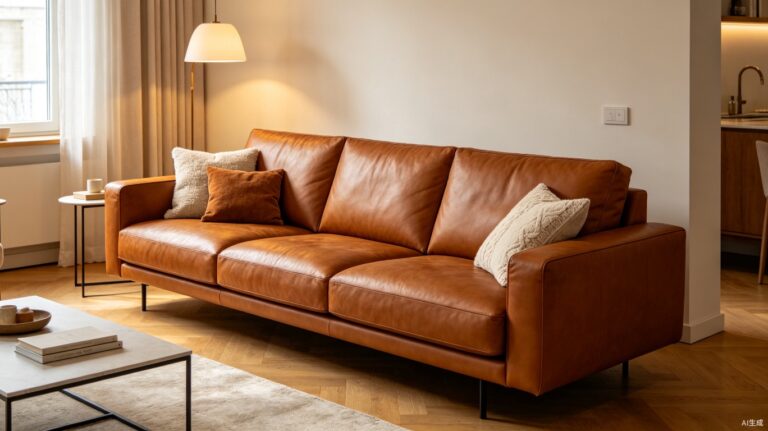
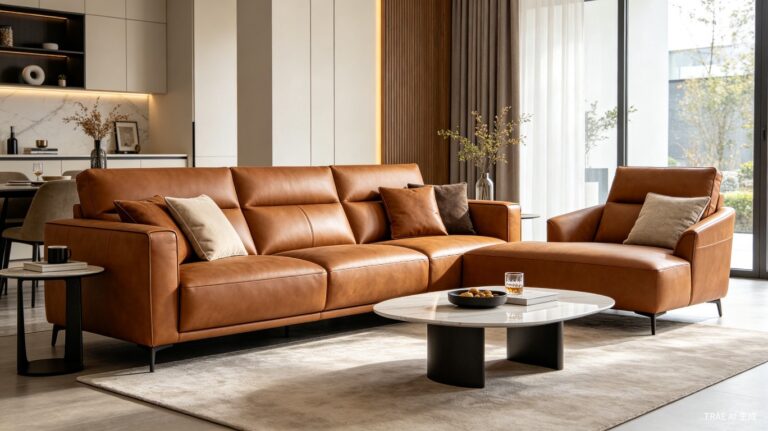
Will the dog’s claws leave the first scar? Will grape juice lift out of the seat, or set forever? Will the color hold through five summers next to a sunny window? If you have asked any of these questions in a showroom, you already know why microfiber leather furniture keeps winning floor space in family homes.
The answers live in test data, not in sales talk. The table below sets out the numbers first. Then we walk through what they buy you in a real living room.
The Numbers First: How Four Sofa Materials Compare
| Material | Martindale abrasion | Typical service life | Daily cleaning effort |
|---|---|---|---|
| Standard PU | 50,000-80,000 cycles | 3-5 years | Careful; harsh cleaners damage coating |
| Microfiber leather | 100,000-200,000 cycles | 5-10 years | Low; stains wipe off |
| Silicone leather | 100,000-150,000+ cycles | 10-15 years | Lowest; alcohol-safe disinfection |
| Genuine leather | Varies by hide grade | 10-25 years | Moderate to high; needs conditioning |
One warning before the deep dive. Martindale ratings across suppliers are not comparable unless the test method and pass criteria match. Always ask which standard sits behind the number.
What the Abrasion Numbers Really Buy You
Industry guidance puts the bar for high-traffic furniture at 100,000 Martindale cycles or more, with commercial contract seating requiring at least 40,000-50,000. Standard PU clears the residential minimum. It does not clear the bar for a sofa that gets used every evening by a family of four.
Microfiber construction changes the math because of the base. Bundled microfibers form a dense, leather-like substrate, so the surface coating sits on something that resists tearing rather than stretching. Independent testing records microfiber leather passing 200,000 cycles, roughly four times the standard PU benchmark. Our own Martindale sampling shows the same story. At 50,000 cycles a good microfiber roll still looks like new material, while a standard PU swatch has already gone shiny at the wear points.
There is a price argument hiding here too. Microfiber typically costs 30-50% less than genuine leather, so the durability gap narrows without the budget gap widening.

Water beading on the surface: the first line of defense against juice, coffee and pet accidents.
Ask About Furniture-Grade Materials
Microfiber Leather Furniture With Kids and Pets: A Real Week
Spec sheets matter, but households run their own field tests. Here is what one typical week looks like on a family sofa.
Monday, a yogurt cup tips over. On microfiber, a damp cloth lifts it without a trace. Wednesday, the dog launches onto the armrest. Claws leave at most a temporary mark on a dense microfiber surface, while aniline leather would take a permanent scratch. Friday, new dark jeans transfer dye onto a light seat cushion. A grade 4-5 color fastness rating means the dye wipes away instead of bonding.
A furniture client of ours runs a rental-model showroom where every sofa gets sat on, spilled on and moved daily. After switching its family-line upholstery from standard PU to a denser microfiber construction, showroom refurbishment cycles stretched noticeably longer. Same designs, same traffic. Only the spec changed.

Softness and drape matter as much as durability for a sofa the family actually uses.
How to Clean Microfiber Leather Furniture Without Damage
The best cleaning routine is the one you can repeat without reading a warning label. For microfiber surfaces, that means three habits:
- Wipe spills the same day with a soft cloth and mild soapy water.
- Vacuum weekly along seams, where grit slowly saws at the surface.
- Skip solvent-based stain removers unless the material is rated for them.
Premium constructions raise the ceiling. A Level 5 stain-resistance rating with alcohol-safe disinfection means even sanitizer wipes will not dull the finish, which is why medical waiting rooms and family homes end up on the same spec sheet. Our full cleaning and maintenance guide walks through the details by stain type, and the same material family is available as silicone microfiber leather for furniture and sofas when a project needs the next step up.

Family-room reality: the same spec that handles showroom traffic handles a lived-in sofa.
Sofa-grade material features on camera: stain release, flex endurance and color stability in one demonstration.
Which Sofa Material Fits Your Home?
Match the material to the household, not the brochure:
- If the sofa faces kids, pets and daily spills → choose microfiber leather furniture rated at 100,000+ cycles.
- If you want a decade-plus service life and hospital-grade wipe-downs → move up to silicone leather.
- If patina, prestige and a 15-year horizon matter more than maintenance → genuine leather still earns its price.
- If the budget is fixed but the traffic is heavy → microfiber gives the best durability per dollar.
For most busy households, the abrasion data settles it: microfiber constructions deliver four times the wear cycles of standard PU at a family-friendly price. Browse silicone and microfiber leather in furniture applications to see the full range in place.
References
1. https://www.cignoleather.com/blogarticle-1/what… — High-traffic furniture requires 100,000+ Martindale cycles; commercial seating minimum 40,000-50,000; standard PU rated 50,000-80,000
2. https://www.winiwpuleather.com/microfiber-leath… — Microfiber leather endures 200,000+ abrasion cycles vs 50,000 for ordinary PU; costs 30-50% less than genuine leather