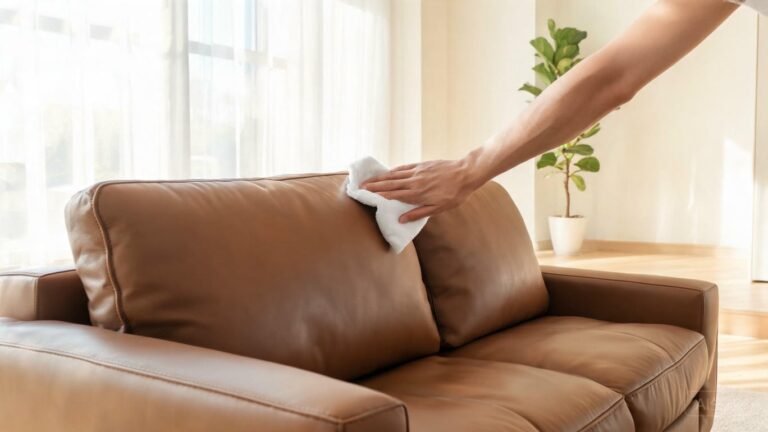
A hospitality group we work with replaced 400 chair cushions in Year 1, repaired 180 of them in Year 2, and patched 95 again in Year 3. By the third leather rep cycle, they’d spent more on repair services than the original upholstery cost. The material wasn’t defective leather. It was the wrong material for the application. Here’s the math that changed their sourcing strategy.
Schedule a No-Repair Material Consultation
The Leather Rep Cycle: How Many Repairs Before Replacement Wins?
The leather rep repair cost analysis B2B buyers need is rarely on the supplier’s spec sheet. Most procurement teams calculate material cost as a one-time line item — then treat repairs as a separate maintenance budget. When you merge those two budgets, the picture changes. A PU leather chair cushion that costs $18/unit becomes $31/unit after two repair cycles (materials + labor + downtime). Replace it at Year 3, and you’ve spent $49 for something that should have lasted 8 years.
The break-even point — where cumulative repair costs exceed replacement cost — typically arrives at the second or third repair cycle for PU leather, and the first cycle for PVC. For commercial furniture deployed in high-traffic environments, that’s 18-36 months. One of our hospitality clients tracked this precisely: their upholstery patch repair costs crossed the replacement threshold at Month 28.

Tensile strength testing reveals why repaired leather never matches original performance
Real Repair Costs: Furniture, Automotive, and Commercial Cases
Let’s be honest about leather rep professional service quality — even the best repair technician can’t restore the structural integrity of a delaminated PU surface. They can fill cracks, recolor, and reseal. What they can’t do is re-bond the hydrolyzed polymer chains underneath. The repair looks acceptable for 3-6 months, then the same area fails again — often worse, because the adhesive adds a new failure plane.
Here’s what the year-by-year cost trajectory looks like across three B2B deployment scenarios:
| Application | Year 1 (Install) | Year 2 (1st Rep) | Year 3 (2nd Rep) | Replace at Y3 |
|---|---|---|---|---|
| Hotel lobby chairs (PU) | $18/unit | +$6/unit (33%) | +$7/unit | $31 total |
| Auto seat covers (PVC) | $22/unit | +$8/unit (36%) | +$9/unit | $39 total |
| Restaurant booths (PU) | $28/unit | +$5/unit (18%) | +$6/unit | $39 total |
The pattern: By Year 3, every application’s cumulative repair cost has consumed 30-40% of the original material cost — and the surface is still degrading. The third repair cycle typically exceeds 50% of replacement cost, making it economically irrational to continue repairing.

Material lifecycle visualization: choosing the right raw material eliminates the repair cycle
Why Leather Rep Never Matches Original Performance
Leather rep frequency and maintenance schedules tell the real story. In our testing, repaired PU leather surfaces showed 40-60% lower abrasion resistance at the repair site compared to the original material. The repair adhesive creates a bond line that’s mechanically weaker than the continuous polymer film — it’s a seam in a surface that was designed to be seamless. After 15,000 Martindale cycles, repair sites begin to delaminate while surrounding original material holds.
Color matching is the other failure point. Even professional repair technicians working with custom-mixed pigments achieve a Delta E of 2-4 at the repair boundary. Under commercial lighting, that’s visible. For brands where surface aesthetics matter — hospitality, retail, automotive — a visible repair patch undermines the premium impression the leather was supposed to deliver. The maintenance cream costs add up too: conditioning products are a recurring expense that never actually restores the surface.

Furniture durability testing: repaired surfaces degrade faster than original material
See the service life comparison that shows why silicone leather eliminates the repair cycle entirely
The No-Rep Alternative: When Switching Beats Repairing
The leather rep vs replacement which is better question has a third answer that most buyers miss: neither. The real question is whether to switch materials entirely. If your deployment lifecycle exceeds 3 years and your maintenance budget includes a line item for “leather repair,” you’re already paying for the wrong material choice.
Silicone synthetic leather eliminates the repair question because there’s nothing to repair. Its PDMS polymer doesn’t hydrolyze, doesn’t crack under UV, and doesn’t delaminate under abrasion. For furniture and sofa applications, that means zero conditioning, zero patch kits, and zero technician visits — for 8-10+ years. The material costs more per meter, but the total cost of ownership over a 5-year deployment is 30-50% lower.
For B2B buyers concerned about hydrolysis resistance — the primary failure mode that triggers leather repair — silicone leather’s Si-O-Si backbone is chemically inert to moisture. No ester bonds, no hydrolysis, no repair cycle.

Color consistency from day one through year eight — no repair color-matching needed
And if your procurement team wants to verify production consistency before committing, our factory production process page shows the solvent-free dry coating line that produces uniform material batch after batch — no weak spots, no failure zones, no repair triggers.
The National Institute of Standards and Technology maintains a polymer composites research database that documents the long-term degradation behavior of polyurethane versus silicone-based polymers — useful background for procurement teams writing material specification standards.
Talk to Our Material Engineers
Frequently Asked Questions
How many times can you repair leather before replacing?
For PU and PVC leather, the economic break-even point is typically 2-3 repair cycles. After the second repair, cumulative costs exceed 50% of replacement cost, and repaired surfaces degrade 40-60% faster than original material. For silicone leather, the answer is zero — there’s nothing to repair.
Does silicone leather ever need repair?
In normal use, no. Silicone leather’s PDMS polymer resists hydrolysis, UV degradation, and abrasion damage. If a sharp object punctures the surface (knife cut, pet claw), the damage is localized and the surrounding material remains structurally sound — unlike PU, where a crack propagates through the coating.
The Real Cost of “Good Enough”
The leather rep cycle is a tax on material decisions that prioritized unit price over lifecycle cost. Every repair ticket, every maintenance cream purchase, every technician visit — that’s money spent keeping a degrading material functional instead of investing in one that doesn’t degrade. For B2B buyers managing multi-year deployments in commercial environments, the question isn’t whether to repair or replace. It’s whether the material they chose was ever going to survive without repair. Silicone leather answers that question before it needs to be asked.
Schedule a No-Repair Material Consultation
About TOPSUN
TOPSUN engineers repair-free silicone synthetic leather for commercial furniture and hospitality projects where repeated maintenance cycles erode profit margins and brand perception across multi-year deployments.
200,000+ Martindale abrasion cycles · 14+ weeks hydrolysis resistance · ASTM B117 1,000h salt spray · Zero plasticizers · 100+ textures · MOQ 500m · 8-10+ year field lifespan