The global faux leather market will reach US$ 38.6 billion in 2026 and climb to US$ 64.5 billion by 2033. A rising share of that spend targets green material fabric: upholstery and surface materials sold on a sustainability story.
Here is the uncomfortable part. In our factory audits, we routinely see buyers accept green claims that would fail a basic REACH or OEKO-TEX check. This guide walks through the five claims that fail most often, the certifications that hold up under scrutiny, and a checklist you can run before signing.
What “Green Material Fabric” Actually Means on a Spec Sheet
Ask ten suppliers to define green material fabric and you will get ten answers. Some mean recycled content. Some mean PVC-free chemistry. Some simply mean a sage-green color chip, which is not the same thing at all.
In our RFQ inbox, roughly one in three requests tagged “green” specifies nothing beyond a shade code. That gap creates risk. Without written chemistry and test data, any supplier can call a product green. A credible spec pins down three things: what the material is made of, how it is processed, and what happens at end of life.

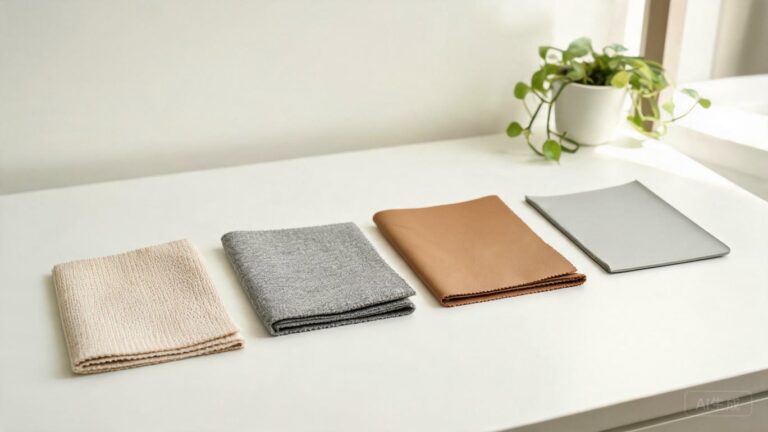
Sage-green caviar-dot silicone leather: color alone does not make a fabric green. Chemistry and documentation do.
The Certification Ladder Buyers Actually Use
Certifications are the fastest way to verify green material fabric claims, but they are not interchangeable. Each covers a different slice of the sustainability question. Here is how the four most requested certifications map out.
| Certification | What It Verifies | Typical Cost Impact | Best For |
|---|---|---|---|
| OEKO-TEX Standard 100 | Harmful substances in the finished material | Low single-digit % premium | Skin-contact consumer goods |
| GOTS | Organic fiber content and processing audits | Mill-level audit cost | Natural-fiber programs |
| REACH / PAHs (EU) | Restricted chemicals in the product | Per-batch compliance testing | EU imports, automotive |
| ISO 10993 | Skin-contact biocompatibility | Lab fees per material family | Medical, baby, 3C accessories |
No single certificate covers everything. EU furniture buyers usually start with REACH, while medical buyers lead with ISO 10993. Map each eco-friendly fabric certification requirement to your market before you build the spec. In our experience, certification adds a low single-digit percentage to unit cost, far less than a rejected shipment. A faux leather manufacturer with in-house labs should produce these documents without hesitation.
Silicone-Coated Fabrics: A PVC-Free Route to Greener Materials
Chemistry decides whether a fabric is green or just dressed in green. Conventional PVC leather relies on plasticizers and can release VOCs over time. A truly PVC-free upholstery fabric starts with the coating: sand-derived PDMS polymer cured with zero solvents, verified at non-detect VOC levels under ISO 16000-6. That is the construction behind genuine eco-friendly silicone leather.
Durability is the quieter argument. Our High Performance collection reaches 200,000+ Martindale cycles. Accelerated aging at 85°C and 85% relative humidity for 14 weeks produces no delamination in full-silicone construction. A material that lasts roughly three times longer than PU also delays replacement, which is its own environmental credit.
A quick tour of the certifications behind our silicone leather, from REACH to ISO 10993.

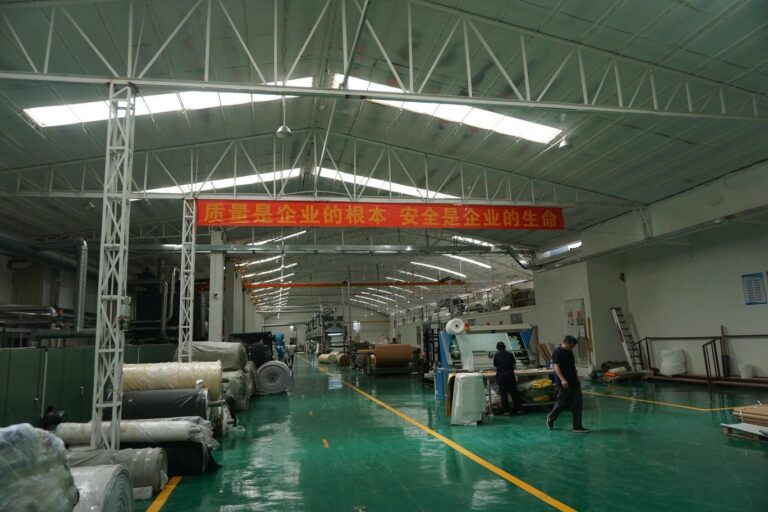
Raw material traceability is the first thing we show buyers during a factory audit.
Cost Reality: Green Material Fabric vs Conventional Over 10 Years
Upfront price is where most green fabric cost comparisons stop. Total cost tells a longer story. Silicone leather typically serves 10 to 15 years, while PU and PVC alternatives commonly fail within 3 to 5. Fewer replacement cycles mean fewer reupholstering invoices, less downtime, and less waste heading to landfill. The detailed numbers sit in our silicone vs PU leather comparison.
The market is voting the same way. The eco-friendly solvent-free synthetic leather segment alone was valued at US$ 815 million in 2025 and is projected to reach US$ 1,310 million by 2034. Buyers are paying for chemistry that survives, not labels that decorate.

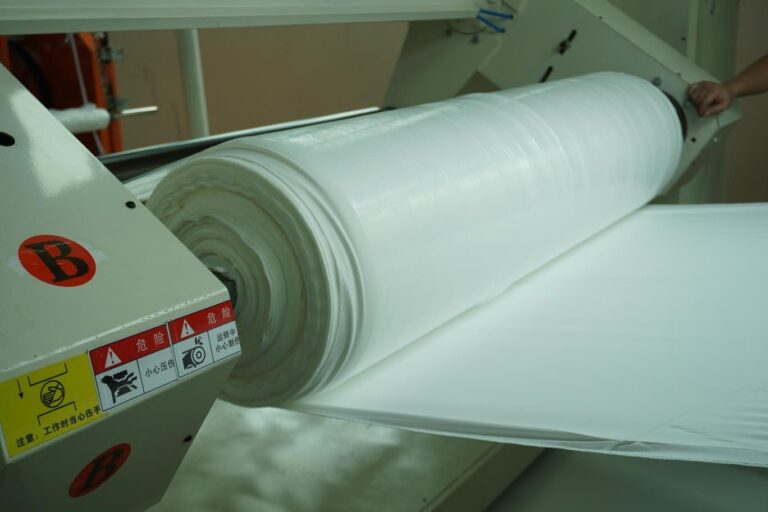
Long-life green materials reduce replacement waste across the furniture lifecycle.
How to Audit a Supplier’s Green Fabric Claims
We have stood on both sides of this table. When competitor samples arrive at our lab for verification, the most common failure is a semi-silicone construction sold as full silicone. Surface tests pass. The PU adhesive layer underneath does not.
Before you sign, request these five items:
- An FTIR report showing pure PDMS peaks, with no PU carbonyl signal
- Batch-linked SGS test reports, not a one-off certificate from 2019
- Third-party inspection access; we welcome SGS, BV, and TÜV into the plant
- Spectrophotometer Delta E records that back up color consistency claims
- Written chemistry disclosure: solvent-free processing, plasticizer-free formulation

Our in-house lab runs Martindale, flexing, and color fastness tests on every production batch.
Is silicone leather genuinely a green material fabric?
Yes, when it is full-silicone and solvent-free. The polymer is sand-derived, free of PVC plasticizers, and verified at non-detect VOC levels. Ask for the FTIR report to confirm you are not buying a semi-silicone blend.
Which certification matters most for EU furniture buyers?
REACH compliance is the baseline for EU imports, and PAHs restrictions apply to skin-contact surfaces. OEKO-TEX Standard 100 covers harmful substances and is widely recognized by retail chains. Most contract projects combine both.
Does green fabric always cost more upfront?
Silicone-coated options carry a premium over commodity PU, typically offset before the first reupholstering cycle. Over a 10-year horizon, the longer service life usually wins on total cost.
Before You Sign: A Five-Point Action List
Sourcing green material fabric does not need to be a leap of faith. Run this list on your next supplier:
- Pin the definition in writing: chemistry, processing, and end-of-life
- Match certifications to your market: REACH for the EU, ISO 10993 for medical
- Demand FTIR or cross-section proof of full-silicone construction
- Price over 10 years, not per meter
- Book a factory audit before the first purchase order
Suppliers with real credentials welcome the scrutiny. The ones that resist it have answered your question for you.
About TOPSUN
TOPSUN manufactures solvent-free silicone leather for furniture, automotive, medical, and marine buyers who need green material fabric with verified credentials.
ISO 10993, REACH + PAHs, FDA 21 CFR, and RoHS documentation ships with every order, backed by SGS test reports and 200,000+ Martindale contract-grade performance.
References
1. https://www.persistencemarketresearch.com/marke… — faux leather market size US$ 38.6B (2026) to US$ 64.5B (2033), CAGR 7.6%
2. https://www.24chemicalresearch.com/reports/2903… — eco-friendly solvent-free synthetic leather US$ 815M (2025) to US$ 1,310M (2034)