What does a fabric design actually cost you? Not the price per metre on the quote. The real cost sits in what you approve before bulk production starts: a color signed off under the wrong light, a repeat size that doubles your waste, a minimum order set by a method you never chose.
Designers who treat fabric design as art direction meet those traps on the factory floor. Designers who treat it as an approval sequence catch them on a swatch, where fixes are cheap. This piece maps the sequence and the numbers behind each step.
What Fabric Design Means When You Are the Buyer
Textile design sits at the intersection of art and engineering: a designer shapes how fibers are structured, how surfaces are patterned, and how color, texture, and weight combine into finished cloth. For the buyer, that definition translates into a chain of approvals. Each approval converts one open question into a fixed cost.
The chain looks like this: design concept, color standard, pattern scale, sampling, bulk release. Skip a link and the missing decision gets made for you, on the supplier’s terms, at the supplier’s margin. The rest of this piece walks the links where most programs lose money.
Three Design Disciplines, Three Approval Paths
The industry splits fabric design into three major disciplines: printed, woven, and mixed media or coated design. Each forms the design differently, and each demands a different artifact before you approve it. Comparing quotes across disciplines without knowing this is how programs end up with the wrong sample type.
| Design Discipline | How the Design Forms | What You Approve | Typical End Use |
|---|---|---|---|
| Printed | Ink laid on the cloth surface, by screen, rotary, or digital print | Strike-off: pattern scale, repeat, registration | Fashion, home textiles |
| Woven | Pattern built from yarn interlacing, often CAD-driven on jacquard looms | Woven sample: structure and hand in one artifact | Upholstery, interiors |
| Coated | Design lives in the coating layer: color, grain, embossing, sheen | Embossing roll proof plus color plaque | Automotive, marine, furniture leather |
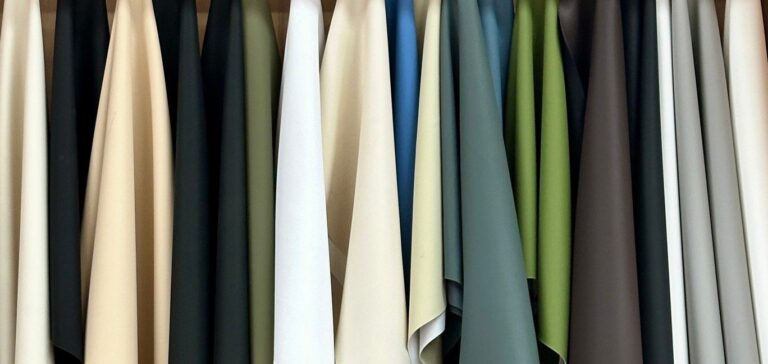
Coated design is the least visible discipline and the one B2B buyers meet most often. The pattern is not printed onto cloth; it is engineered into the surface itself. That changes what a sample proves and what it cannot.
The Color Decision: Lab Dips vs Strike-Offs
Two pre-production artifacts dominate color approval, and they are not interchangeable. A lab dip approves a solid dye formulation, checked under D65 daylight with spectrophotometer readings against a Delta E tolerance. A strike-off approves print execution: pattern scale, repeat dimensions, registration, and ink laydown, judged visually against your artwork.
Confusing the two is a classic delay. One sourcing guide puts it plainly: neither artifact approves fabric hand, width, or wash shrinkage. Those need separate confirmation. Expecting a color swatch to guarantee finished texture is how off-shade dye lots and mismatched purchase orders happen.
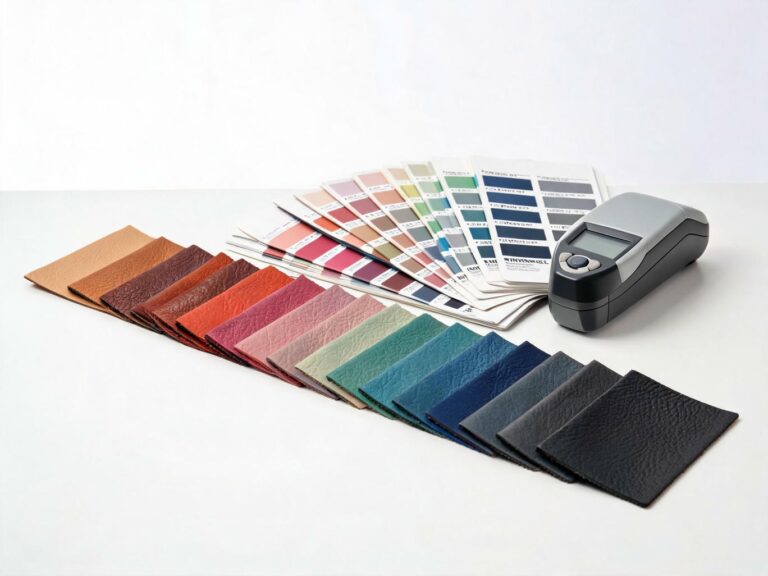
For coated material the equivalent artifacts are a color plaque and an embossing proof. The plaque carries the matched color, often to a Pantone or RAL reference. The embossing proof carries the grain. Approve them together, because color reads differently across a grain depth that you have never seen in person.
Pattern Scale and Repeat: Why 60 cm Costs More Than 30
Repeat size is the vertical distance before a pattern starts over. It looks like a pure design choice, but it drives waste. Larger repeats must align across every panel you cut, and alignment losses grow with the repeat. One fabric supplier’s own planning table shows the pattern: small motifs print with minimal loss, 30 to 60 cm repeats need alignment verification, and 60 cm repeats carry high waste allowances.
The same logic reaches coated and embossed surfaces. Grain scale changes how panels nest on a hide or a roll. A deep 60 cm floral grain on booth seating wastes material that a fine 30 cm texture would have used. Ask for the waste allowance in writing when the repeat grows. If a supplier cannot state one, the number is being absorbed somewhere in your price.

Color and texture decisions displayed as a fan. Each panel is one approval converted into a fixed cost.
The MOQ Is the Design Method
Minimum order quantities look like supplier policy. Mostly they are physics. Each printing method carries a different setup, and the setup decides the floor. A sourcing guide for custom printed fabric sums it up: the print method you choose is your MOQ, and the MOQ is your risk.
| Method | MOQ per Design | Setup Cost | Best For |
|---|---|---|---|
| Digital print | About 100 m; development slots near 50 m | Low, no cylinders | Market tests, complex art |
| Flat-bed screen | 800 to 1,500 m | $200 to $500 per screen | Placement prints |
| Rotary screen | 1,500 to 3,000 m | $300 to $800 per colour | Proven designs, long runs |
| Coated silicone leather | 500 m | In-house mixing and coating line | Furniture, marine, medical programs |
Digital print buys you a market test at a 40 to 70 percent per-metre premium. Rotary buys the lowest unit cost and demands 1,500 to 3,000 metres of commitment, because every colour needs its own engraved cylinder. Choosing the method is choosing the size of your bet. Make that choice consciously, not by accepting whatever MOQ appears in the first quote.
Release paper textures: where coated fabric design actually forms.
Designing With Silicone Leather: What the Coating Layer Allows
On a silicone coating line, fabric design concentrates in three controllable layers: color, grain, and finish. Color matching runs to Pantone and RAL references, with lab dips confirmed in a light booth before anything is coated. Grain choice comes from release paper textures, the same mechanism rotary printers use for registration but applied to embossing instead of ink.
The coating layer also carries the performance brief. A sofa program that leans on softness needs a different build than a marine program that leans on UV and hydrolysis resistance. Our furniture and sofa applications show how that brief changes the build for indoor seating. For sun-exposed decks and cockpit seating, the marine and outdoor applications page covers what the same design language must survive outside.

Custom color matching to a reference standard. The plaque and the grain proof get approved together.
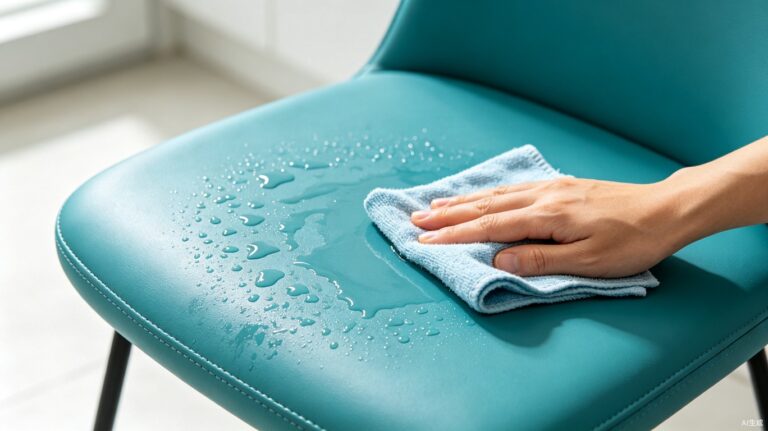
Design also has a service life, and maintenance expectations belong in the spec. A texture that hides wear suits high-traffic seating; a smooth pale grain suits spaces cleaned daily. Our cleaning and maintenance guide explains how surface design holds up under both routines, so the look you approve is the look that lasts.
The Numbers That Belong on the Design Sheet
Design decisions end on a spec sheet, and the sheet should carry numbers, not adjectives. On a coated program the core lines come from standards: thickness from 0.8 to 2.0 mm (ISO 2286-2), weight from 400 to 800 g/m², tensile strength at or above 15 N/mm (ISO 3376), and abrasion at or above 200,000 Martindale cycles (ISO 12947-2). Each line converts a feel into a testable claim.
Service numbers matter as much as touch numbers. Flex resistance at or above 100,000 cycles (ISO 5402) predicts how a seat edge ages. UV performance under ASTM G154 and VOC emissions tested to ISO 16000-6 close the outdoor and air-quality questions. A design sheet without these lines is a mood board, and mood boards do not survive procurement.
The Approval Loop: From Swatch to Bulk
A disciplined loop runs in four gates. Gate one: concept and reference samples, confirming the design direction. Gate two: color plaque and embossing proof, or lab dip and strike-off on printed programs. Gate three: production-intent samples from the actual line, not the sample room. Gate four: bulk release against the signed standard, with retention swatches kept by both sides.
Each gate closes one variable. Programs that compress the loop into a single email approval re-open every variable at bulk inspection, when a correction costs a full production run instead of a swatch.
The verdict: fabric design succeeds or fails at the approval gates, not at the sewing machine. Approve color, scale, and method in that order, in writing, before bulk.
Frequently Asked Questions
What is the difference between a lab dip and a strike-off?
A lab dip approves a solid color formula under D65 light with instrument readings. A strike-off approves a printed pattern’s scale, repeat, and registration. On coated programs the equivalents are a color plaque and an embossing proof, and neither approves hand, width, or shrinkage.
Why does a bigger repeat size cost more?
Larger repeats must align across every cut panel, so waste grows with the repeat. Planning tables from fabric suppliers show small motifs with minimal loss and 60 cm repeats with high waste allowances. Get the allowance stated in writing before you approve a large-scale design.
About TOPSUN
TOPSUN develops fabric design for coated silicone leather in-house: Pantone and RAL color matching, release paper grain selection, and embossing proofing on our own lines. Physical samples ship in 3 to 5 days, custom runs start from 500 meters, and test reports travel with every sample card.
Request Custom Fabric Design Samples
References
1. weaverine.com: lab dip vs strike-off guide