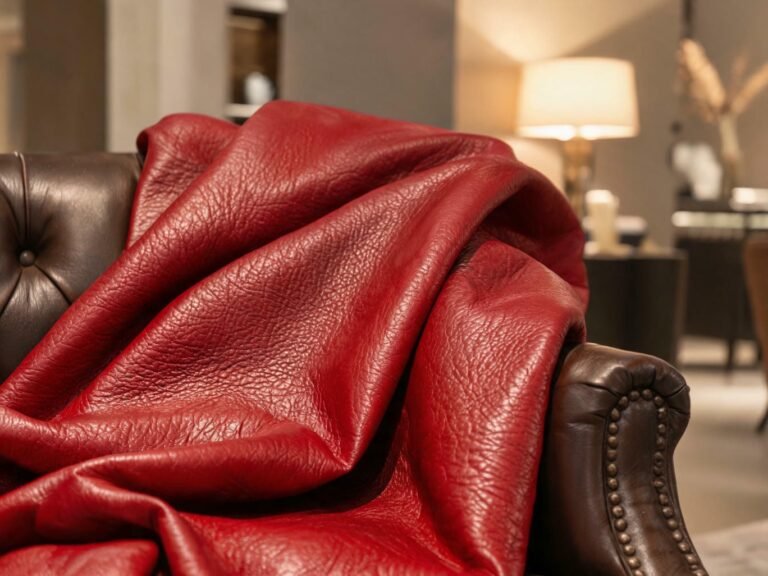
Your supplier quotes black leather at $12 per square foot. The spec sheet says “chrome tanned, REACH compliant.” What it doesn’t say: the tannery’s chromium recovery rate, their LWG rating, or whether that batch will pass a Cr(VI) test at customs. We’ve audited enough black leather tanneries to know the real cost of non-compliance — and it’s never on the invoice.
Request Compliance Documentation
Why Black Leather Tanneries Face Tighter Compliance in 2026
The regulatory landscape for black leather tanneries shifted dramatically in 2025-2026. The European Chemicals Agency advanced an EU-wide restriction proposal covering 12 hexavalent chromium compounds, targeting the elimination of approximately 17 tonnes of Cr(VI) emissions annually. For B2B buyers sourcing black leather for commercial applications, this means tannery environmental compliance is no longer optional — it’s a customs clearance issue.
The ZDHC (Zero Discharge of Hazardous Chemicals) MRSL v4.0 has expanded its restricted substance list to over 40 chemical families, including a full ban on perfluorinated compounds. If your tannery can’t produce current test reports, your shipment can be held at port — and the cost of that delay dwarfs any per-foot savings from a cheaper supplier.
The LWG Rating System: Gold, Silver, and What It Means
The Leather Working Group (LWG) audits tanneries on energy use, water management, waste handling, and chromium recovery. Ratings range from Bronze to Gold, with Gold signifying closed-loop water systems, on-site effluent treatment, and documented green hide sourcing.
| LWG Rating | Water Use (L/m²) | Cr Recovery | Typical Buyers |
|---|---|---|---|
| Gold | ~100 | Documented | EU OEMs, premium brands |
| Silver | ~150 | Partial | Mid-tier furniture, automotive |
| Bronze | ~200 | Limited | Budget contracts |
| Unrated | ~250+ | None | Spot purchases (high risk) |

Material lifecycle documentation wall — critical for tannery audit compliance
Chrome vs Chrome-Free: The Tannery Divide
Chrome tanning remains dominant in black leather tanneries globally — it’s fast, produces stable leather, and costs less. But chrome-tanned black leather carries inherent Cr(III) and potential Cr(VI) risks that require rigorous testing. The EU’s chromium VI limit reduction from 3 ppm to 1 ppm has pushed many tanneries toward Wet White systems, vegetable tanning, and titanium-based alternatives.
For buyers specifying black leather for export to ECHA-regulated markets, chrome-free black leather eliminates an entire category of compliance risk. The trade-off is cost: chrome-free tanning typically adds 15-25% to the per-foot price. But when you factor in rejected shipments, customs delays, and compliance audit costs, the TCO often favors chrome-free from the start.

Physical testing lab — where chromium content and heavy metal limits are verified
Hidden Costs of Non-Compliant Black Leather Sourcing
In our audits of Asian tanneries supplying black leather for furniture contracts, we’ve found that fewer than 40% maintain documented chromium recovery systems. The hidden costs pile up quickly: rejected shipments at EU ports average $8,000-15,000 per container in demurrage and return shipping; re-sourcing replacement material under deadline pressure adds 20-30% to unit cost; and the reputational damage of a failed compliance audit can disqualify a supplier from future tender opportunities.
A leather hide supply chain risk assessment should be standard in your pre-qualification process. If your supplier can’t produce a current LWG certificate, ZDHC test report, and chromium content analysis within 48 hours of request, you’re carrying undocumented risk.

Supplier evaluation site visit — verifying tannery compliance documentation on-site
How to Audit a Black Leather Tannery in 4 Steps
Here’s the audit framework we use when evaluating black leather tanneries for B2B contracts:
- Step 1 — Documentation review: Request current LWG certificate, ZDHC MRSL compliance report, and Cr(VI) test results from an accredited lab. Verify the test date is within 12 months.
- Step 2 — Water and waste audit: Ask for water consumption records per square meter of finished leather and effluent treatment discharge permits. Gold-rated tanneries consume roughly 100L/m²; anything above 200L/m² signals inefficiency.
- Step 3 — Batch traceability: Verify that each roll carries a batch number traceable to a specific tanning drum, chemical lot, and hide origin. Without traceability, you cannot isolate non-compliant material if a customs test fails.
- Step 4 — Third-party verification: Commission an independent pre-shipment test for chromium VI, formaldehyde, and restricted substances. Internal lab reports are useful, but they don’t survive a customs challenge.

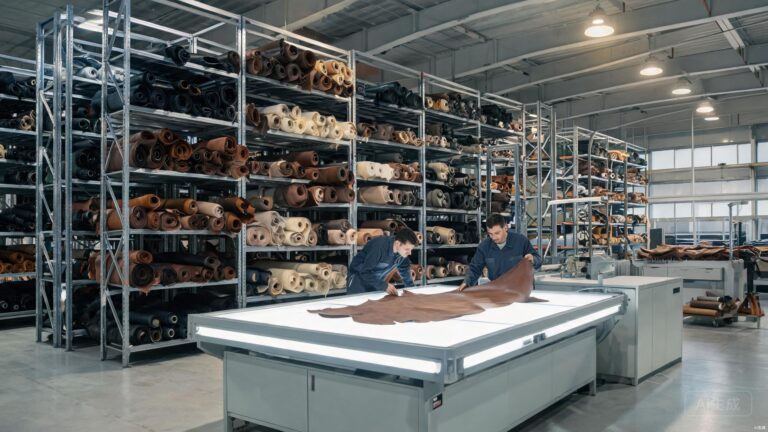
Quality inspection station — where batch consistency and compliance are verified
How TOPSUN’s eco-certification process eliminates tannery compliance risks
Frequently Asked Questions
What’s the difference between LWG Gold and Silver rated tanneries?
Gold-rated tanneries operate closed-loop water systems with documented chromium recovery and on-site effluent treatment. Silver-rated tanneries meet most environmental criteria but may lack full closed-loop capability. For EU-bound shipments, Gold rating significantly reduces customs inspection risk.
Can chrome-tanned black leather pass REACH compliance?
Yes, but only if the tannery maintains strict Cr(III) to Cr(VI) conversion controls and can produce current test reports showing chromium VI below 1 ppm. The risk isn’t the chemistry — it’s the documentation gap. Many tanneries produce compliant leather but can’t prove it on demand, which creates the same customs problem as non-compliant material.
Are synthetic leather manufacturers subject to the same audits as tanneries?
No. Synthetic leather manufacturers (PU, PVC, silicone) bypass the tannery audit framework entirely because they don’t process animal hides. Instead, they’re evaluated against chemical safety standards like REACH SVHC, RoHS, and Oeko-Tex. For buyers who want to eliminate tannery compliance risk, silicone leather offers a fundamentally different supply chain with no chromium, no heavy metal discharge, and no LWG dependency.
Compliance Is Cheaper Than Customs Delays
The math is straightforward: a Gold-rated tannery charges 10-15% more per square foot, but that premium buys documented compliance that clears customs without friction. An unrated tannery saves you money on the invoice — and costs you a container. When sourcing black leather from tanneries, verify the rating, demand the test reports, and never accept “compliant” as a substitute for “certified.” For buyers who want to bypass tannery risk entirely, silicone leather offers a chrome-free, heavy-metal-free alternative that starts from a completely different compliance baseline.

Quality inspection at a leather manufacturing facility — verifying compliance standards
About TOPSUN
TOPSUN produces silicone-coated synthetic leather through a solvent-free manufacturing process that bypasses traditional black leather tanneries and their chromium compliance risks entirely. Our black silicone leather is manufactured without chromium, without formaldehyde, and without the heavy-metal discharge that drives tannery audit failures.
ISO 10993 biocompatibility tested, REACH SVHC 181 compliant, RoHS 2.0 certified — with third-party test reports available for every production batch.