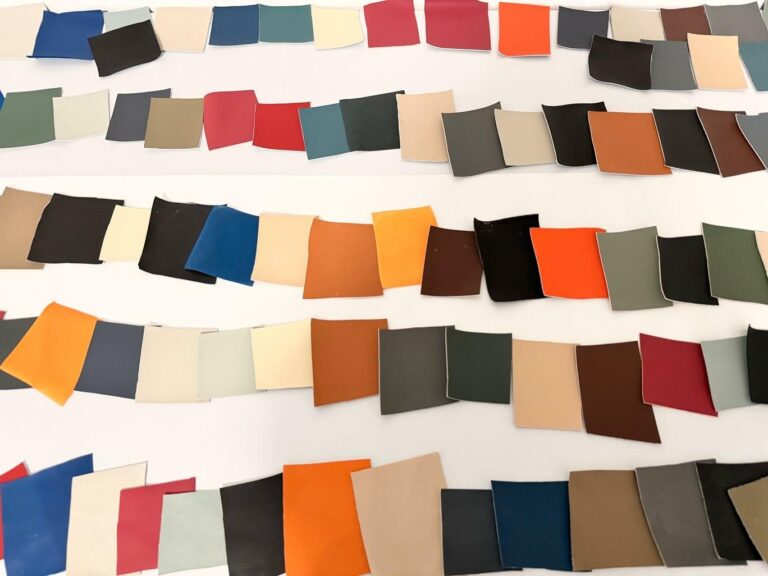
Last quarter I benchmarked three upholstery rolls for a market report. All three arrived under the same line on their spec sheets: artificial PU. All three looked identical on the sample card. Then the tropical cabinet finished its work. One roll cracked inside two years of simulated humidity. One softened and held. The third is still going at five, with its surface intact and its grain readable.
Artificial PU is a label, not a material. Under it sit four variables that decide which of those three rolls your program receives. They are the resin base, the process route, the backing tier, and the hydrolysis class. None of them appear on a standard quote sheet. All of them can be specified. This article is the market analyst’s decode. It covers what the label hides and the grade ladder underneath. The last section gives the one line that turns a vague quote into a defensible order.

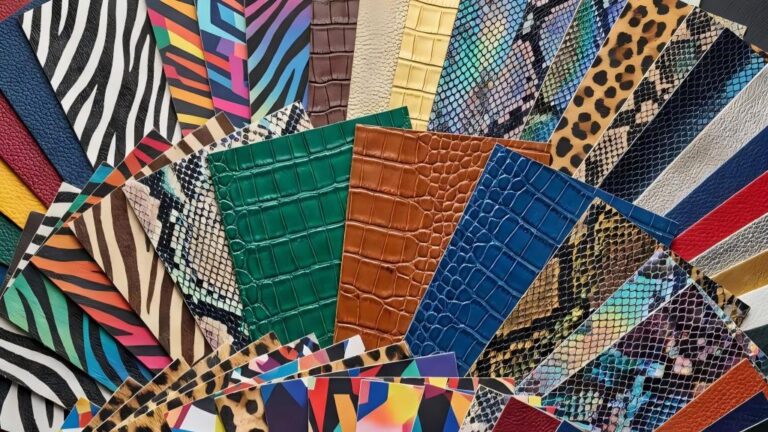
Same label, different ladders: three swatches that look alike in a photo and part ways in a tropical cabinet.
What the Label Actually Covers
Polyurethane leather, the material the trade files under artificial PU, is a composite: a liquid polyurethane layer bonded onto a fibrous substrate, usually a textile. That single sentence spans an enormous quality range. A low-cost coated polyester can peel in a humid lobby inside two years. An engineered high-grade build runs a decade in the same room. The label covers both and prices them apart by a factor buyers rarely see explained.
The trade’s own guides say it plainly. Synthetic leather is built in layers. Each production choice, from backing to coating chemistry, feeds directly into final performance. A spec sheet that stops at the words artificial PU has told you the family and nothing about the member. Family-level buying is how benchmark reports end up with cracked samples.
The Grade Ladder: Four Variables That Change the Roll
Four variables decide what arrives. Each has a cheap answer, a defensible answer, and a written signal that separates them.
| Ladder rung | What the quote sheet says | What actually varies | The written signal to demand |
|---|---|---|---|
| Resin base | “PU coated fabric” | Polyether resins resist moisture and hydrolysis; polyester resins suit oil contact but degrade in humid air | A named resin base, polyether or polyester, matched to your climate |
| Process route | “Artificial PU” | Wet coagulation builds a microporous, breathing layer for premium builds; dry transfer on release paper builds a consistent, cheaper surface | Wet, dry, or combined route stated with a breathability figure |
| Backing tier | Nothing | Woven polyester, knitted cotton, or high-density microfiber carry the load; a weak backing undermines every layer above it | Backing type and weight class declared per roll |
| Hydrolysis class | “Premium quality” | Jungle-test results run 1–2 years for standard grades and 5–10 for engineered builds under the same tropical method | A test report in years, not an adjective |
Two rungs deserve emphasis. On resin, low-cost polyester-based coatings react chemically with atmospheric moisture over time. The polymer chains break, and the surface cracks, turns sticky, and flakes. Polyether-based builds and crosslinked stabilizers are the countermeasure, and humid climates should not accept less. On hydrolysis, the year band is the single most decision-dense number on the sheet. It is the failure clock your warranty will run against.

Every roll answers the four questions; only the paperwork says so out loud.
Reading the Ladder in Practice
Process control is the quiet fifth variable. Small variations in coating thickness, curing temperature, and lamination pressure create batch-to-batch differences that surface later as field defects. Serious mills close that loop with shipment testing: tensile and tear strength, plus coating adhesion, on production lots. A supplier who cannot show lot-level adhesion data is selling you the same label with a different ladder behind it.
The environment decides which rungs matter most. Localized heat above roughly 120 degrees Celsius can deform an embossed grain, so spec the heat exposure honestly. Repeated flexing at sub-zero temperatures stiffens coatings unless low-temperature flexibilizers are in the recipe. And the compliance tail now follows the chemistry. Traditional wet lines ran on solvents such as DMF. Water-based and solvent-free systems cut emissions and keep REACH conversations short. The quote sheet that names its system saves you a compliance audit later.
Buyers who want the sibling view of this decode will find it in the apa itu artificial leather briefing in this series. That one-word survey spans PVC, PU, microfiber, and silicone for the Indonesian market. For the numbers behind a hydrolysis claim, see the PU leather durability file. It walks the four values a QA report must match before you sign. And when no PU rung can meet your project’s humidity band, the silicone column is the exit. The full versus semi silicone grades are the two ways out of the polymer clock.

One name, four questions: the buyer who asks them gets the roll the label promised.
Is artificial PU the same as vegan leather?
Almost always, yes. Standard artificial PU is polyurethane over a textile backing, with no animal content anywhere in the sandwich. Cross-section checks confirm it. The stack is a PU skin layer, sometimes a foam midlayer, over a woven, knitted, or microfiber base. No hide fibers in sight. The exception is a split-leather backing under a PU film. It carries animal content and belongs to a different label conversation.
Can a supplier prove the resin base on paper?
Yes, and that is the point of asking. The declaration is one line on the quote. The verification is a standard tropical test report with the year band printed against the method. Suppliers who answer “premium quality” to both questions have told you their ladder, and it is the short one.
The One-Line Test for Your Next Quote
Here is the sentence to paste into your next RFQ, exactly as market analysts write it into benchmark templates. Quote the polyether or polyester resin base. Name the wet or dry process route. Declare backing type and weight. Print the tropical hydrolysis years per test method. A supplier who fills all four blanks is selling a material. A supplier who fills none is selling a label.
Artificial PU is not one roll; it is four ladders hiding behind two words. Specify the rungs, and the label starts telling the truth.
Talk to Our Materials Analysts
Request Ladder-Decoded Samples
References
1. https://www.solamnileather.com/What-is-PU-Leath… — Polyether versus polyester resin bases and hydrolysis behavior; jungle-test bands of 1–2 versus 5–10 years; heat and cold-flex limits; backing tiers
2. https://taiteleather.com/how-synthetic-leather-… — Layered construction and backing load logic; wet coagulation versus dry release-paper routes; batch consistency from coating, curing, and lamination control; DMF and REACH compliance shift