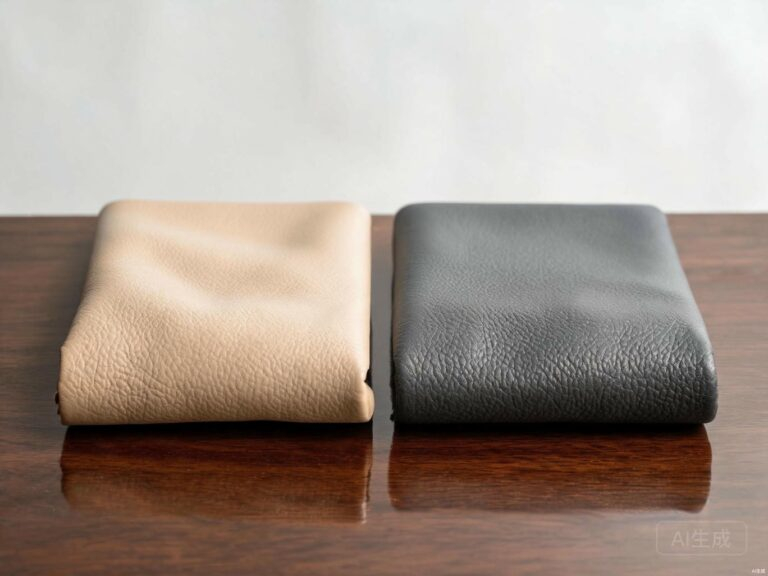
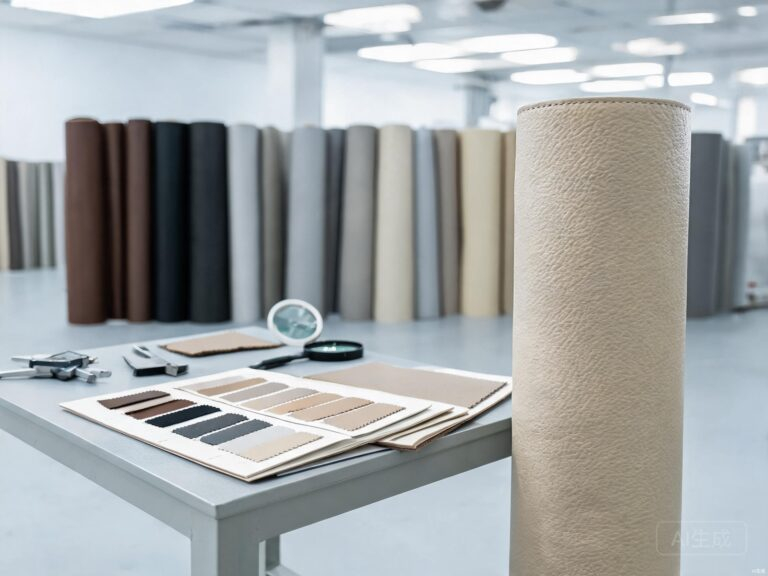
One master hide, scanned and pressed into a roller, becomes kilometers of identical grain. That is the quiet engine behind PU imitation leather, and it explains both the appeal and the suspicion. The material copies the surface of hide with remarkable accuracy, at a cost and consistency no tannery can match. Whether it reads as luxury or as shortcut depends on decisions the buyer makes before the order. This article walks through what the copy copies, where it wins, where it shows, and how to specify one that holds up.
The core fact first: this is a composite. A woven or knitted fabric carries the strength. A polyurethane coating carries the look and the handle. The imitation lives entirely in that coating, which means it can be engineered, audited, and improved in ways hide never could.
What PU Imitation Leather Actually Copies
Hide brings three signals people read as leather: the grain pattern, the way light scatters across it, and the way it yields under a hand. A PU imitation builds each signal separately. The grain comes from embossing. The light play comes from finish chemistry, often two-tone, where a darker tone settles into the grain valleys. The hand comes from foam layers and formulation softness. Splitting the problem this way is why a good imitation passes a glance and a grip, even though it fails the origin test every time.
| Technique | What It Copies | How It Works |
|---|---|---|
| Release-paper embossing | Cowhide, crocodile, or custom grain | Film cast on textured paper carries the pattern |
| Metal-roller embossing | Deep, sharp pore structure | Engraved rollers press texture after coating |
| Two-tone finishing | Depth and light play of aged hide | Contrast pigment settles into grain valleys |
| Foam-layer construction | The soft, cushioned hand of full-grain | Expanded middle layer adds body without weight |
How the Grain Gets Copied: Hide to Roller
The process starts at the source. A selected hide becomes the master for an embossing plate or release paper, so the pores, wrinkle clusters, and hair-follicle detail transfer to the tool. From there the copies multiply. High-quality embossing runs deep and sharp, which does more than look real: the raised grain also resists visible scratching better than a flat film, because damage hides in the texture. Cheap imitations skimp here, pressing a shallow pattern that flattens under a thumbnail in one try. In a design review, press both materials with a fingernail and the gap between them announces itself.

Every imitation grain starts as a drawing or a master hide, never an accident.
Where the Imitation Wins
For production goods, imitation beats hide on four fronts. Consistency: panels cut from one roll match each other exactly, which hide can never promise. Color freedom: the coating accepts custom colors, including brand-specific shades matched to a Pantone chip. Care: spills wipe off a sealed film that would stain a hide. And ethics: no animal is involved, which for a growing share of buyers is not a compromise but the point. A furniture line that ships matching panels for a decade is only possible because the grain repeats.

Custom grain and custom color in one program is a coating-line strength, not a hide strength.
Where the Copy Shows
Three tells survive even good imitations. The grain repeats: look across a full panel and the pattern cycles, while hide never does. The edge and underside show a fabric backing where hide shows fibrous flesh. And there is no patina: the surface ages by wearing out, not by deepening. None of these tells matter equally in every product. On a jewelry box lid nobody studies the pore rhythm. On a sofa arm that ages in sunlight, the missing patina becomes visible within years. Our furniture and sofa applications notes map exactly which surfaces forgive an imitation and which do not.

The roller decides realism: deep engraving reads as hide, shallow engraving reads as wallpaper.
Discuss Your Imitation Grain Spec
Specifying an Imitation That Holds Up
Treat imitation as a design decision with a checklist:
- Choose the grain from a physical sample, not a rendering, and press it with a fingernail before approving
- Match the construction to the product: foam-backed builds for hand-critical goods, dense builds for high-abrasion zones
- Pin the finish system in writing, especially for two-tone looks that must survive cleaning chemicals
- Confirm what happens at end of life: standard PU coatings crack and peel, while silicone-based chemistry avoids the hydrolysis clock entirely, as our silicone leather introduction explains
PU imitation leather is neither a counterfeit nor a compromise. It is a separate material that borrows the surface language of hide and adds what hide lacks: repeatability, color freedom, and easy care. Specify it deliberately and it reads as intention. Specify it carelessly and it reads as cost-saving, which is exactly what it will look like.
Is PU imitation leather good quality?
It ranges widely. Deep-embossed builds with a proper foam layer and documented finish chemistry serve furniture and goods for years. Shallow-embossed budget films flatten and peel within a couple of seasons. The quality lives in the emboss depth, the backing, and the finish, all of which are specifiable.
Does imitation leather always look cheap?
No. Two-tone finishing and deep grain produce materials that pass close inspection in hand. The tells that remain, such as the repeating pattern and fabric edge, are invisible in most finished products and irrelevant to most buyers.
Request Imitation-Grade Sample Sets
About TOPSUN
TOPSUN develops silicone-based leather with more than 100 textures and custom Pantone or RAL colors, giving design teams imitation freedom without the hydrolysis clock.
Deep-emboss capability, 10-15 year service life, and SGS documentation on every order, from 500-meter MOQs.
References
1. https://szoneierleather.com/custom-leather-fabr… — Embossing uses release paper or metal rollers to replicate cowhide, crocodile, or custom grains; deep embossing also improves scratch resistance
2. https://fjyudeng.com/luxury-on-a-budget-5-premi… — Full-grain embossed patterns replicate natural pore structure with three-dimensional depth that catches light realistically
3. https://www.wzbags.com/what-is-pu-leather/ — Composite structure: the PU coating carries the look and handle, the fabric base carries the strength