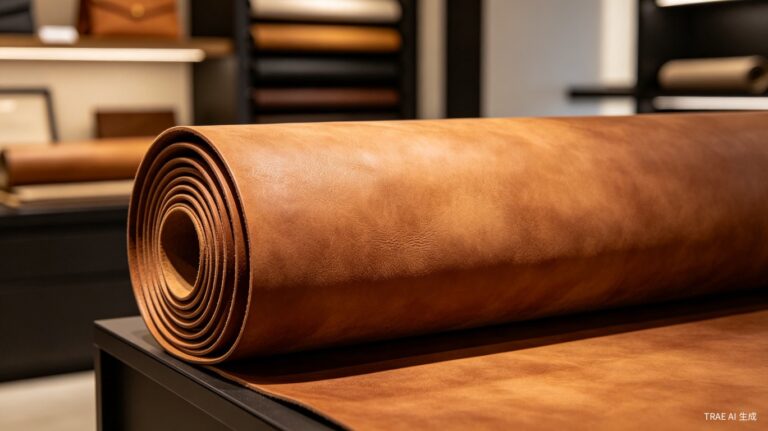
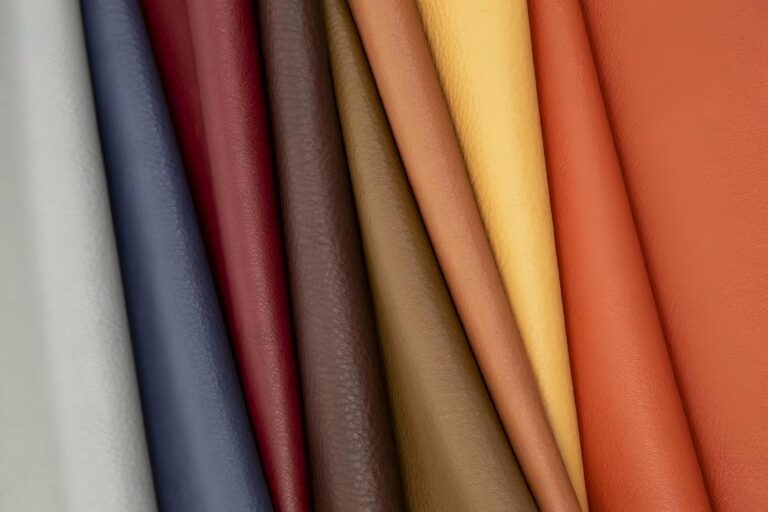
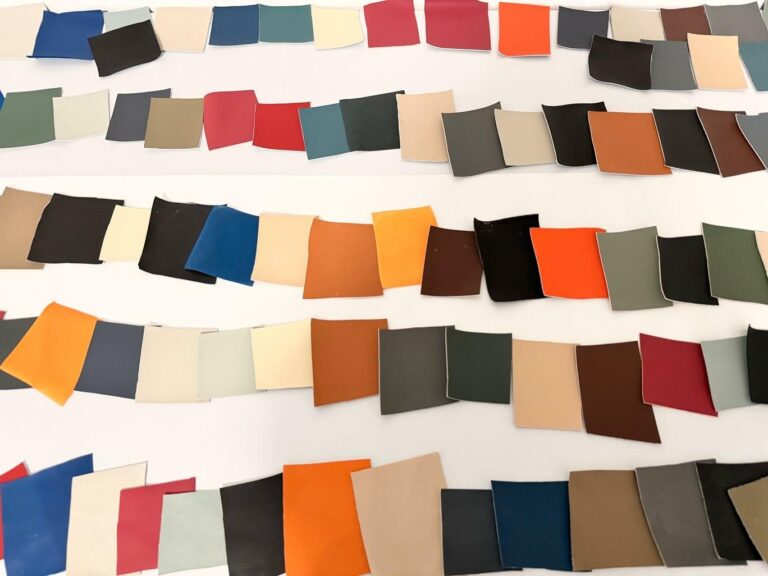
Most buyers meet microfiber leather fabric in a sample book and assume it is just a better PU. It is not. The performance gap comes from the substrate. It is a dense, three-dimensional non-woven fiber core. That core behaves like real hide’s collagen structure, not like a woven cloth with a coating on top.
That structural difference is measurable, and the numbers below explain why premium furniture, automotive, and bag programs keep specifying it over conventional PU.
| Property | Microfiber Leather | Standard PU Leather |
|---|---|---|
| Core structure | 3D non-woven microfiber network | Woven fabric backing |
| Tensile strength | 35-45 MPa | Coating-dependent, generally lower |
| Martindale abrasion | 100,000-200,000+ rubs | 10,000-30,000 rubs |
| Heavy-use lifespan | 8-10+ years | 2-3 years before peeling |
What Microfiber Leather Fabric Is Made Of
The core is built from ultra-fine split fibers, typically polyester or nylon, each filament under one denier. Needle entanglement turns those fibers into a dense, porous, non-woven sheet. The result mimics genuine hide’s interwoven collagen bundles. PU resin then impregnates and coats the network, and finishing adds the surface grain.
Standard PU leather starts from the other end: a woven or knitted fabric that carries a coating. Woven backings have a flat, layered structure. Loads concentrate along the coating-to-fabric interface, which is exactly where PU peels. In the microfiber version, the load path runs through a continuous 3D fiber network. Stress gets distributed instead of concentrated. In our own lamination work, the difference shows up immediately in flex testing. Woven-backed samples split at the crease line. Microfiber substrates crease and recover. Fabric inspection before coating matters as much as the coating itself. That is why our production process starts with incoming substrate checks.

Substrate inspection first: the fiber core determines how the finished fabric ages.
Why the Non-Woven Core Outperforms Woven PU Backings
Translate the structure into test data and the gap is wide. Independent supplier testing records conventional PU at 10,000-30,000 Martindale rubs before visible wear, while high-spec microfiber exceeds 100,000-200,000+ rubs. Tensile strength follows the same curve: 35-45 MPa for microfiber constructions, against roughly 15-25 MPa for PVC synthetics and 20-30 MPa for many genuine leathers.
For buyers, that ratio changes what a product can survive. A cinema seat, an office chair, or a commuter bag lives in the tens of thousands of rubs per year. Coated woven PU burns that budget in two or three seasons. Microfiber fabric spreads the same wear over a decade.

Flex testing: the 3D fiber core creases and recovers where coated woven backings split.
Where It Fits, and the Silicone Upgrade
Microfiber leather fabric earns its premium in high-cycle applications. Think furniture seating, automotive interiors, electronics accessories, and bags handled daily. Our furniture and sofa programs use it wherever abrasion budgets disqualify standard PU.

High-cycle furniture seating is where the fiber core’s abrasion budget pays off.
The remaining weak point in classic microfiber is still the PU component inside it. Pairing the same microfiber substrate with a silicone coating removes that weak point. It adds hydrolysis resistance and alcohol-safe cleaning on top of the fiber core’s strength. That combination is what our silicone microfiber leather was engineered for.
If your application punishes surfaces, start with the substrate: fiber core first, coating second. That is the whole spec in one sentence.
Request Microfiber Silicone Samples
References
1. https://taiteleather.com/why-microfiber-leather… — Martindale: PU 10,000-30,000 rubs vs microfiber 100,000-200,000+; lifespan 2-3 years vs 8-10+ years (2026)
2. https://www.eco-leather.com/ar/what-is-microfib… — Composition: sub-1-denier polyester/nylon split fibers, non-woven substrate; tensile 35-45 MPa vs PVC 15-25 MPa (2025)