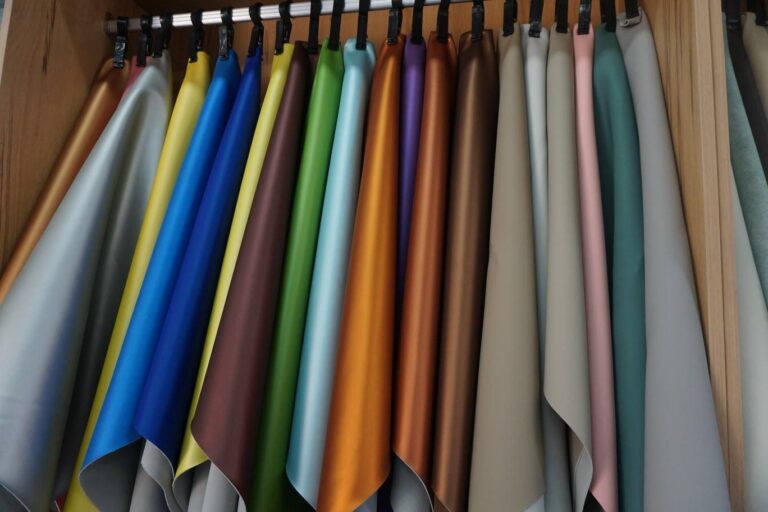
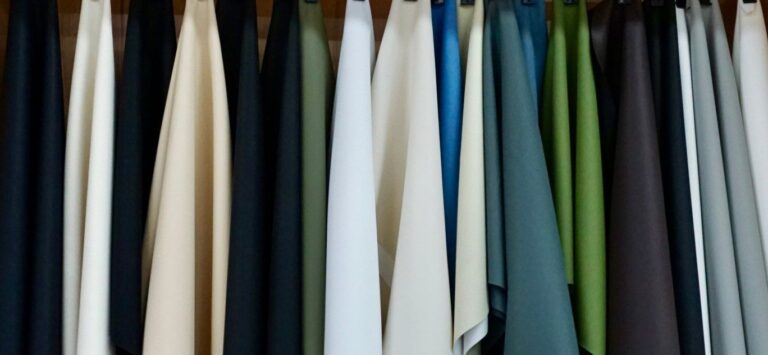
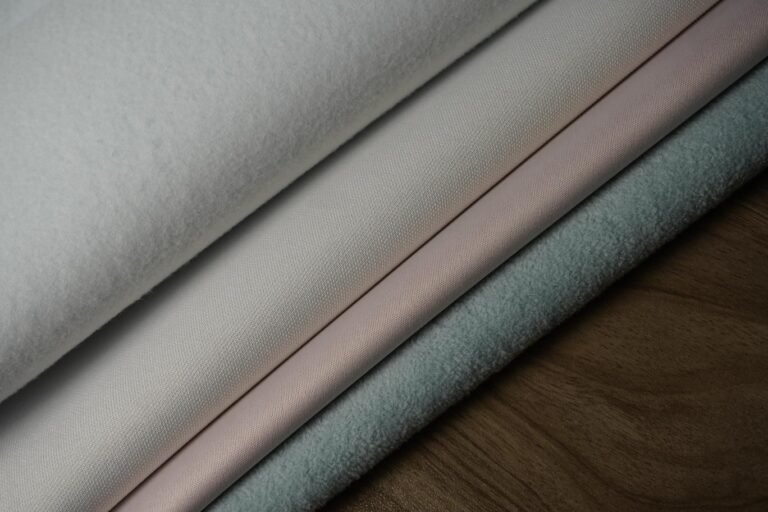
Recycled PU leather has become the default answer to sustainability questionnaires. Order a roll, claim the credit, file the certificate. The reality is messier. Some rolls carry genuine recycled content through every layer. Others hide a token percentage in the backing fabric while the coating stays 100% virgin. After reviewing dozens of supplier certificates and running comparative tests in our own lab, we wrote this guide to show what the label actually guarantees, where the material fails, and when a different material deserves your budget.
What Recycled PU Leather Actually Contains
“Recycled” can describe two very different parts of the roll. The most common route is a recycled polyester backing. PET bottles and post-industrial polyester waste get cleaned, melted, and re-spun into yarn, then woven into the base fabric. The second route puts reprocessed PU into the coating itself, usually sourced from factory trim scrap and off-spec rolls.
Most commercial products blend the recycled feedstock with virgin polyurethane, typically between 30% and 100% recycled content. The three-layer structure stays identical to conventional PU: fabric backing for tensile strength, polymer coating for the leather look, and recycled content sitting somewhere in that stack. Ask a supplier which layer is recycled before you assume anything.

Material traceability starts at the raw material stage, not at the certificate.
The GRS Minimum: Why 20% Counts as Certified
GRS, the Global Recycled Standard, is the most credible certificate in this space. It tracks material through the supply chain and verifies the recycled percentage in the final product. Here is the part most marketing pages skip: the minimum threshold is just 20% recycled content. A roll can be fully GRS certified with four-fifths of it made from virgin polymer.
We audited a sample last year where only the knit backing carried GRS certification. The coating, the part that touches your product and wears out first, was 100% virgin. The certificate was real. The impression it created in the buyer’s pitch deck was not. Always request the transaction certificate and ask exactly which layers it covers.
Where Recycled PU Leather Fails in Real Use
Recycling changes the story a roll tells. It does not change the chemistry of polyurethane. PU coatings still hydrolyze: moisture attacks the polymer chains, the surface cracks, and delamination follows. In our 85°C / 85% RH climate chamber runs, conventional PU shows measurable degradation within weeks. Industry field data puts PU service life at 3 to 5 years before failure.
Abrasion tells a similar story. Standard PU grades typically survive 50,000 to 100,000 Martindale cycles. High-performance silicone leather reaches above 200,000 cycles on the same ISO 12947 test. If your product lives outdoors, in a hospital, or inside a vehicle, those numbers decide the total cost, not the recycled percentage.

Martindale abrasion testing separates marketing claims from measurable wear life.
The Silicone Leather Alternative: Longer Life by Chemistry
Here is the uncomfortable comparison. Silicone leather contains no recycled content at all, yet it often delivers better environmental numbers across a full lifecycle. Silicone polymers resist hydrolysis by chemistry, not by additive packages. Our material carries 10 to 15 year service expectations against PU’s 3 to 5, with non-detect VOC results under ISO 16000-6 and a 100% solvent-free formulation.
| Spec | Recycled PU | Virgin PU | Silicone Leather |
|---|---|---|---|
| Recycled content | 20-100% (GRS) | 0% | 0% (rPET option) |
| Typical service life | 3-5 years | 3-5 years | 10-15 years |
| Hydrolysis resistance | Fails like PU | Fails 3-5 yrs | 14-week chamber pass |
| VOC (ISO 16000-6) | Solvent traces | Solvent traces | Non-detect |
| Martindale cycles | 50K-100K | 50K-100K | 200K+ |
For buyers who need the circular story and the durability, silicone leather on rPET backing combines both: a recycled polyester base fabric under a coating that does not hydrolyze.

Lifespan, not recycled percentage, drives the 5-year cost curve.
Watch how silicone and PU layers behave differently under the same stress tests.
Why the Market Keeps Growing Anyway
None of these weaknesses have slowed demand. The global synthetic leather market is valued at $67.4 billion in 2026 and projected to reach $119.4 billion by 2033, an 8.5% annual growth rate. Sustainable variants are pulling much of that growth. Eco-friendly automotive interior materials alone passed $2.1 billion in 2025. Buyers keep specifying recycled content because ESG scorecards and tender requirements demand it, and a GRS certificate remains the cheapest way to score points. The smarter play is pairing that certificate with materials built to survive long enough to justify it.
Credentials matter, but so does the polymer underneath them. Our breakdown of eco-friendly silicone leather covers how solvent-free silicone formulations score on the same ESG report cards.
Before You Sign: A 5-Point Verification Checklist
Recycled PU leather earns its place in short-lifecycle fashion and bag programs, where the GRS story carries real commercial weight. It deserves scrutiny everywhere else. Run every candidate roll through this checklist before you commit:
- Request the GRS transaction certificate and confirm which layers it covers, not just the roll.
- Ask for the recycled percentage by weight and by layer, coating included.
- Demand hydrolysis test data: weeks at 85°C / 85% RH, not just a warranty sentence.
- Compare Martindale cycles against your product’s real wear profile.
- Model 5-year total cost per square meter, including replacement cycles.
Recycled PU leather is a legitimate tool, not a complete strategy. Verify the content, test the durability, and price the lifecycle. Then decide.
Does recycled content weaken the PU coating?
It can. Reprocessed PU feedstock has shorter polymer chains than virgin resin, which is why most suppliers cap the blend instead of running 100% recycled coatings. Ask for tensile and tear data on the exact blend you will receive.
Is GRS certification enough for an eco claim?
It is a strong start on recycled content traceability, but it says nothing about VOC emissions, hydrolysis life, or end-of-life behavior. Pair GRS with ISO 16000-6 VOC reports and hydrolysis data for a defensible claim.
About TOPSUN
TOPSUN manufactures silicone leather for automotive interiors, furniture, and outdoor programs where hydrolysis failure ends product life early.
In-house verification covers 200,000-cycle Martindale testing, 14-week hydrolysis chambers, ISO 16000-6 VOC reports, and SGS documentation with every order.