Why do some bag factories run one leather supplier for a decade while others rotate vendors every season? The difference rarely shows up in price lists. It shows up at the receiving dock. Incoming quality control decides whether a supplier’s promises survive contact with your cutting tables. Experienced bag manufacturers grade their leather bag suppliers on first-pass rates, not samples. This checklist shows what their QC teams actually measure, roll by roll.
Grade Your Leather Bag Suppliers Before They Ship
Mature bag factories formalize what casual buyers leave to instinct. Supplier tier systems used by OEM manufacturers draw a clear line: Grade A suppliers record no major quality incidents for three consecutive years and hold a first-pass test rate of 95% or higher. Grade B suppliers produce occasional minor issues but correct them quickly, which earns standard cooperation with extra sampling.
Ask any prospective leather bag supplier for two numbers. What is your first-pass rate? How long since your last major incident? Suppliers who track those figures will answer in seconds. Suppliers who never measured them will negotiate the definition instead. That answer alone sorts the list faster than any sample box.
The Receiving Dock Checklist for Leather Bag Suppliers
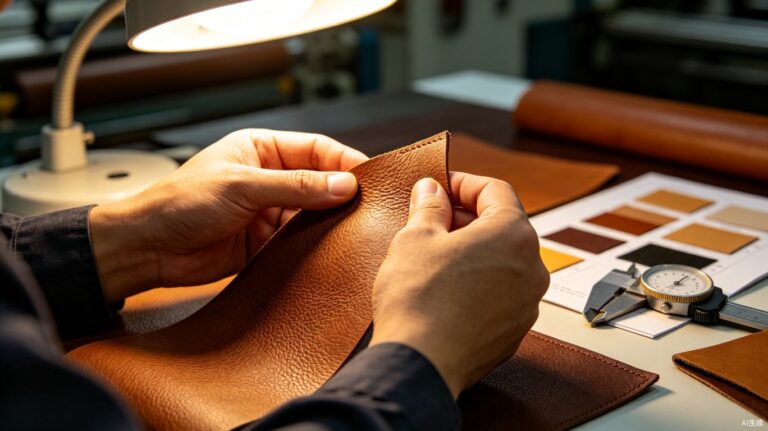
Incoming QC for coated fabrics follows a repeatable sequence. Factories that skip steps pay for it in rejected cutting sections:
- Thickness and weight verification against the approved spec, on every lot.
- Color matching against the sealed limit sample, under standardized light.
- Surface defect inspection on a fabric inspection machine using the 4-point system.
- Coating adhesion peel test; unfinished patches or peeling coating reject the whole roll.
- Hand-feel evaluation against the reference sample, because spec sheets cannot hold softness.
The 4-point system deserves a note. Defective sections get marked and excluded from cutting, and rolls exceeding the defect threshold are rejected entirely. That granularity saves money twice: bad zones never reach the cutting table, and the defect map becomes hard evidence in the next supplier conversation.

Color fastness testing at incoming: cheaper here than in a customer return.
Limit Samples: The Defense Against Batch Drift
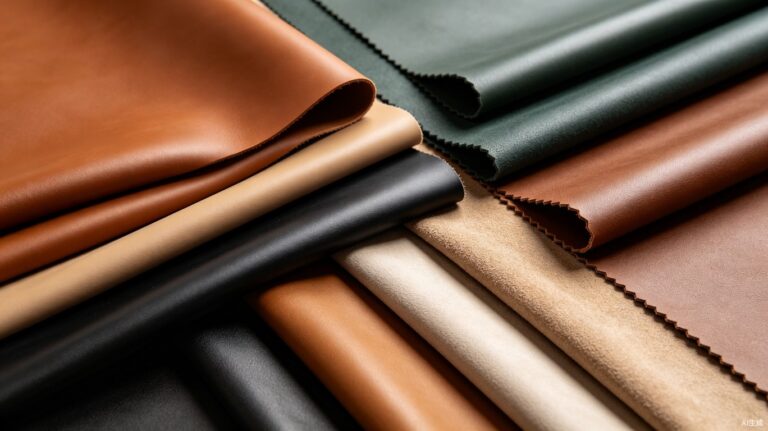
Every hide differs, so natural leather suppliers manage variation with sealed limit samples that define acceptable ranges for color, grain, and feel. Synthetic suppliers face a higher bar. Coated fabrics are engineered products, so buyers expect near-perfect repeatability between batches. When a synthetic roll drifts beyond the limit sample, the tolerance conversation ends quickly.
This is where supplier QC depth shows. Our own line verifies color with spectrophotometer Delta E control and pulls Martindale abrasion samples per batch, with SGS reports attached to every order. Printed and embossed samples add another layer, since pattern registration matters as much as shade.

Printed samples carry two risks at once: pattern registration and shade drift.

Approved material, sealed sample, repeatable batches: the supplier trifecta.
Bag programs also live on style variety, which is why we point sourcing teams to our fashion and sports applications range for crossbody, backpack, and accessory structures. Care expectations belong in the same conversation as selection; our cleaning and maintenance guide covers what bag brands should print on their own care labels.
The verdict on leather bag suppliers: samples open the relationship, but incoming QC governs it. Grade suppliers on first-pass rates, test every roll against a sealed limit sample, and reject drift early. Factories that run those three habits stop rotating vendors and start compounding quality.
Microfiber silicone for bags: engineered consistency from roll to roll.
References
- https://nl.synberry.com/bag-manufacturer-materi… 鈥?Supplier tiers: Grade A requires 3 clean years and 鈮?5% first-pass test rate (2026)
- https://www.researchandmarkets.com/reports/5806… 鈥?Leather goods market $431.09B (2025) to $464.8B (2026) at 7.8% CAGR (2026)