A customer once ordered fabric for two projects in one cart: bow blanks for her shop and seat covers for a van. Both were “fake leather sheets” in her search box. Both were wrong for the other job. The bow blanks needed soft 0.7 mm craft cuts. The van seats needed a meter-wide, heavier gauge that craft packs never come in. The listing photos looked identical. Sheet format and thickness decide whether a project starts well or restarts twice. Here is the map we hand to buyers, from hobby tables to upholstery shops.
Fake Leather Sheets: The Format Map
The market sells one material in three formats, and each format exists for a reason. Know them before comparing prices, because a per-sheet price and a per-yard price cannot be compared directly.
- Craft sheets: about 8 by 12 inches, usually 0.7 mm, sold in color packs.
- Yardage rolls: standard 54 or 60 inch widths, sold by the running yard.
- Oversized panels: cuts like 63 by 39 inches for upholstery replacement work.
Convert prices to one unit before comparing anything. A 32-color craft pack at $30 works out near $0.94 per sheet. A 54-inch roll at $12 per yard covers four times that area per dollar, but in one color. Craft packs sell variety. Rolls sell coverage. Neither is overpriced until you match it to the wrong project.

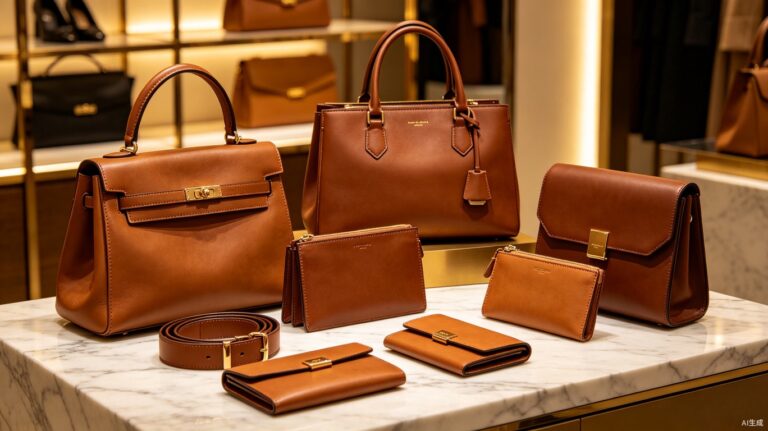
Layered displays show drape and thickness better than any flat product photo.
Thickness Decoded, From 0.5 to 1.2 mm
Thickness is the spec that decides how a sheet cuts, sews, and wears. Craft packs settle at 0.7 mm because that gauge cuts cleanly on desktop machines and holds a bow shape without glue bleed. Marine and upholstery vinyl runs thinner at about 0.5 mm where large coverage matters more than body. For general DIY, 0.8 to 1.0 mm balances workability with durability.
High-wear zones deserve the extra half millimeter. Seat panels, bag bases, and journal spines take 1.2 mm and keep their shape for years. Cutting machines set a hard ceiling too: popular craft cutters handle material under 2.4 mm, so an over-thick sheet is not just stiff, it is uncuttable on your bench.

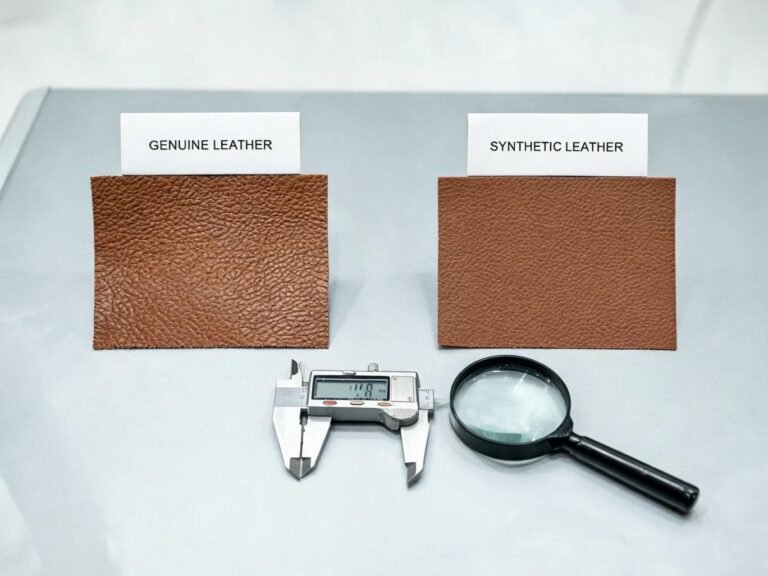
Sample strips let you compare gauge and finish side by side before a bulk pack.
Backing and Coating: The Half You Cannot See
The back of a sheet carries half its performance. Craft sheets pair a PU face with a cotton or polyester back, and a tightly woven backing improves tear resistance at needle holes. Vinyl sheets use a scrim layer instead, which trades softness for weatherproof strength.
Coating type matters just as much. Confirm whether the face is PU, PVC, or a hybrid, and ask for a datasheet when the listing will not say. For items that live near windows or in cars, request a lightfastness rating. Color that migrates or fades shows up in reviews long before it shows up in returns data.
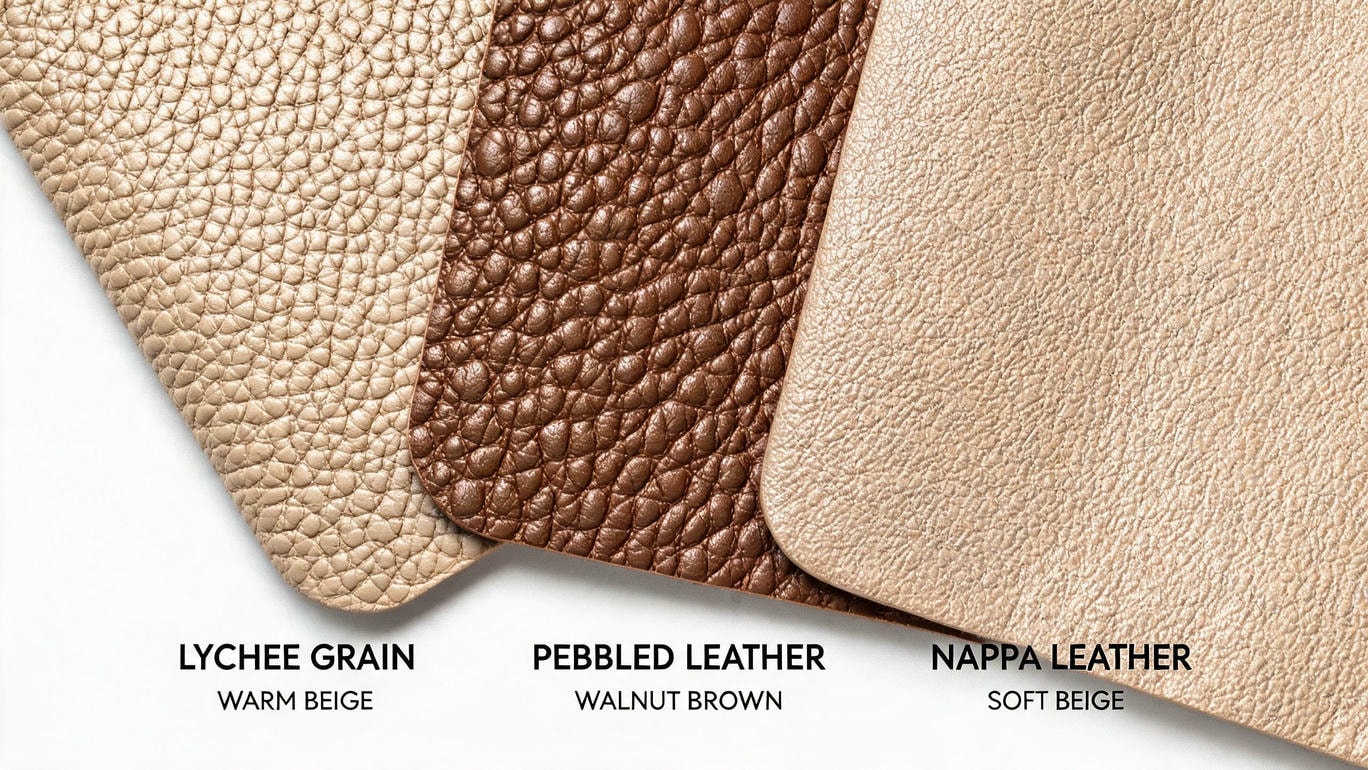
Grain detail at close range separates decent sheets from great ones.
Matching Fake Leather Sheets to the Job
Fit the format to the project and the decision almost makes itself. Bows, earrings, and journal covers take 0.7 mm craft cuts, where color variety beats durability. Handbags and wallets move to 1.0 mm yardage so edges can be skived and stitched clean. Car interiors and marine seating need wide panels with UV and weather ratings.
Baby and kids items add a safety layer on top of format. Soft hand, no small detachable parts, and washable surfaces lead the spec, which our baby and kids applications page covers in detail. The same logic extends to pet products and picnic gear: if the item meets mouths, mud, or sunscreen, the surface treatment outranks the grain pattern.
B2B buyers should note the volume math too. Wholesale listings commonly set minimums around 50 pieces or 50 yards. A craft shop testing thirty colorways reaches that minimum easily. A single maker rarely does, which is why assortment packs exist. Care extends any choice: most sheets wipe clean with a damp cloth, and our cleaning and maintenance guide lists what to avoid, from solvents to heat sources.

Sheets live next to other decorative inputs. Match care rules across the set.
The Decision Path, Condensed
Work the questions in order and the right sheet falls out. First, what size does the project need? Under 12 inches and small-batch points to craft packs. Over a meter points to yardage or panels. Second, what does it survive? Wear zones push the gauge up. Third, what backs it? Sewn projects want woven fabric backs. Weather projects want scrim. Fourth, who certifies it? A datasheet answers in seconds what a product photo never will.
Two failure patterns repeat across returns, and both are avoidable at this stage. The first is gauge mismatch: beautiful 0.7 mm sheets stitched into a tote base that bags out within a month. The second is finish mismatch: a glossy sheet photographed beside matte hardware, which no lighting fixes. Order one sample in the exact gauge before committing a colorway to production. It is the cheapest insurance in this category.
Sampling keeps all of this cheap. Our samples center ships panels in target gauges and finishes, or you can contact our team for a material match against your project list.
Fake leather sheets are one product family wearing three costumes. Choose the costume first, the gauge second, and the backing third. That order, applied before checkout, is the difference between a project that finishes on schedule and a cart you regret. It is also exactly how we sort fake leather sheets for every program we supply, from craft counters to furniture lines.
Material comparison footage: seeing gauge and finish together beats reading specs.