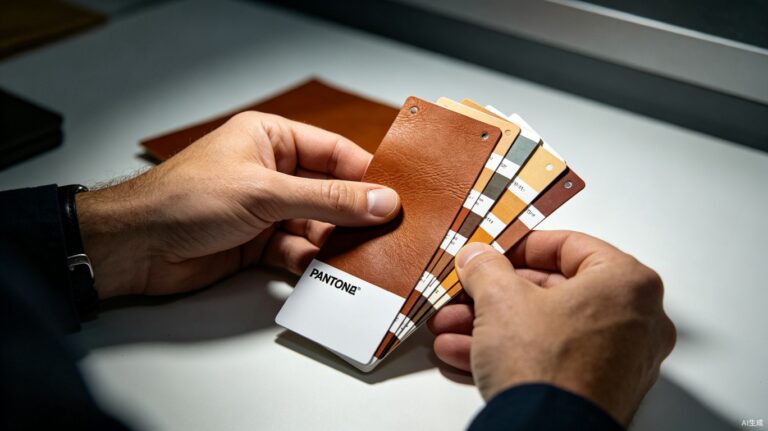
Every week a customer sits on three sofas in our showroom and asks the same one. Which of these is real leather? The more useful question is which type of leather furniture fits the room it will live in. The word leather covers at least five very different materials. Their service lives range from two years to more than twenty-five. The price gaps run just as wide. This guide compares the five types on lifespan, cost, and failure mode, then matches each grade to the project it actually suits.
The Showroom Question Every Buyer Asks First
Real leather is a legal phrase, not a quality statement. Bonded leather contains only 10 to 20 percent leather fiber, ground into pulp and bound with polyurethane over a fabric backing. Split leather comes from the lower layers of the hide, embossed to imitate grain. Top-grain is lightly sanded and refinished for uniform color. Full-grain keeps the entire surface untouched. All four deserve the label. Only two of them deserve a ten-year commitment.
Showrooms rarely explain this hierarchy, because every price tier needs a story. The floor sample you touch is usually the best hide in the building. The sofa delivered to your home may carry a different grade under the same cushion design. One question closes that gap. Ask for the grade name, the thickness in millimeters, and the finish type. A confident seller answers all three without hesitating.
Types of Leather Furniture: The Five Grades Compared
| Type | Typical material price | Expected lifespan | How it fails | Best fit |
|---|---|---|---|---|
| Full-grain | $15-35 per sq ft | 15-30+ years | Ages into patina, rarely fails | Heirloom sofas, low-traffic luxury |
| Top-grain | $8-20 per sq ft | 10-20 years | Coating wears through at seats and arms | Active families, commercial seating |
| Split | $3-7 per sq ft | 3-5 years | Embossed surface cracks and stiffens | Backs, sides, low-contact panels |
| Bonded | 60-75% below top-grain | 2-3 years | Peels and flakes, cannot be repaired | Short-term budget projects |
| Full silicone | Project-based quote | 10-15 years | Hydrolysis-resistant, surface wear only | Hospitality, healthcare, family homes |
Two numbers in that table decide most purchases. A standard sofa consumes 50 to 60 square feet of material. At full-grain pricing of $15 to $35 per square foot, the leather alone costs $750 to $2,100 before labor. Bonded leather cuts the material bill by 60 to 75 percent, which explains its popularity in budget retail. The lifespan column explains the rest: bonded peels within 2 to 3 years regardless of care, so the replacement usually erases the savings by year five.
The Thickness and Finish Specs That Decide the Lifespan
Grade sets the ceiling, but two specs decide whether a sofa reaches it. Thickness comes first. Furniture hides run 1.0 to 1.4 mm, and the minimum depends on the load. Residential seating needs at least 1.0 mm. Commercial seating in hotels, restaurants, and offices needs 1.2 to 1.4 mm. Material under that line shows wear through at seat centers within 18 months, and no conditioner reverses it.

Hide selection at the cutting stage: grade and thickness are locked in long before the frame gets upholstered.
Finish is the second spec. Aniline leather takes pure dye with no surface coating, feels the softest, and absorbs stains permanently. Semi-aniline adds a light protective layer and suits most homes. Pigmented finishes maximize stain and scratch resistance for commercial use. A seat endures 5,000 to 10,000 sitting cycles per year, and the finish absorbs most of that friction. Match the finish to the cleaning reality of the room, not to the swatch in the brochure.
Where Silicone Leather Fits Among the Traditional Types
Silicone leather is the newest type on the floor, and it answers the failure mode the others share. Hydrolysis and coating breakdown end PU-faced furniture in 3 to 5 years in humid climates. Full silicone construction tests 14 weeks at 85°C and 85% relative humidity with zero delamination, which supports a 10 to 15 year service life. It also tolerates alcohol-based cleaners and ink stains, two things pigmented hides fear. Our furniture and sofa applications page shows where that spec earns its price.

Color and finish options fan out across grades: the same color lives at very different price and durability tiers.

Commercial seating loads: hotel and office sofas need 1.2 to 1.4 mm hides or a hydrolysis-resistant synthetic.
A short walkthrough of how silicone leather behaves on real sofa frames, from fold endurance to stain wipe-off.
The honest trade-off is patina. Silicone never develops the aging character that makes full-grain attractive. It instead holds a stable surface color and cleanability for its entire life. For buyers torn between the chemistries, our silicone vs PU leather comparison breaks the decision down by test data rather than by feel.
About TOPSUN: we manufacture full-silicone furniture leather for sofas, hospitality seating, and healthcare interiors. Capacity runs 500,000 meters monthly with a 500 m MOQ. Every order ships with SGS reports for abrasion, hydrolysis, and stain resistance. OEM and ODM projects welcome across 30+ countries.
Talk to Our Furniture Material Team
Your Next Steps on the Showroom Floor
- Ask for the grade name, never for leather. Full-grain, top-grain, split, or bonded. If the seller cannot name it, walk.
- Ask for thickness in millimeters and match it to the load: 1.0 mm minimum at home, 1.2 to 1.4 mm for commercial seats.
- Ask for the finish type and the cleaning products it survives. Aniline and busy households do not mix.
- Price the replacement, not just the purchase. A bonded sofa at 40% off still loses the math if it peels by year three.
- For humid climates, healthcare projects, or heavy cleaning routines, put a full silicone spec sheet next to the hide quotes. Our cleaning and maintenance guide covers the care routines that keep any type alive longer.
The five types of leather furniture are not good or bad in themselves. They are load ratings. Match the grade to the years of use you actually need, and the price stops being a gamble.
Request Furniture-Grade Samples
References
1. https://leathermingle.shop/blogs/news/best-leat… — Leather grades, pricing per square foot, thickness minimums and furniture lifespan ranges
2. https://www.leathercreationsfurniture.com/the-u… — Full-grain vs top-grain vs split and bonded longevity comparison with care guidance