Which textile material survives five years of hotel armrests, car doors, and salt air? The one whose specification covers more than weight and color. In our experience, most rejected shipments trace back to specs buyers never asked about, not to the fabric itself.
Below is the six-point checklist our customers run before committing to a roll, and the program match it leads to.
What Counts as a Textile Material
Textile guides sort fabrics into three families. Natural fabrics come from plants and animals, such as cotton, linen, silk, and wool. Regenerated fabrics chemically process wood cellulose into fibers like viscose, modal, and lyocell. Synthetic fabrics are built from petroleum-derived polymers, including polyester, nylon, acrylic, and spandex, and they dominate wherever durability leads the requirement list.
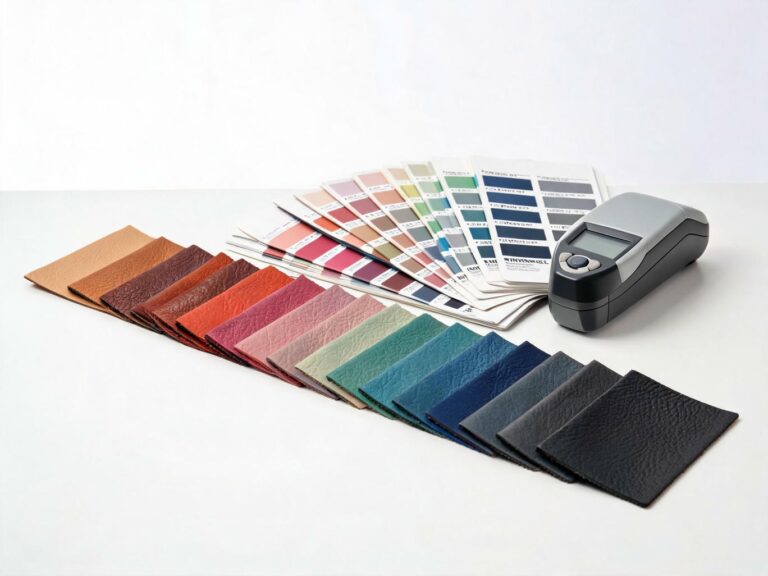
Contract and vehicle programs add a fourth category: the coated textile. A woven or knitted base fabric carries a functional coating, and the coating decides fire behavior, abrasion life, and cleanability. In our plant the base fabric is only half the story; the other half is how the substrate and surface are bonded. That pairing is exactly what our full-silicone versus semi-silicone comparison breaks down.
How base fabric choice changes the performance of the same surface coating.
Six Specs Buyers Skip in a Textile Material
- Fire class. FMVSS 302 governs vehicle interiors, and standard furniture fabric never has to meet it. Contract furnishings follow EN 13773 instead.
- Abrasion cycles. Martindale counts should match real traffic, not a brochure default.
- UV and color fastness. Car cabins reach 160°F in summer sun, and weak dyes fail within months.
- Temperature window. We spec silicone-coated material from -40°C to 250°C, which covers cold chain through engine-bay trim.
- Batch tolerance. Set color and texture drift limits per lot, or audits will find the drift for you.
- Compliance paperwork. REACH, FDA 21 CFR, and RoHS files belong with the shipment, not in a follow-up email.

Fire class is the one spec that can disqualify a material outright, so we test it first.

Color fastness runs on every lot; sun-faded covers start as missed fastness specs.
Matching the Textile Material to Your Program
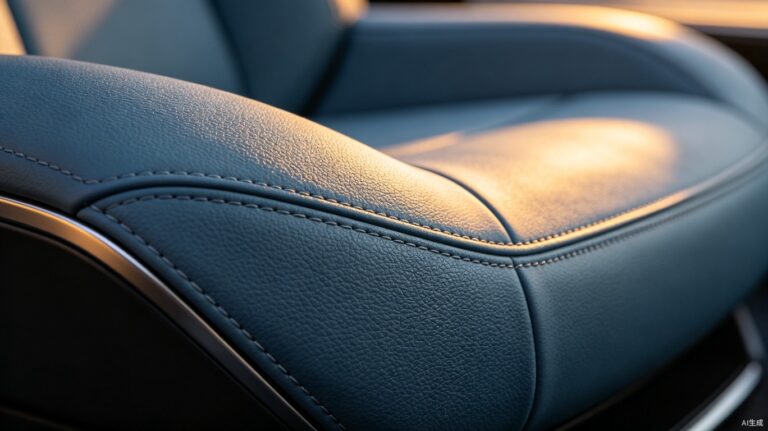
Heavy-traffic furniture lives on abrasion and cleanability. Vehicle interiors put FMVSS 302 and UV fastness first, and genuine leather builds often cost $800 to $2,500 per vehicle in material alone. Marine programs ask for the widest window: salt, water, sun, and temperature swing together, which is what our marine and outdoor applications line was built for.

Marine seating stacks salt, UV, and temperature into one requirement list.

Contract upholstery: abrasion and cleaning specs decide the repeat order.
When one material must serve two programs, run the stricter standard on both lines. A textile material qualified only for furniture will not survive an automotive audit, and retrofitting compliance after tooling is far more expensive than specifying it first.
The Decision Path in One Pass
- If your program is furniture with heavy traffic, start with abrasion and cleaning specs.
- If it is automotive or transport, lock FMVSS 302 and UV fastness before price talks.
- If it is marine or outdoor, verify the full temperature and water window first.
- If two programs share one material, qualify against the stricter of the two standards.
Six checks take one meeting. Send us your program profile and we will return the spec sheet that matches it. The right textile material is the one whose paperwork arrives with the roll. For a direct performance comparison, see our silicone versus PU analysis.
Request Textile Material Samples
About TOPSUN
TOPSUN supplies silicone-coated textile materials from 0.23mm to 3.0mm, with in-house fire, abrasion, color-fastness, and low-temperature testing on every production lot.
Compliance documentation ships with each roll, and custom substrate selection starts at a 500m MOQ with monthly capacity of 500,000m.
Is a coated textile still a textile material?
Yes. The base fabric stays a textile; the coating adds the performance layer. Our construction pairs woven or knitted fabric with a silicone surface, so you keep textile handling and gain elastomer durability.
Which single spec should I settle first?
Fire class. It is the only requirement that can disqualify a material outright. FMVSS 302 governs vehicle interiors and EN 13773 covers contract furnishing, so settle both before abrasion or color talks begin.
References
1. https://fabriculture.store/blogs/news/types-of-… — natural, regenerated, and synthetic fabric families and their performance traits
2. https://stitchdesk.com/automotive-upholstery-fa… — FMVSS 302 applies to automotive but not standard furniture fabric; cabin heat reaches 160°F; automotive leather material cost $800-2,500