Two rolls of leather arrive at a Rotterdam terminal. Both invoices read “genuine leather, cowhide.” One of them is bison. The customs officer does not inspect the grain. He checks the species line.
Here is the conclusion up front. Asking leather from which animal is no longer a trivia question. It is a declaration field, a spec-sheet variable, and a cost driver. Below, we walk through the 2026 regulatory rewrite and the bench behavior of five common hides. Then we look at the paperwork gap that the phrase “genuine leather” leaves open.
The Five Hides at a Glance
One table, two lenses: how regulators sort these hides, and how they behave once they are on your product.
| Hide | “Cattle” under EUDR? | Typical weight | Bench behavior | Buyer gap |
|---|---|---|---|---|
| Cattle (Bos) | Yes (genus Bos only) | 2–15 oz by cut | Widest range; top grain tough | Splits sold under the same label |
| Bison | No (excluded genus) | 4–9 oz | Dense fiber, scratch-resistant | Misdeclared as cattle |
| Goat | No | 1.5–4 oz | High strength-to-weight, pebbled | Rarely named on spec sheets |
| Sheep | No | 1–2 oz | Softest, crease-resistant | Fails fast under abrasion |
| Pig | No | 1.5–2 oz | Breathable, strong for weight | Lining promoted to the face |
Leather From Which Animal: The Species Note That Rewrote the Rules
The EU Deforestation Regulation applies from 30 December 2026 for large and mid-sized operators. Micro and small firms get until 30 June 2027. It covers seven commodities, cattle among them, plus the derived products listed in Annex I.
On 13 July 2026, the Commission adopted a Delegated Act rewriting that product list. Cattle hides, skins and leather — HS codes ex 4101, ex 4104, ex 4107 — came off Annex I. The stated reason: the leather chain runs independently of beef supply. The same act added frozen cattle tongues to the list. Leather left the scope; tongues joined it.
The fine print that matters: the act defines “cattle” as the genus Bos, including Bibos, Novibos and Poephagus. It explicitly excludes water buffalo (Syncerus) and bison (Bison).
So “cattle” on a customs document is a taxonomic claim, not a description. Declare bison as cattle and the paperwork is wrong even though the hide is real. Exotic skins still face CITES permits regardless of the Annex I change.
The same July package set the technical rules for the EUDR Information System. Operators file due diligence statements through it, with simplified declarations for micro and small firms. Samples and goods used only for testing sit outside the scope, which matters for swatch shipments.
Note the timing asymmetry. Products removed from scope are out now. Products added to Annex I, soluble coffee among them, become subject only from 30 December 2027.
In our declaration reviews for EU-bound furniture shipments, the recurring error is not fake leather. It is honest leather with the wrong species line. Automotive buyers got relief in the same July package, since aircraft and motor vehicle seats were removed over their negligible wood content. Check what that shift means for your automotive interior applications file before the December clock starts.

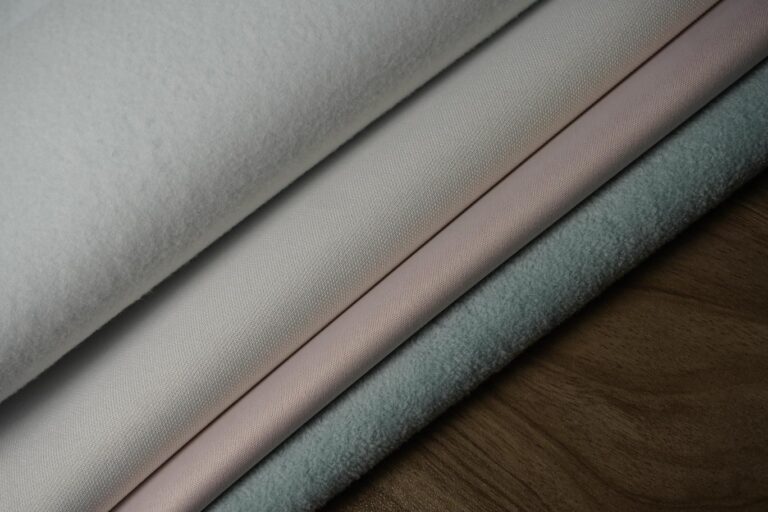
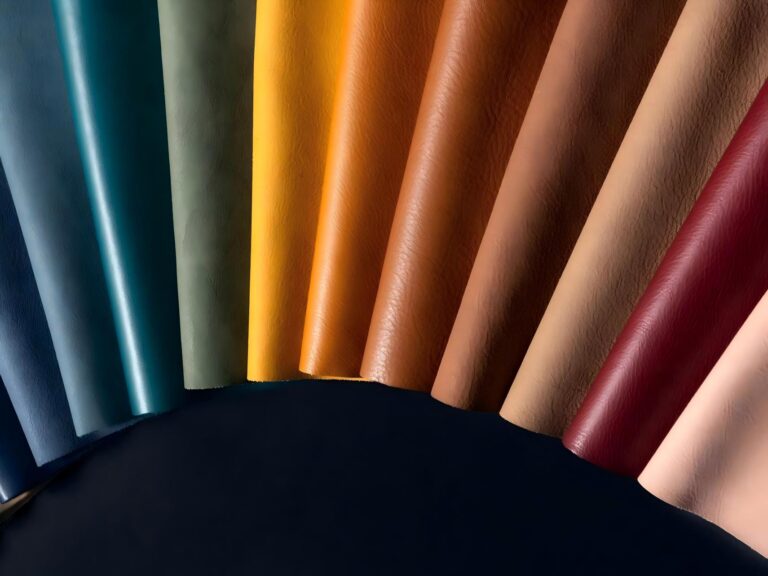
Five species can hide behind one invoice line. The stack above is a single material family; the paperwork question is which animal, which cut.
What Each Hide Does on the Bench
Regulators sort hides by genus. Buyers should sort them by behavior on the bench. The five commercial species differ far more than most spec sheets admit.
Cattle is the workhorse, and its weight range is the widest. A dealer stocks bullhide at 6–9 oz and cow split suede at 2–3 oz. Same animal. Roughly a third of the mass, and a fraction of the tear strength.
Bison vs cow leather comes down to fiber packing. Bison runs 4–9 oz with densely packed fibers, resists scratching better than cowhide, and softens with age. Its grain is less uniform — a design feature until someone demands color consistency across four hundred chairs.
Goat earns its place on strength-to-weight. The pebbled grain hides scuffs, and the hand stays supple. Gloves, bags and budget upholstery all lean on it.
Sheep is the thinnest and softest mass-produced leather, typically 1–2 oz. It resists creasing beautifully and fails abrasion just as fast. In one hospitality project we reviewed, a sheep-suede armrest marketed as “genuine leather” wore through within eighteen months of daily use.

Sheepskin grain: buttery at 1–2 oz, and the first species to give up under abrasion loads.
Pig suede runs 1.5–2 oz, is strong for its weight, and breathes. It is a lining material that marketing sometimes promotes to the face of a product. That promotion is where the failure starts.
Read the weight numbers together. A 2 oz sheep face cloth and a 9 oz bullhide both pass as “leather” at bidding. Only the ounce range tells you which one survives the warranty period.
Why “Genuine Leather” Erases the Animal
“Genuine leather” certifies one thing only: real hide, any species, any layer. It is a truthful phrase and a useless specification.
US trade definitions describe “leather” as the material that retained its original fiber structure. Words like “reconstituted” and “bonded” flag the recycled end. None of these terms names the animal, and that is the field buyers keep skipping.
Within cattle alone, top grain and split can differ threefold in tear performance. A buyer comparing two “genuine leather” quotes may be comparing a 9 oz hide to a 2 oz split. The price gap is real. The performance gap is bigger. Warranty disputes follow the label, because the invoice protects the supplier, not the buyer.
A defensible spec line names four things:
- Species: cattle, goat, sheep, bison, pig
- Layer or cut: top grain, split, suede
- Weight in ounces, with a tolerance
- Tannage method: chrome, vegetable, or hybrid
Ask suppliers for these four fields and watch the responses. Factories that run their own tannery and coating lines answer within hours. Traders answer with the word “genuine” again.
Our own incoming-material checks treat the four fields as pass-or-fail. A roll that cannot name its species and cut does not enter the warehouse, whatever the invoice says.

A macro view settles nothing on its own. Grain can be embossed; only the four spec fields identify the material.
Hide-Free: When the Species Question Has No Answer
Silicone leather ends the species question by removing the animal. There is no genus to declare, no CITES listing to track, no Annex I line to watch. One material declaration works across every market discussed above. That is a compliance advantage, not a green slogan.
The bench numbers have to carry the argument. Our rolls test to at least 200,000 Martindale cycles under ISO 12947-2, above most cow top grains. Flex resistance runs past 100,000 cycles (ISO 5402). VOC emissions are non-detect under ISO 16000-6. Hydrolysis panels show no change after 14 days at 70°C and 95% relative humidity.
Automotive programs add FMVSS 302 flame spread and 1,500-hour UV exposure under ASTM G154. Our factory production runs coating through finishing inside one group, so a single traceability file covers each roll.
The honest trade-off: silicone does not patina. Hand feel differs from full-grain, and eco-friendly silicone leather is sold on consistency, not aging. If the brand story needs crease-and-character, buy the cow.
On the safety file, our silicone lines carry EN 71 toy documentation and FDA food-contact references. The species section is absent, not disputed.
Watch how hide-free silicone leather faces five-animal comparison on abrasion, weight and declaration effort.
Leather From Which Animal: Five Lines to Fix Before Your Next Shipment
Which animal your leather comes from now shows up in customs data, warranty claims, and reupholstery budgets. Run this list before you sign anything.
- Write species, layer, weight and tannage on every spec line; reject “genuine” alone.
- Check genus claims against the EUDR species note: bison and water buffalo are not cattle.
- Confirm CITES paperwork for any exotic skin in the order.
- Date every declaration against the 30 December 2026 application clock.
- Decide whether your product needs a species answer at all, or a hide-free one.
Leather from which animal has five honest answers and one empty one: “genuine.” Pick the answer your product actually needs, then make the paperwork say it.
About TOPSUN
TOPSUN formulates hide-free silicone leather for furniture, transit and healthcare brands that need one clean material declaration across every market. The portfolio backs that claim with ISO 12947-2 abrasion above 200,000 cycles, non-detect VOC reporting, REACH and RoHS documentation, and 6 million meters of annual capacity across three owned plants.
References
1. https://environment.ec.europa.eu/news/commissio… — Delegated Act of 13 July 2026 removing cattle hides, skins and leather from EUDR Annex I; application dates of 30 December 2026 and 30 June 2027 (2026)
2. https://chinawto.mofcom.gov.cn/article/jsbl/zsz… — Species annotation defining cattle as genus Bos, excluding water buffalo (Syncerus) and bison (Bison); HS codes ex 4101, ex 4104, ex 4107 (2026)
3. https://hideandsole.squarespace.com/leather — Hide weight ranges by species: bison 4–9 oz, sheep 1–2 oz, pig suede 1.5–2 oz, bullhide 6–9 oz