USD 28.5 billion. That’s what the world spent on coated textiles in 2025, and Grand View Research projects the number climbs to USD 39.3 billion by 2033. Widen the lens to all coated fabric products and Future Market Insights puts 2026 sales at USD 52.2 billion, heading for USD 83.5 billion within a decade.
Yet anyone who has spec’d material for a hotel lobby or a transit seat knows the dirty secret. Plenty of products in this market fail the same three tests: abrasion, UV, and hydrolysis. This article breaks down the six fabric product categories that actually hold up in commercial use, the coating chemistry behind each, and the test numbers that separate the survivors from the replacements.
| Market Segment | Base Value | Forecast | CAGR | Primary Demand Drivers |
|---|---|---|---|---|
| Coated textiles | $28.5B (2025) | $39.3B (2033) | 4.1% | Automotive, construction, furniture, industrial |
| Coated fabrics (all) | $52.2B (2026) | $83.5B (2036) | 4.8% | Transportation (30%), protective clothing (22%) |
What “Fabric Products” Actually Means in Industrial Sourcing
Ask a retail buyer and “fabric products” means curtains and cushion covers. Ask an engineer and the term lands somewhere completely different: base textiles — woven or knitted — that have been coated, laminated or finished to add properties the base fabric can’t deliver alone. That second definition covers the technical textiles sector, where materials are engineered for aerospace, automotive, filtration, thermal protection, insulation and construction, and where the fabric is a functional component rather than a decoration.
The distinction matters commercially. A decorative fabric is judged on color and hand-feel; an engineered fabric product is judged on cycle counts, hours under UV lamp, and grams of fogging in a sealed cabin. Buyers who spec the second category using the first category’s criteria almost always end up replacing the material within two years. That is precisely why understanding what separates the product families below is worth an hour of your time.
The Six Fabric Product Categories That Matter in 2026
Within the coated-fabric universe, six product families account for most commercial and industrial purchasing. Each is defined less by its looks than by the substrate and coating stack under it:
- Furniture and sofa upholstery — 0.8–2.0 mm coated materials balanced for softness and abrasion, the workhorse category for residential and hospitality seating.
- Automotive interior fabric products — trimmed for fogging (<2 mg per DIN 75201), odor (≤3 per VDA 270) and FMVSS 302 flammability compliance.
- Ultra-thin electronics and accessory fabrics — 0.23–0.8 mm laminates for 3C accessories, wearables and fashion goods where thickness budget is measured in tenths of a millimeter.
- Marine and outdoor coated fabrics — heavier 0.8–2.5 mm builds rated for 1,500+ hours of UV exposure (ASTM G154) and 1,000+ hours of salt spray (ASTM B117).
- Flame-retardant public-space fabrics — certified against FAR 25.853 for aviation, EN 13773 Class 4 for drapery, and CAL TB 117 for furniture in public settings.
- Rigid-substrate and wall-panel products — 1.0–3.0 mm composites bonded to PET or similar backings for structural panels, wall cladding and 5G-transparent electronics enclosures.

Every category above starts at the same place: substrate selection, coating formulation, and a controlled curing line.
How the Coating Chemistry Changes the Spec Sheet
Three coating chemistries dominate the catalog — polyurethane, PVC, and silicone — and the choice rewrites every line of the spec sheet. PU coatings deliver a soft hand at low cost but carry polyester urethane’s weakness: hydrolysis. Moisture attacks the ester bonds, and the coating peels within two to three years in humid service. PVC brings inherent flame retardancy but ships with plasticizers (phthalates) and chlorine chemistry that increasingly complicates EU compliance, including REACH screening across 247+ substances of very high concern.
Silicone coatings are the newer entrant and the reason our production lines run solvent-free. The Si-O-Si backbone in the polymer carries a bond energy of roughly 452 kJ/mol versus about 360 kJ/mol for the ester linkages in PU — around 25% stronger, and hydrophobic to boot.
In practical terms, our silicone-coated fabric products clear 200,000 Martindale cycles (ISO 12947-2) and hold flex resistance past 100,000 bending cycles (ISO 5402). They also survive 14+ weeks of accelerated hydrolysis aging at 85°C / 85% RH with zero delamination, where PU blanks typically fail in three to four weeks. Service life lands at 10–15 years, roughly three times the PU baseline.

Tensile verification (ISO 3376): ≥15 N/mm for furniture and automotive builds, ≥20 N/mm for marine grades.
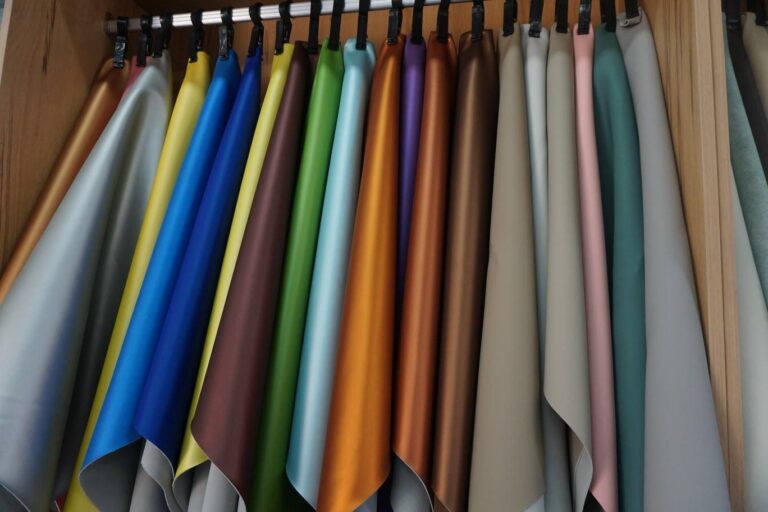
Side-by-side material comparison: where PU, PVC and silicone coatings diverge under stress.
Matching Durable Fabric Products to the Application, Not the Catalog
Category lists are a starting point; applications decide the final spec. A hotel banquet chair and a yacht cockpit seat may both draw from the “upholstery” family. The yacht build needs the marine-grade UV and salt-spray package, while the banquet chair needs stain resistance and a two-hour cleanability story. Temperature range separates them too — our materials hold -40°C to 250°C without degradation, but the relevant question is which end of that range your application actually lives at.
A recent project illustrates the process. A hospitality client initially specified a mid-range PU for 400 restaurant booths, lured by the per-meter price. Our team ran the service-life math instead: at 2–3 years of PU life against 10–15 for silicone coating, replacement labor alone flipped the decision before counting material. The booths were re-spec’d to a silicone-coated grade with alcohol-disinfectant compatibility, and the first install has now outlived the original PU’s entire expected lifespan. For teams mapping requirements to product families, the application overview page organizes eleven verticals from automotive to medical.

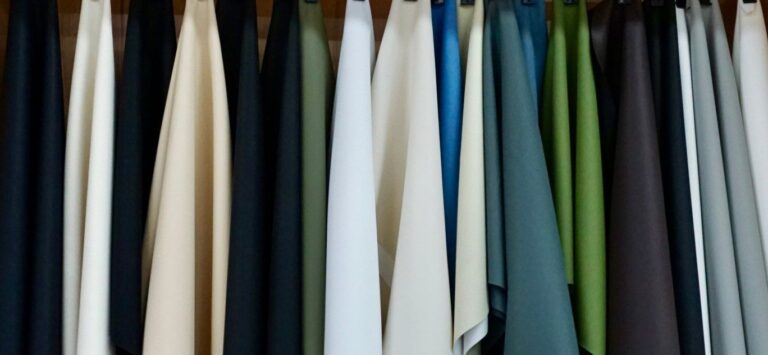
Application-first selection: the same base technology, spec’d differently for seating, walls and panels.
The Test Standards Behind Every Serious Fabric Product Quote
Any supplier can print “heavy-duty” on a swatch card. Test standards are what turn the adjective into a number, and four matter most when comparing fabric products across vendors:
- Martindale abrasion to ISO 12947-2 (cycle counts).
- Color fastness to ISO 105-B06 (Class 4.5 is the commercial benchmark for light exposure).
- Flex resistance to ISO 5402 (bending cycles).
- Water resistance to AATCC 127.
On the compliance side, request the REACH SVHC screening scope in writing. A report covering 247+ substances with a named laboratory is the current gold standard, and ours carries a verifiable SGS report number.
Our engineering team treats the drying and curing stage as the quiet variable most buyers never see. Coating adhesion is decided in the oven — inside the production process — which is why identical-looking materials from different factories age completely differently.
If you want the chemistry from first principles, the silicone leather introduction page walks through the polymer structure and why it resists hydrolysis that destroys PU.

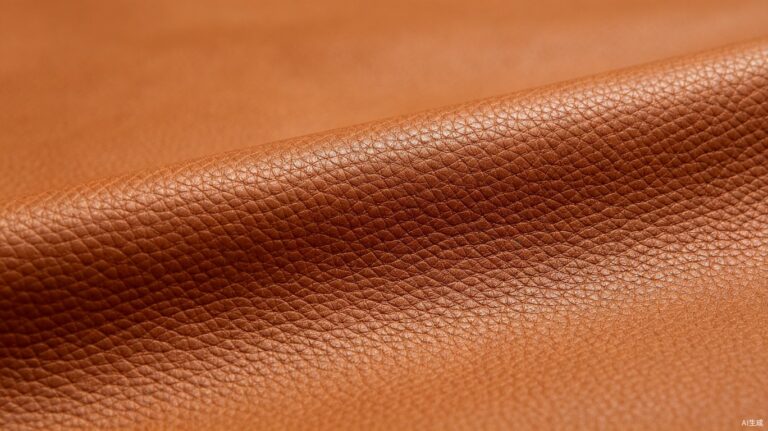
Curing controls everything downstream: adhesion, flex life and hydrolysis behavior are locked in at this stage.
About TOPSUN
From a 60,000+ m² manufacturing network spanning three bases, TOPSUN engineers silicone-coated fabric products for furniture, automotive, marine, medical and electronics applications, exporting to buyers in over 30 countries.
Ten automated coating and laminating lines, monthly capacity above 500,000 meters, thickness options from 0.23 to 3.0 mm, and six product families spanning ultra-thin electronics laminates to flame-retardant transit grades.
Which Fabric Product Fits Your Project? A Quick Judgment Table
When the shortlist comes down to chemistry and construction, this decision table resolves most sourcing calls we see:
| If Your Application Needs… | Best-Fit Product Family | Deciding Spec |
|---|---|---|
| Soft hand + daily abrasion | Furniture upholstery grade | Martindale ≥200,000; 0.8–2.0 mm |
| Cabin compliance + low fogging | Automotive interior grade | FMVSS 302; fogging <2 mg |
| Sub-millimeter thickness | Ultra-thin electronics grade | 0.23–0.8 mm; TVOC <0.05 mg/m³ |
| Sun, salt and weather exposure | Marine & outdoor grade | QUV 1,500+ hrs; salt spray 1,000+ hrs |
| Public-space fire code | Flame-retardant grade | EN 13773 Class 4; FAR 25.853 |
| Stiff panels or wall cladding | Rigid substrate / PET composite | 1.0–3.0 mm; 5G signal-transparent |
The coated fabric products winning commercial contracts in 2026 share one trait: their suppliers quote test numbers, not adjectives. Bring the six categories and the four standards above to your next RFQ, and the differences between bids become measurable instead of marketing. A PET-based silicone composite is a good place to start if wall panels or electronics enclosures are on your list.
Request Product Family Swatches
References
1. https://www.grandviewresearch.com/industry-analysis/… — Coated textiles market USD 28.5B (2025) to USD 39.3B (2033), 4.1% CAGR
2. https://www.futuremarketinsights.com/reports/coated-f… — Coated fabrics USD 52.2B (2026) to USD 83.5B (2036); transportation 30% of application sales (2026)