The brief landed in a spec studio we joined last spring: a 40,000 m² co-working lounge program, leather-look requested, contract durability non-negotiable. A cleaning crew leans on whatever is in the janitor’s closet. The client’s first line read “nothing that looks like vinyl,” and their second read “nothing that behaves like domestic furniture”. That combination is exactly why the search for a fabric alternative deserves a designer’s method, not a catalog scroll.
Five material families went onto the sample rail. This article walks the rail the way we walked it — hand first, bench second, budget last — and shows the decision tree that finally closed the brief.

The program: a 40,000 m² lounge where every seat lives a contract life — coffee, cleaner, and a thousand sittings a week.
The Brief That Put a Fabric Alternative on Every Sample Rail
A commercial brief rewrites what “fabric” means. Domestic upholstery lives on vibes — hand, drape, a color story. Contract upholstery lives on numbers: the furnitureforbusiness.co.uk checklist insists on lab data before sign-off. The bands most specifiers memorize are unforgiving.
Light domestic use starts around 15,000 Martindale cycles. General contract — hotel lobbies, restaurant and office seating — sits at 50,000–60,000. Heavy contract runs 80,000–100,000. Our lounge program, with its all-day dwell and daily wipe-downs, needed the heavy-contract band plus chemical cleaning tolerance. It also needed a fire path the client’s insurer would accept — BS 5852 Crib 5 or an equivalent documented route.
Add the operational layer and the grid tightens further. Cleaning codes had to survive quaternary ammonium wipes, colorfastness needed ISO 105-B02 grade 4 or better against south-facing glass. Pilling needed an ISO 12945 rating that would not embarrass the seat in month six. Every family on the rail below was measured against that grid, and the studio kept one rule. No spec sheet line may be skipped. A sheet with an abrasion number and no composition line was written to be skimmed.

Designer’s method: the rail gets sorted by evidence, not by mood board.
Woven Contenders: Where 60,000 Martindale Cycles Still Lose the Room
The first shelf held the honest textiles — wool-blend weaves and high-tenacity polyesters with beautiful melange surfaces. On paper they cleared the threshold: several carried 60,000+ Martindale cycles and proper ISO 12945 pilling grades. Two things removed them anyway.
First, cleaning: a woven face absorbs whatever the janitor’s crew applies. Coffee with milk is a structural event in a woven lounge seat. The fiber holds the stain chemistry long after the surface looks dry. Second, the spec sheet’s fine print: the Covelle guide makes the point that a high rub count promises abrasion, not chemical tolerance. Our program’s cleaning schedule is a chemical event several times a day.
The seam-slippage numbers on two of the wool blends also flagged a risk the abrasion line hid. High-cycle fabrics can still open at the seam where the frame flexes. The weave stayed on the rail for the quiet corners and left the main seating zone. It is a useful discipline: a coated-material overview belongs on the same rail precisely because some requirements are chemistry requirements. No weave can dress for them.

The rail after round one: survivors only — a rack that still holds everything is a rack nobody trusts.
Coated Fabrics: What PU and PVC Reveal Under a Notebook Eraser
The second shelf held the coated families, and this is where hand feel starts lying. PU felt closest to leather in the studio — soft, warm, quietly expensive. PVC felt like PVC, which the brief had banned in so many words. The studio’s bench tests reversed the ranking.
On our own sample bench we run three quick tests before any lab paper: a coin scratch, a denim rub, and an alcohol wipe left to dwell for ten minutes. The PU sheet lost the wipe test — surface crazing inside a week of accelerated aging. Its construction is the reason, which the full versus semi construction comparison explains better than any brochure. A porous polyurethane film over fabric is a hydrolysis clock.
PVC passed the wipe but failed the hand: stiff drape, visible emboss, plasticizer smell in a closed room. Both went back with notes. The episode is worth remembering for what it says about order of operations. The studio could have spent three weeks falling in love with PU samples before a single wipe test ran. The discovery would have arrived exactly as painfully, just later and with more sunk design work.
The Budget Session: Reading Whole-Life Cost Off the Same Sheet
Before the final family took its turn, the client’s quantity surveyor joined the table. The conversation moved from spec sheets to five-year math. The woven option priced lowest per meter. It assumed a re-cover cycle in year four or five at commercial rates — fabric, labor, downtime on the floor. PU priced mid-range and carried the hydrolysis clock, which the surveyor translated into a warranty exclusion he had seen before. PVC priced aggressively and was disqualified by the brief’s own language.
The silicone family priced highest per meter and lowest per service year. Its 10–15 year duty expectation against a 40,000 m² program turns the per-meter premium into a rounding error once one avoided re-cover is counted. Contract-grade guidance makes the same argument from the procurement side — whole-life value, not ticket price. The studio’s recommendation letter simply copied the surveyor’s table into the appendix.
Budget sessions kill more material choices than bench tests. Arriving with the per-year column already computed is the difference between defending a decision and surrendering one.
The Silicone Fabric Alternative That Survived Every Bench Test
The last family arrived with the least marketing and the most chemistry. Silicone-coated fabric carries no plasticizers, no solvent load and no hydrolysis clock. The surface is a cross-linked silicone film that treats alcohol, bleach solution and coffee as weather, not as attack.
On the bench it passed the coin, the denim and the dwell test. In the lab records it holds 200,000+ Martindale cycles, QUV 1,500+ hours and non-detect VOCs. That puts it a full band above the heavy-contract 80,000–100,000 threshold rather than merely at it. The fire conversation closed quickly. Silicone’s flame retardance is inherent to the polymer rather than an additive package that can migrate or wash out. That means one less row of paperwork to defend at sign-off.
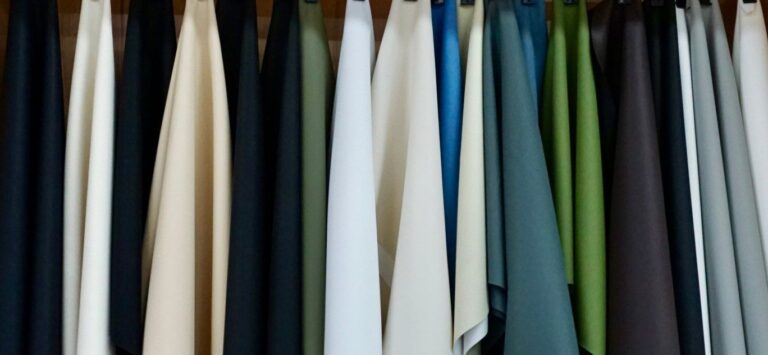
The surprise was the hand. The lychee-grain versions have a pebbled warmth that reads leather-adjacent rather than rubbery. The finish range is wide enough to spec colorways per zone — calm neutrals in the focus rooms, deeper tones where coffee actually lives. The microfiber-backed construction was the sample that finally convinced the client’s soft-seating lead, who had arrived as the program’s designated skeptic.

Hand feel, last: the texture that turned a chemistry argument into a design decision.
Finish range on camera: the colorway and grain options a zone-by-zone spec needs.
A Decision Tree for the Next Fabric Alternative Brief
The lounge program closed with one material and a clear conscience. The reasoning compresses into a tree any studio can reuse before the sample rail is even booked.
| If the Brief Says… | Shortlist | Because |
|---|---|---|
| Low traffic, visual warmth first | Woven wool blend | 60,000 cycles is enough; chemistry tolerance irrelevant |
| Domestic budget, dry rooms | PU coated fabric | Best hand per dollar — until humidity or alcohol appears |
| Toughest chemical duty, hand optional | PVC vinyl | Wipes clean forever; drape and plasticizers pay the tax |
| Contract traffic + cleaning crew + fire path | Silicone-coated fabric | 200,000+ cycles, no plasticizers, inherent flame retardance |
Three caveats keep the tree honest when other studios reuse it. Weight the rows in the order the client experiences failure. A stain that never lifts outranks a rub count that arrives two years later. Chemistry columns lead, abrasion columns follow. Refuse to let a single number carry a family. 200,000 cycles on a sheet that crazes at the first quaternary wipe is not a contract material. It is a laboratory anecdote.
And keep the fire path inside the same conversation rather than delegating it to a compliance annex at the end. Inherent versus additive flame retardance decides how much paperwork follows the material for the life of the building. Run any shortlist through those three filters and most sample rails shrink to one family before the second meeting. That is exactly what a fabric alternative search is supposed to achieve: fewer options, better evidence, faster sign-off.
A fabric alternative is not a single answer. It is a family decision driven by traffic, chemistry and fire scope. The studios that get it right test the wipe before they fall in love with the hand, price the fifth year before the first meter, and file the losing samples with their reasons attached. The next brief will ask the same questions in a different order.
The lounge that opened on this program has not had a single reupholstery call. The archive of failed swatches is the quiet asset that made the quick decision possible.
Request the Specifier Sample Rail
References
1. https://furnitureforbusiness.co.uk/what-is-cont… — Contract grade checklist: Martindale thresholds, BS 5852 Crib 5 and whole-life value for commercial procurement
2. https://www.covelleliving.com/journal/how-to-re… — Spec sheet anatomy: Wyzenbeek (ASTM D4157) versus Martindale (ASTM D4966) and what a rub count does not promise